+ Ответить в теме
Страница 7 из 9 ПерваяПервая 1 5 6 7 8 9 ПоследняяПоследняя
Показано с 121 по 140 из 176

Тема: blackbag.nl

  1. #121
    Я робот. Собираю для Вас информацию из интернета
    Регистрация
    18.04.2011
    Сообщений
    90,662

    По умолчанию 0

    Continued work on MIWA/Anker 3800
    I had spent quite some time on the Anker 3800 cylinder. This system was originally patented by the Japanese firm MIWA. It contains just 4 pins, each of them having 4 possible depths. But, there’s also 4 sliders that are magnetically operated by magnets in the key. This system was sold in the Netherlands by […]
    -------------------------------------
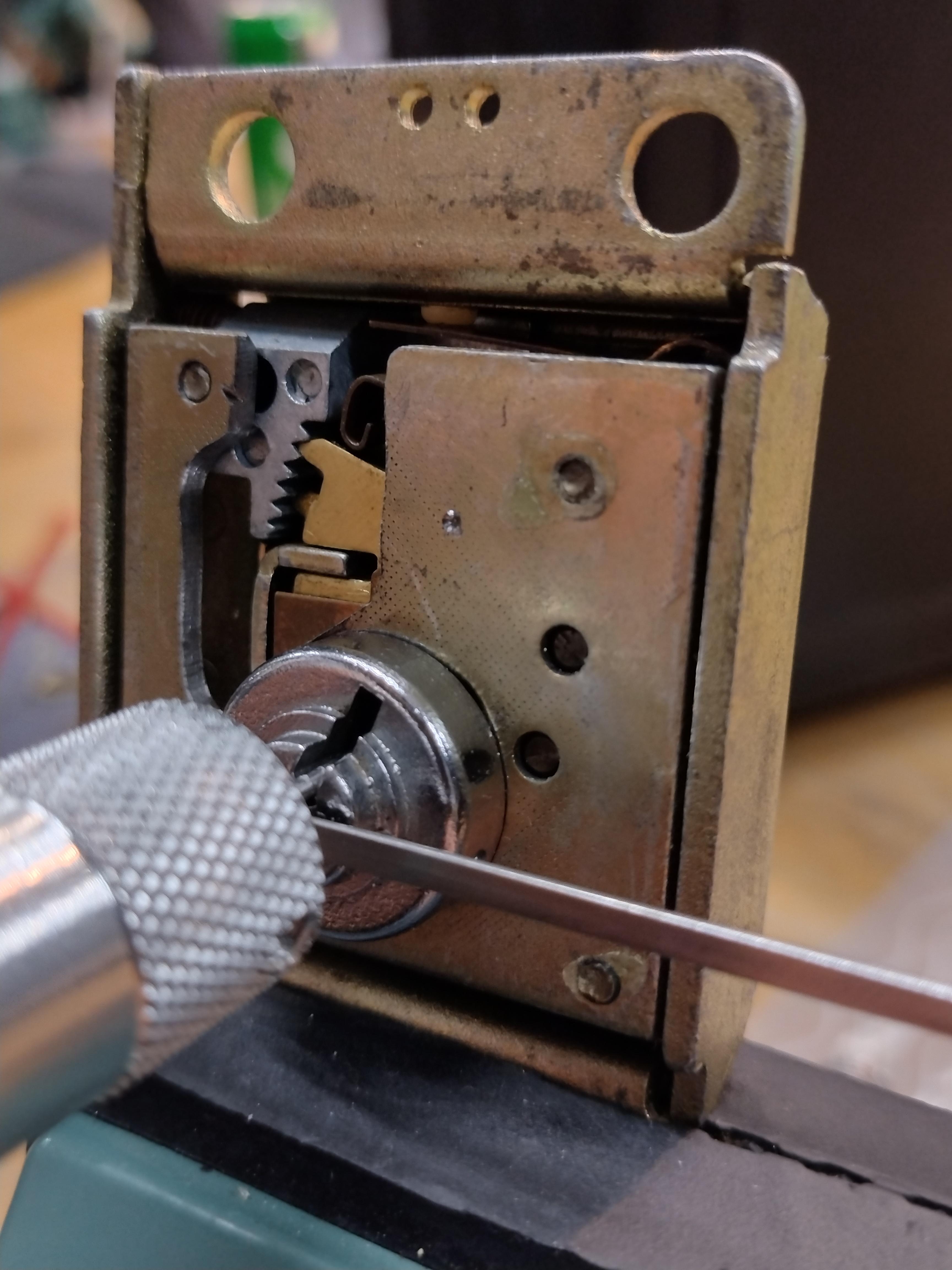
    I had spent quite some time on the Anker 3800 cylinder. This system was originally patented by the Japanese firm MIWA. It contains just 4 pins, each of them having 4 possible depths. But, there’s also 4 sliders that are magnetically operated by magnets in the key.

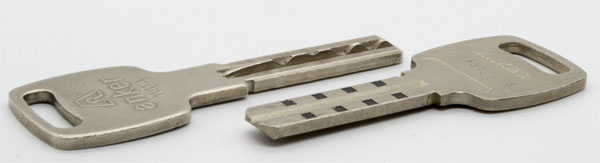
    An Anker 3800 EurocylinderThe keysThis system was sold in the Netherlands by Dutch firm Ankerslot and is still used in many large, high security setups.

    I made a magnetometer to decode the magnets in a key or in a cylinder, made a 3D model of the key to be able to print it and figured out how to get the master key of a system. My talk at MCH’2022 is available online.

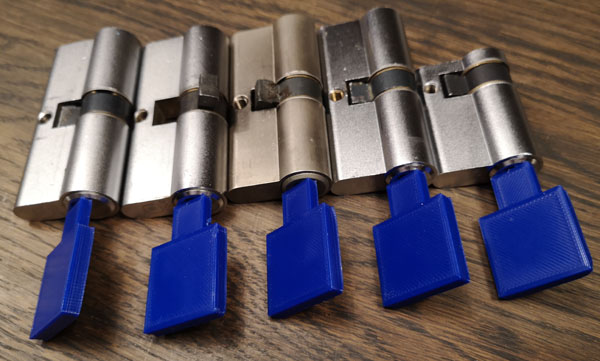
    At LockCon, Han provided me with a set of five cylinders, all keyed differently but all part of the same masterkey system. No keys were provided.

    I started by reading out all the magnets in the sliders. Each slider can have one or two magnets. If there are two, one is for the user key, one for the master key (we’ll ignore submasters for the moment). By knowing the magnets in the cylinder, it is possible to figure out which magnet should be in the key. For master keyed systems, there might be two possible magnets to operate the slider, where one will be in the master key, the other in the user key. With this information, I could determine the magnets in the master key and in the individual user keys.

    The correct bitting is another story. I had no key to start with. It is possible to create 256 keys and try them all to find all possible bittings. I was lucky however to have gotten one half cylinder.

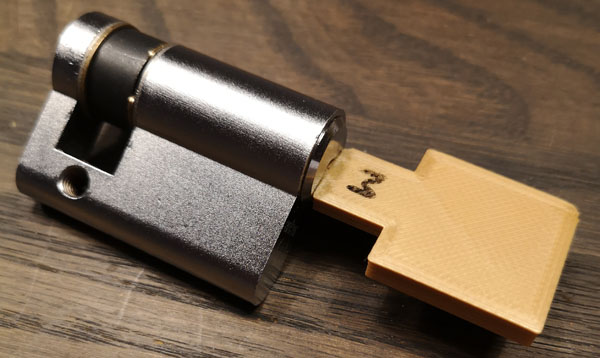
    What I did is create a bump key (so four times the deepest cut, which I will call a ‘4’), containing the correct magnets. With the bump key, I could open a cylinder and disassemble it. The half cylinder was my luck, as that can also be re-assembled. For this task, I used a 3D-printed plug follower.

    This gave me all the correct bitting positions for this one cylinder (pin 1: 3 or 4, pin 2: 1 or 3, pin 3: 2 or 3, pin 4: 4). Since I did not have the original key, I did not know which depth belongs to the user key and which to the master key. The configuration allows for 2^3=8 possibilities. By creating 8 keys and trying them on the other cylinders, I could find out the master key bitting. With 3D printed keys, it is possible to print, say, a 3/1/2/4 key and if it doesn’t work, file a bit away to get a 4/1/2/4 key. That is exactly what I did and 4/1/2/4 worked on all cylinders, giving me the correct master key.

    Next, I wanted to create the user keys. I could have created user keys by only using different magnets and keeping the bitting the same, but that would not give me the keys as they would originally be made for these cylinders. Since I now had a working master key, I could easily probe each pin position for all depths in sequence. I started with a 1/1/2/4 key, trying that on the 4 remaining cylinders and writing down the results, then filing it to a 2/1/2/4, trying again and then 3/1/2/4. With four keys to start with and 4*3=12 filing actions I was able to decode all the bittings.

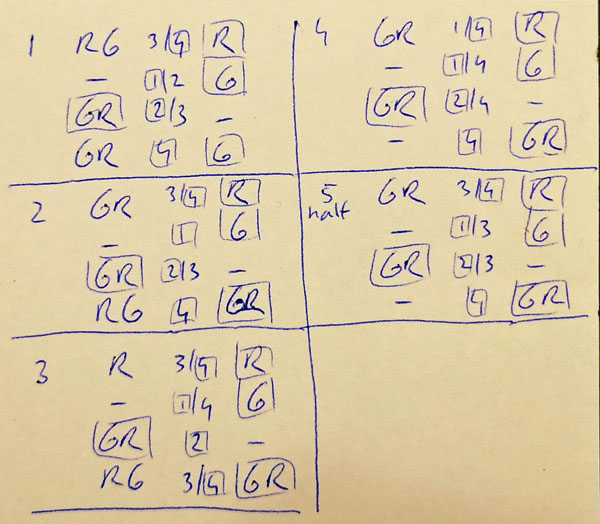
    Decoded cylindersHere, I have put squares around the magnets and bittings of the master key. If there are other bittings or magnets, they must be in the user key. The first pin of cylinder 2 for instance has possibile depths 3 and 4, and the master key has depth 4, so the user key must have depth 3. Note that in this system (and in this instance), user keys can have a bitting that can be filed down to the master key, as long as the magnets are different. Cylinder 2 shares the middle two magnets with the master key, the outer two are different.

    With that information, I knew all the individual keys and printed them.

    The user keys only open one cylinder eachAnd I have the master key.

    The master key is golden of course In fact, with this collection of cylinders, it is now also possible to make submaster keys for certain subsets of cylinders, even if that was not intended originally.

    Thanks for reading! -Walter.

    Photos CCBY4.0 Walter @ Toool Blackbag


    Источник...

  2. #122
    Я робот. Собираю для Вас информацию из интернета
    Регистрация
    18.04.2011
    Сообщений
    90,662

    По умолчанию 0

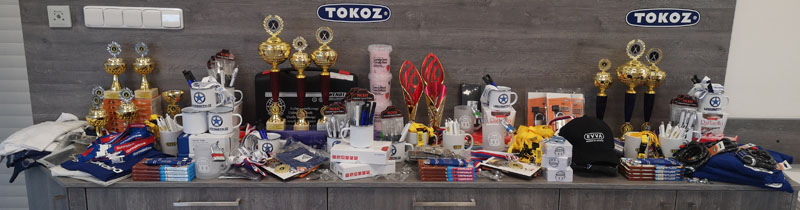
    Czech Lockpicking Championships
    The Association of Czech Lockpickers held their yearly competition last weekend. Starting up after COVID, they offered a limited program without impressioning championships, but still included a padlock competition, blitz, cylinders and freestyle. I (Walter) went over to participate. There were competitors from Czechia, Germany, Austria, Hungary and I was the representative for the Netherlands. […]
    -------------------------------------
    The Association of Czech Lockpickers held their yearly competition last weekend. Starting up after COVID, they offered a limited program without impressioning championships, but still included a padlock competition, blitz, cylinders and freestyle.

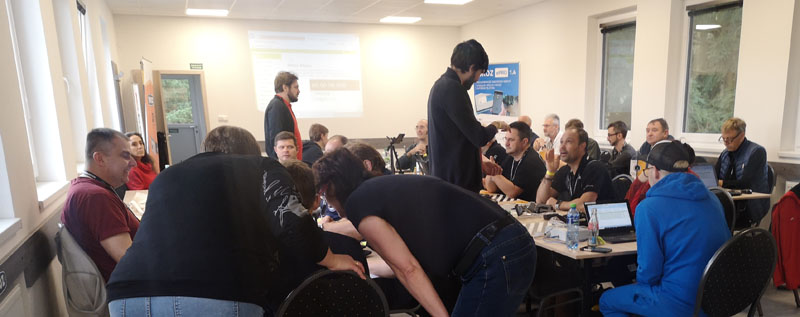
    I (Walter) went over to participate. There were competitors from Czechia, Germany, Austria, Hungary and I was the representative for the Netherlands. The championships were held at a nice and cosy facility, giving ample room for socialising and catching up with old friends.

    Some of the ‘usual suspects’ were absent due to work or for other reasons, but still there were plenty of people participating

    Padlocks

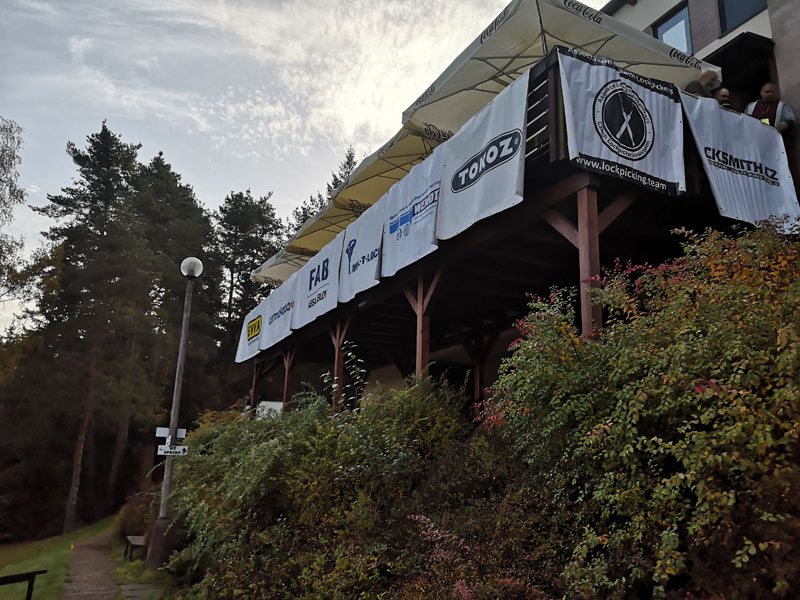
    First up was the padlock competition. The padlocks were provided and differed quite a lot in difficulty. You are allowed to test your tension wrench before the clock starts. For one particular lock, it was hard to test the tension wrench without accidentially already opening the lock.. on the other side of the spectrum, some of the Tokoz padlocks proven impossible to open in the allotted time.

    I had a tool stuck in a lock which I why I didn’t make the A-finals. But all for the best, because in the B-final I then became second. There were 7 people in the A-final, 9 in the B-final.

    Blitz

    The blitz competition requires opening locks within a minute. Each participant brings their own lock. I was a bit confused here.. I’ve done such competitions before. I fondly remember the one held by SSDeV in 2003. People would give me the lock and tell me exactly how to open, because the goal here is not to bring a difficult lock, but to encourage beginning lockpickers to have success. It is a competition that should also show the audience that lockpicking is a sport that can be done by anyone. However, at this competition, there were very difficult locks, I even saw a Mul-T-Lock with the pin-in-pin system. It was no surprise that it take not long for most of the people to be out of the game, me included.

    Cylinders

    For me, the cylinder opening is the most interesting competition and I was looking forward to it, after the Blitz. For this competition, people take their own locks that they need to open within 5 minutes or they cannot participate. I took an Ivana Necoloc (rebranded Anker Infinity) that was used in the Toool championship finals (nobody opened it there in 15 minutes). For the first time, I prepared for a competition, because I practiced opening this lock within 5 minutes. I managed to do so here under stress as well (about 1’20) and could participate. The competition saw some very difficult locks, such as the EVVA ICS.

    I made it to the A finals, even though I did not open the FAB lock. Later, I learned it has a very deep pin because of bump protection, which I somehow missed in the stress.

    In the final, I openend a cheap lock (Legallais) and a Winkhaus, but left the EVVA ICS and Cisa SB (similar to Abus XP1) closed. The Cisa was almost completely picked until I made a mistake and had to start over. Jascha had the same happening to him. The last round I got Jascha’s Yale dimple lock which had dimples and sliders. I destroyed my lockpick on it, but opened it in 14’58! That, in the end, was enough for fourth place overall. I though my Ivana lock would be difficult enough to give me an advantage, but it turned out everybody in the A-finals opened it within the 15 minutes.

    Freestyle

    For the freestyle competition, the locks were once more provided. They needed to be opened within 5 minutes. I did not bring any electropicks or other ‘freestyle’ tools, so reverted to normal picking. I again made it to the A-finals. There, I opened 3 EVVA locks and 2 Euro Plus locks. Once I figured using the Bogoto was the way to go, I opened these in seconds, but unfortunately the first EVVA and Euro Plus took me 1’49 and 2’14. THere were 2 Mul-T-Lock interactive cylinders that “talked” to me but wouldn’ open in the end, a FAB 400 I had opened in the first round but wouldn’t open in the final and a Kaba Gemini that was only opened by the winner using an electropick (and a bit of luck). I think it was due to my time that I only became 7th here.

    Overall it was a very nice competition with a good atmosphere. Thanks to the organisers!

    Photos CCBY4.0 Walter @ Toool Blackbag


    Источник...
  3. #123
    Я робот. Собираю для Вас информацию из интернета
    Регистрация
    18.04.2011
    Сообщений
    90,662

    По умолчанию 0

    Lockpick set by Moki
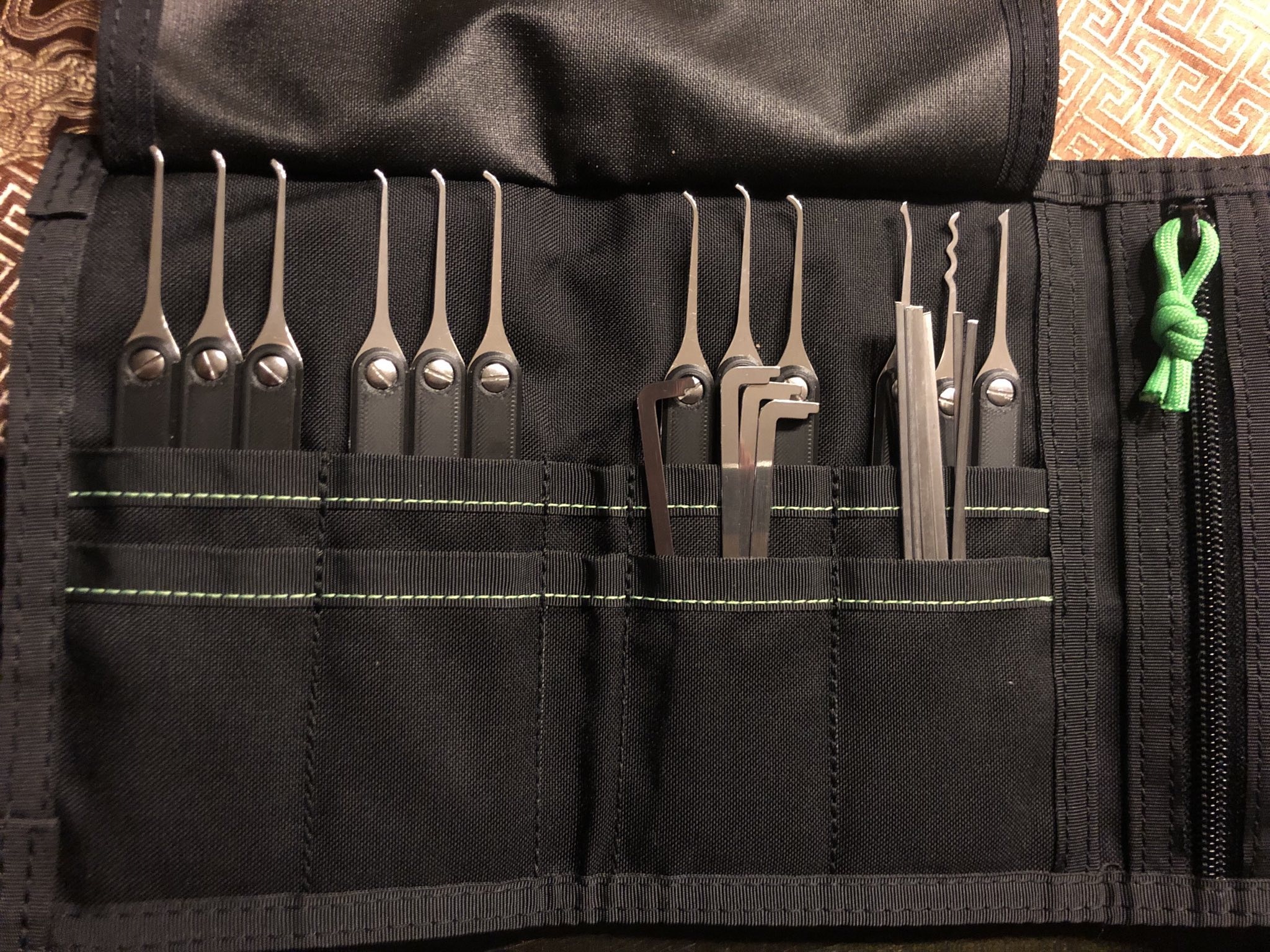
    Hi everyone, this is a quick blog post to show off a lockpick set by Lockpick maker Moki who also makes wonderful pick cases, as seen below. These cases are made in part from bicycle inner tube, which appealed to us. The Moki set contains three hook sets; small, medium, and deep hook of pointy, […]
    -------------------------------------
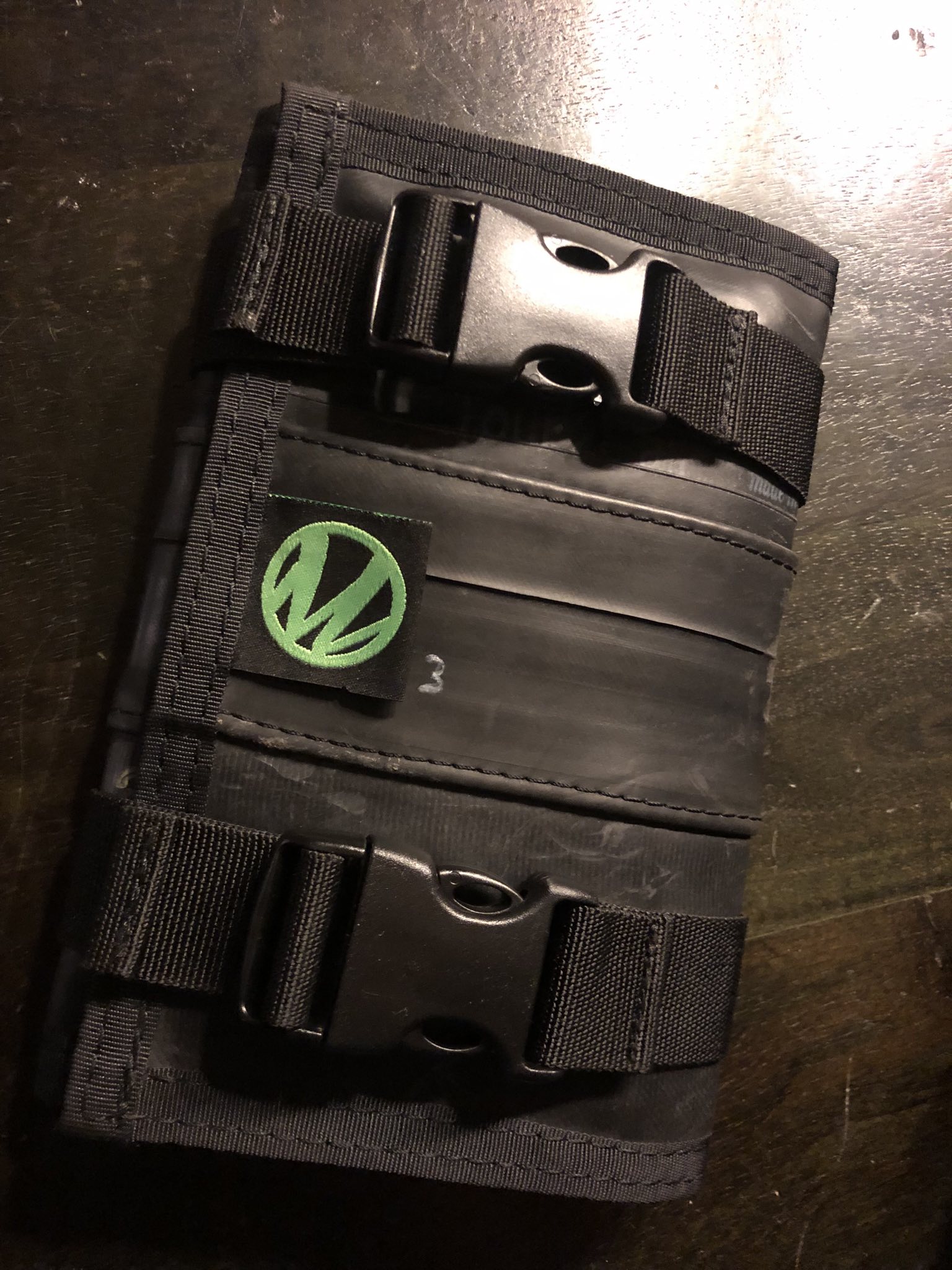
    Hi everyone, this is a quick blog post to show off a lockpick set by Lockpick maker Moki who also makes wonderful pick cases, as seen below. These cases are made in part from bicycle inner tube, which appealed to us.

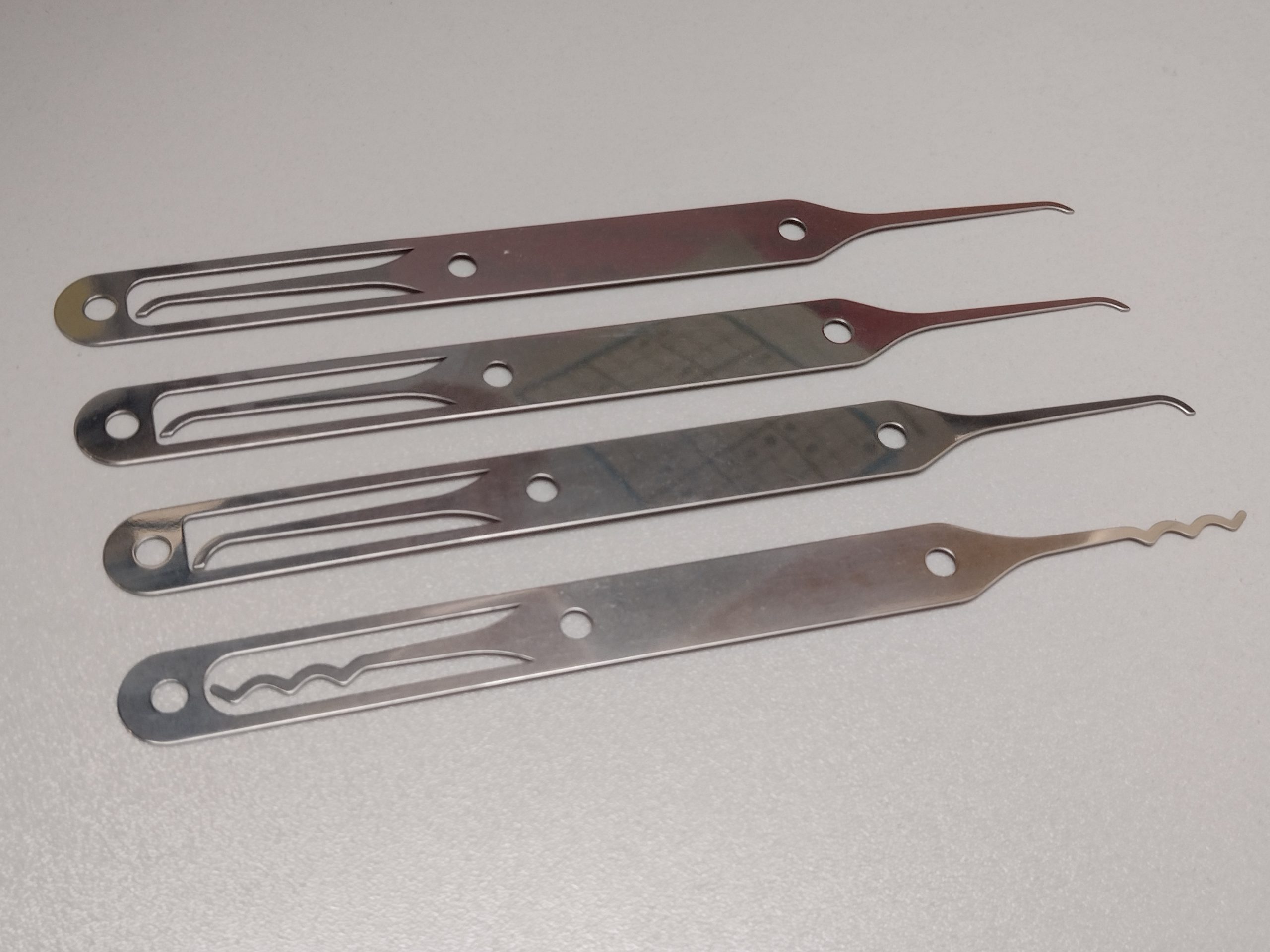
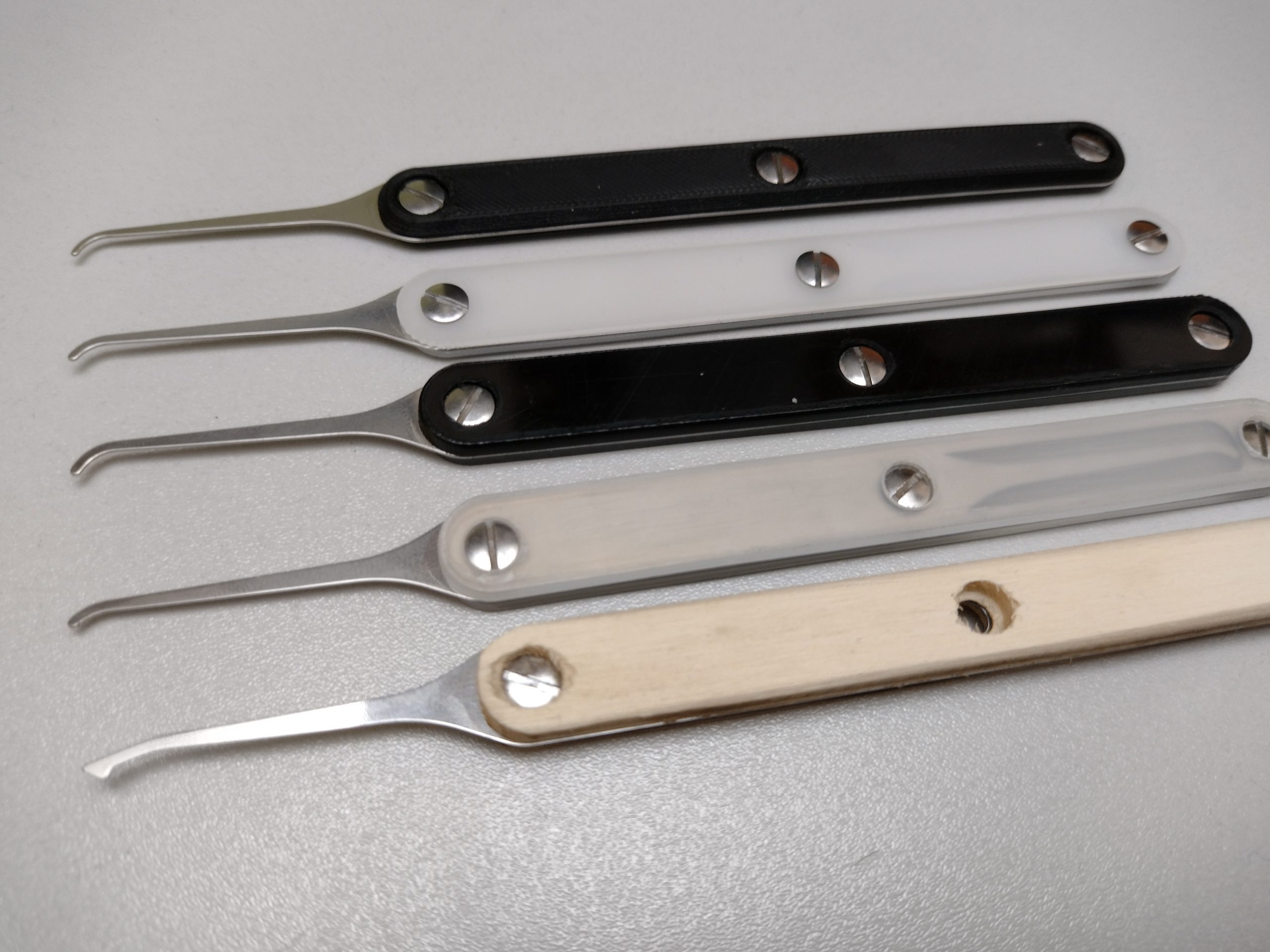
    Moki pickcase with a Explorer Set lockpicks and 3D printed PETG handles Bicycle inner tube lockpicking pouch The Moki set contains three hook sets; small, medium, and deep hook of pointy, flat and round hooks similar style to the Sparrows SSDeV and Law Lock Tools Tipene set. All the lockpick shapes work very well. There is often debate on which is best, but we are open to all lockpick shapes, each has their function.

    While we don’t expect to break these lockpicks, it’s an interesting design choice to have a replacement tip in the handle. All lockpicks came heavily polished, more so than any commercial lockpick we have seen.

    The set of flat hooks and a triple peak rake. (Don’t look too closely at the reflections).The lockpicks are longer and wider than standard lockpicks, think Law Lock Tools Pro, or Sparrows Sandman. Due to the size, the picks are quite flexible and are thus heavily improved with handles. Moki sells 3D printed handles from PETG, and has sold thick metal handles in the past. But it wouldn’t take much to make your own.

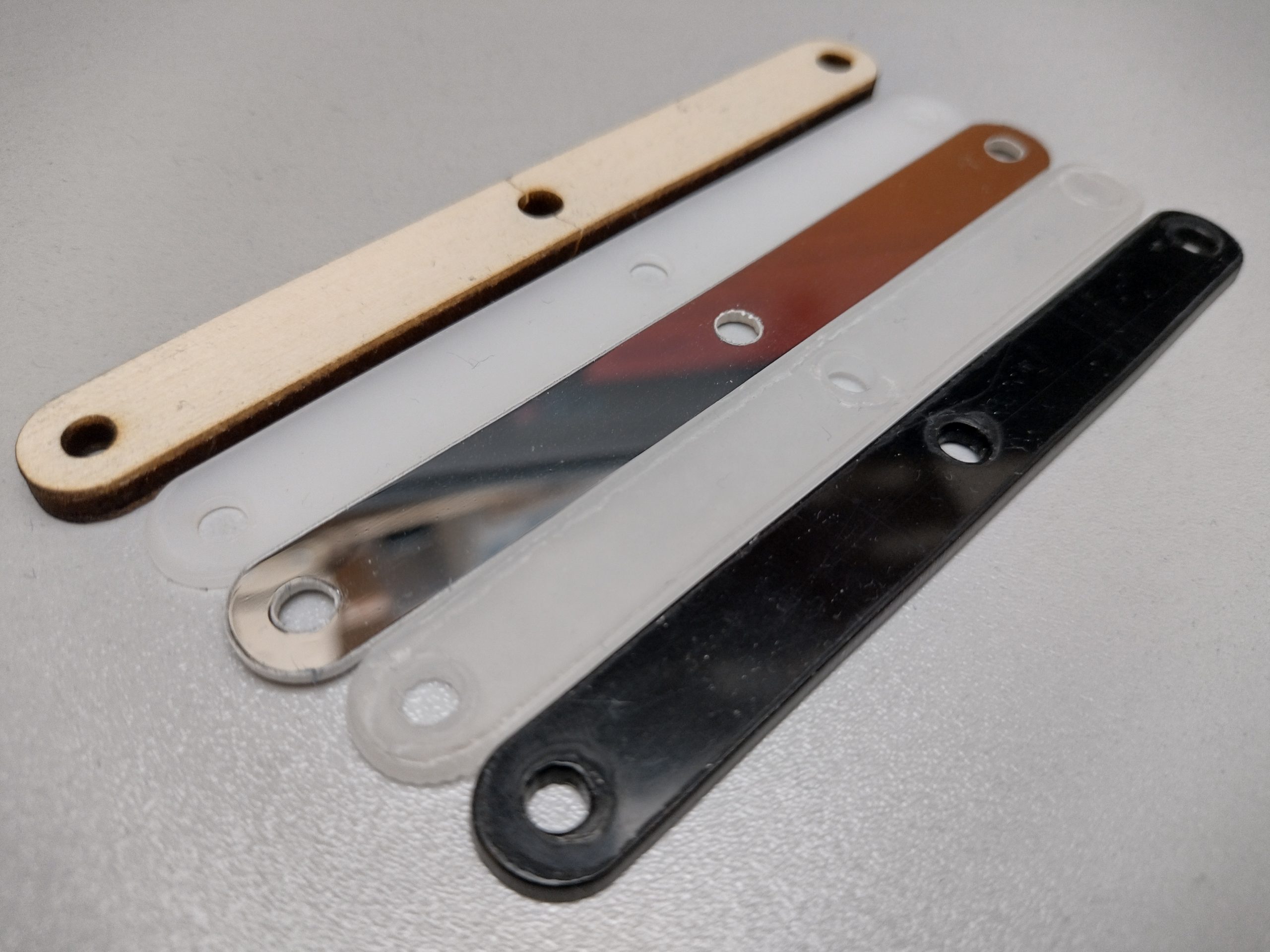
    Experimenting a bit with the size and shape shows 2mm at each side works best. The screws in the set require countersunk holes, and are a bit fiddly to put together.

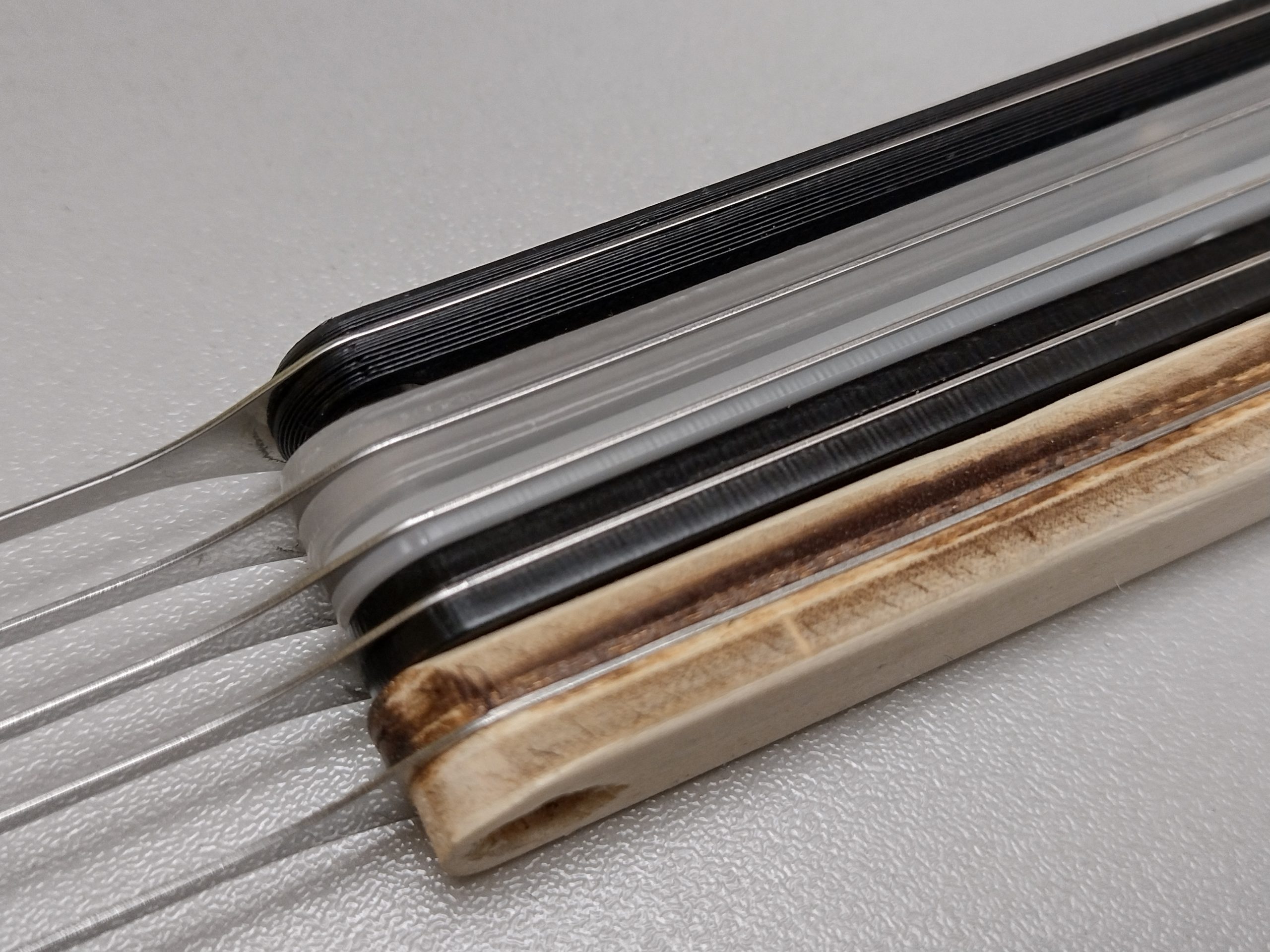
    Moki PETG, POM 2mm natural, POM 2mm BLK, POM 1mm natural, 4mm plywood.It is quite interesting working with these different handle materials. The 4mm thick wood is superb in feedback, but is thicker than any usual lockpick.

    All plastic handles are an improvement over the handleless lockpicks, but none have the same feedback as glued/welded metal handles. The search for the best handle continues…

    Closeup of the handle thickness.The sky is the limit, except for the flex in wood.

    Источник...

  4. #124
    Я робот. Собираю для Вас информацию из интернета
    Регистрация
    18.04.2011
    Сообщений
    90,662

    По умолчанию 0

    Space heater modification for affordable winter days
    This post is a bit of unusual content for this blog, but I believe it to be worth sharing. In summary, I’ve modified a 1500 W space heater to output 400 W heat continuous. This lets me heat up just my computer corner, and subsequently save on my energy bill. The winter is cold. While […]
    -------------------------------------
    This post is a bit of unusual content for this blog, but I believe it to be worth sharing.
    In summary, I’ve modified a 1500 W space heater to output 400 W heat continuous. This lets me heat up just my computer corner, and subsequently save on my energy bill.

    The winter is cold. While not unusual, this year’s energy prices are going through the roof. (For reference, electricity is about €0.8 per kWh and gas goes for €3 per m^3.) This requires us to be smarter about energy use, or pay the price. It doesn’t help that my house isn’t very energy efficient. Luckily, I wasn’t home during the coldest weeks of December. Annoyingly, I’ve paid about €50 in heating for the single day I used my central heating. While I can afford it, I’d rather spend it on locks.

    One solution to save on the energy bill is to use a localized heating over central heating. The newest technology in that regard are infrared (IR) panels. They radiate infrared light, which is absorbed by surfaces. This is believed to be more energy efficient than heating the air. The panels are usually mounted to the wall. But I’ve also seen then hanging from the ceiling, or as large format placemats under a computer keyboard. I couldn’t find one that fit my needs, so I modified a fairly useless space heater instead.

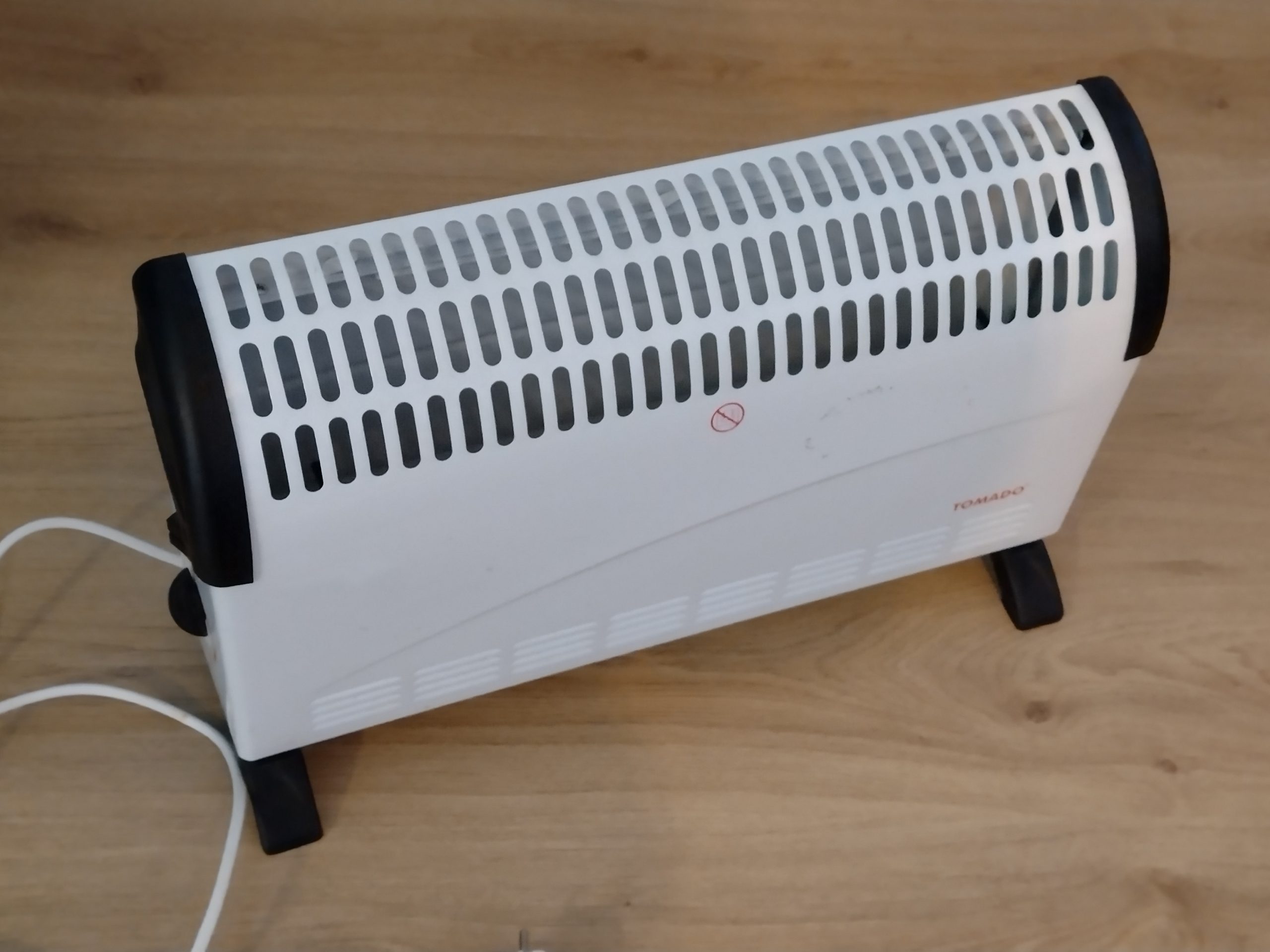
    Useless, wouldn’t usually be my way of describing these devices. Space heaters work as designed, converting electrical energy into heat. I’ve bought a 2* 750 W version some years ago, but have not used it much. It heats up quickly, and shuts off as it reached it maximum temperature. Heat for 10 seconds, cold for 30. This hysteresis is quite annoying to me. Therefore, I chose to wire the two 750 W elements in series, reducing the power output to approximately 400 W. This appears to be enough to make my workstation habitable. (Given, I’m dressed for the weather as well.)

    The difference is, the heater will get less hot, and the temperature is more stable as the tipping point of the thermostat is rarely reached. You might even forget it is even there. (Please don’t, as it’s still a fire risk.) I’m using the heater for about 5h a day on normal winter days, and have not used my central heating for a month.

    While the modification isn’t difficult for the average maker, I rather share the complete story and make it more accessible. Do take care, though, as electricity is largely unforgiving, and the dangers are easy to underestimate.

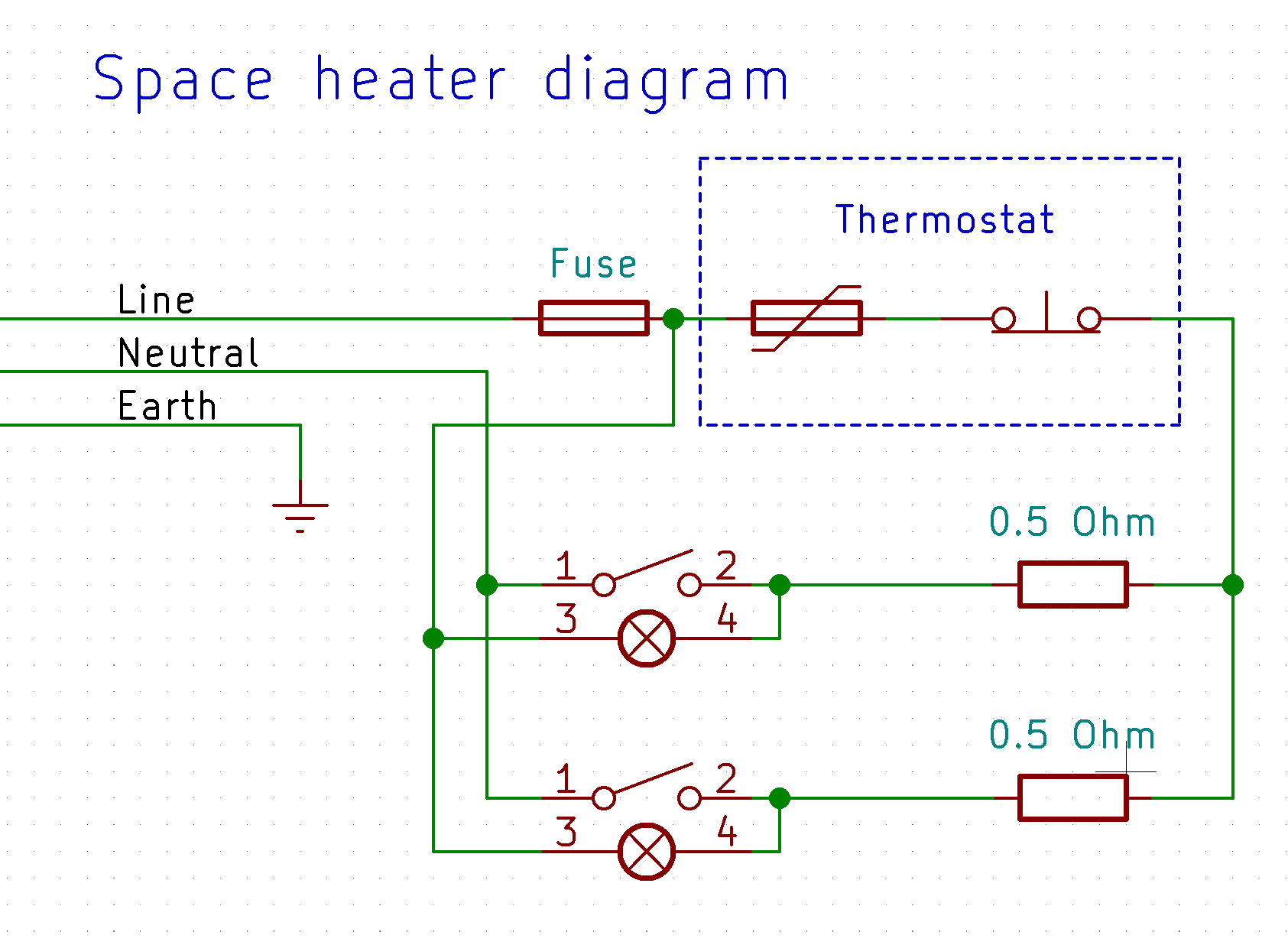
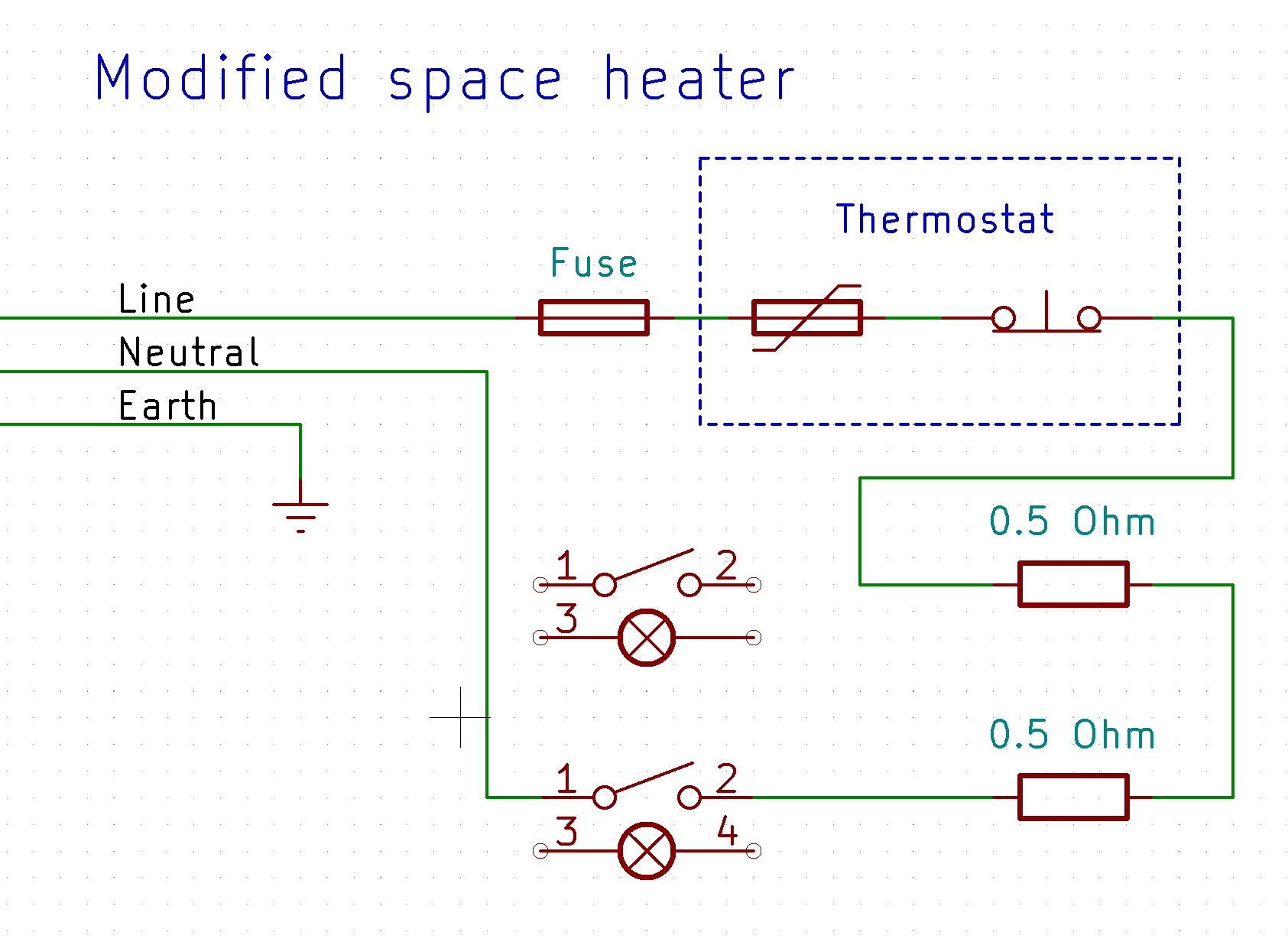
    In the figure below, there are simplified two diagrams which represent the original and the modification. In simple terms, electricity flows through a heating element to create heat. As continuous heat can burn out the element, they added a thermostat to regulate the temperature. This is quite a dumb device and consists of a bi-stable thermal switch. The heat builds up, until it trips the temperature dependent switch. The switch is turned on again when the temperature cools down below the set point. The overshoot and undershoot is called the hysteresis.

    Switches with a build in lights are added for usability, and the earth is the safety feature to complete the build. It should be connected to the metal case, as a short from line or neutral to ground will trip the ground fault circuit interrupter (GFCI or RCD), or at the worst case, cause your circuit breaker(s) to pop.

    In the original configuration, the heater can be used as 750 W or 1500 W heater. Making it into something arguably more useful isn’t hard. I’ve simply wired both heating elements in series, which quadruples the resistance, and sets the power output to 375 W.

    The modifications are fairly straight forward, as clip on connectors are used to simplify manufacturing. Swapping the wires is usually enough to make it work. As you will see, I’ve not wired the optional switch light, and reused the cable for another connection.

    Please take care of the necessary safety precautions, including unplugging it from the wall. Furthermore, don’t forget to wire the earth, (thermal) fuse, and thermostat correctly as they are life-saving features.

    Let’s summarize. I’ve outlined a simple modification to a space heater to output 400 W heat continuously. This is enough for me to heat my work space in moderate Dutch winter weather. For the next winter, I’m very likely to invent in a heated work table surface, and a heated office chair, instead.

    Hopefully this inspired you to modify your devices, and save some money on the electricity bill. I’d rather see you spend the money on other necessities, and if possible your lockpicking hobby.


    Источник...

  5. #125
    Я робот. Собираю для Вас информацию из интернета
    Регистрация
    18.04.2011
    Сообщений
    90,662

    По умолчанию 0

    25/25 6-pin cylinder
    I got some new (old) cylinders. One was a small 25/25 cylinder with the key stuck in it. When I disassembled it, I was amazed to see six pins instead of the maybe three I was expecting. The housing pins were tiny and also very short, except for one tall one, that has a double […]
    -------------------------------------
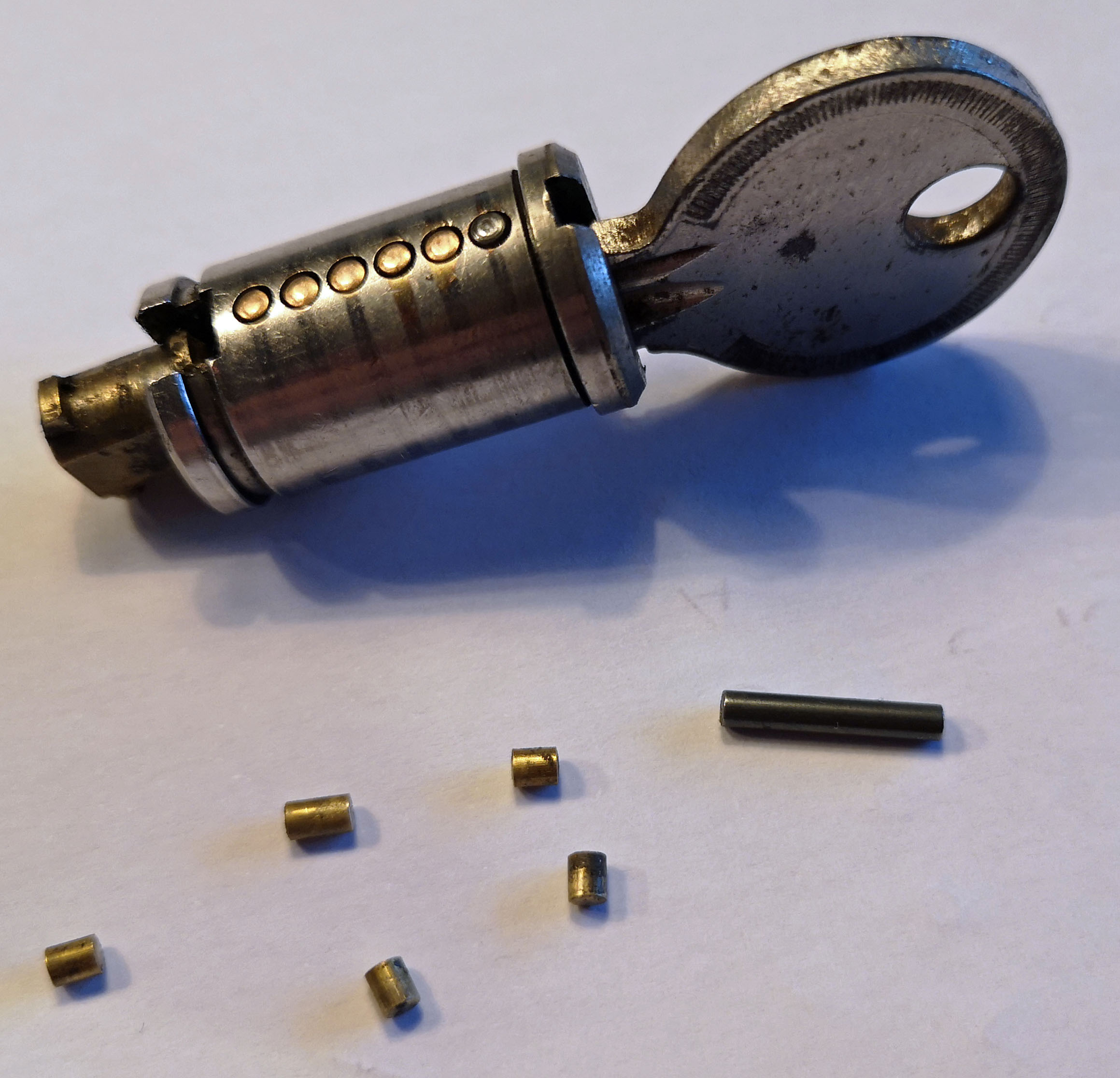
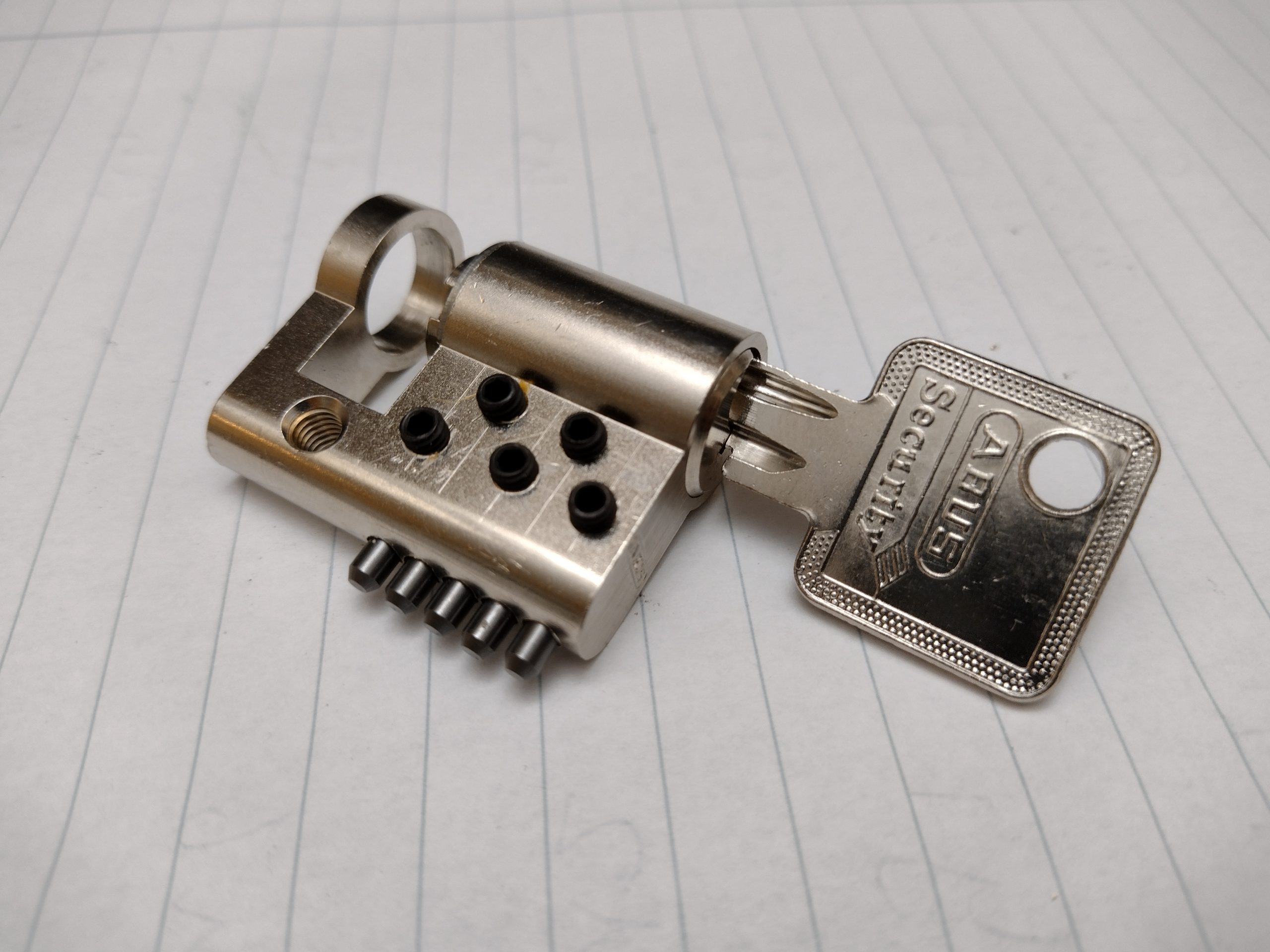
    I got some new (old) cylinders. One was a small 25/25 cylinder with the key stuck in it. When I disassembled it, I was amazed to see six pins instead of the maybe three I was expecting.

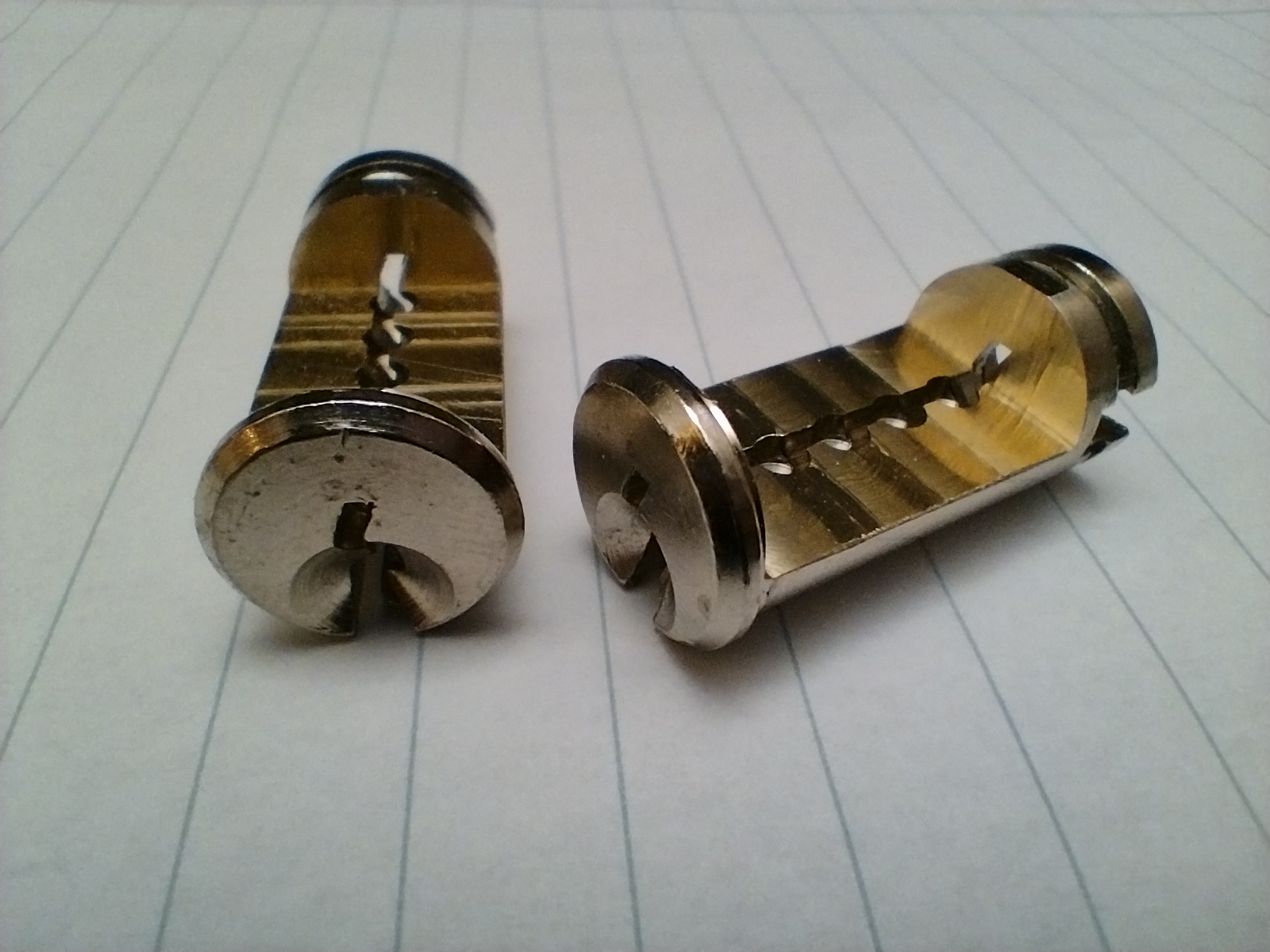
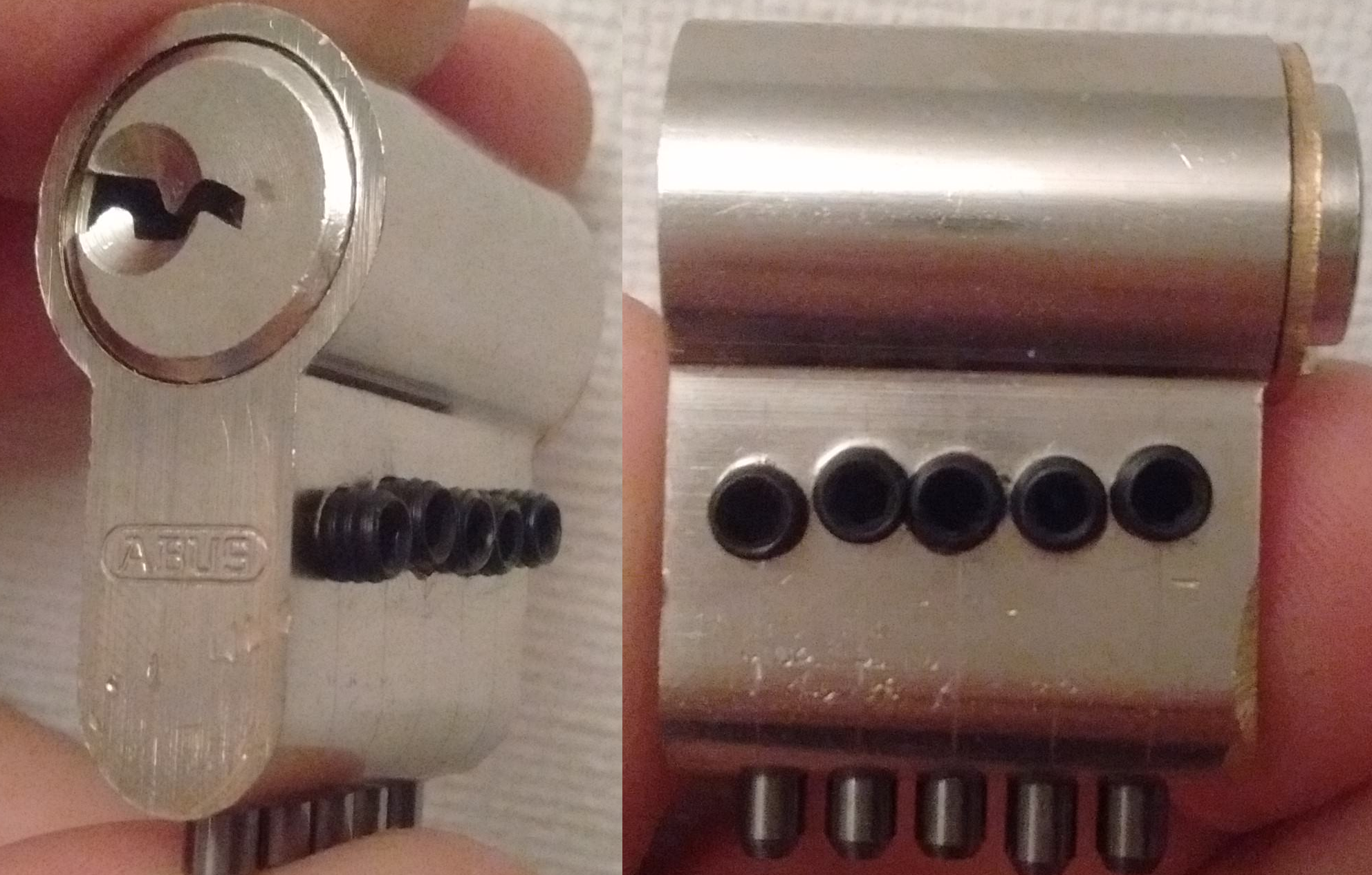
    The housing pins were tiny and also very short, except for one tall one, that has a double function as an anti-drill pin. The corresponding key pin is also made of hardened steel. There is one regular housing pin that is longer than the others. You would expect the key to have one cut that is deeper than the others, but that is not the case.

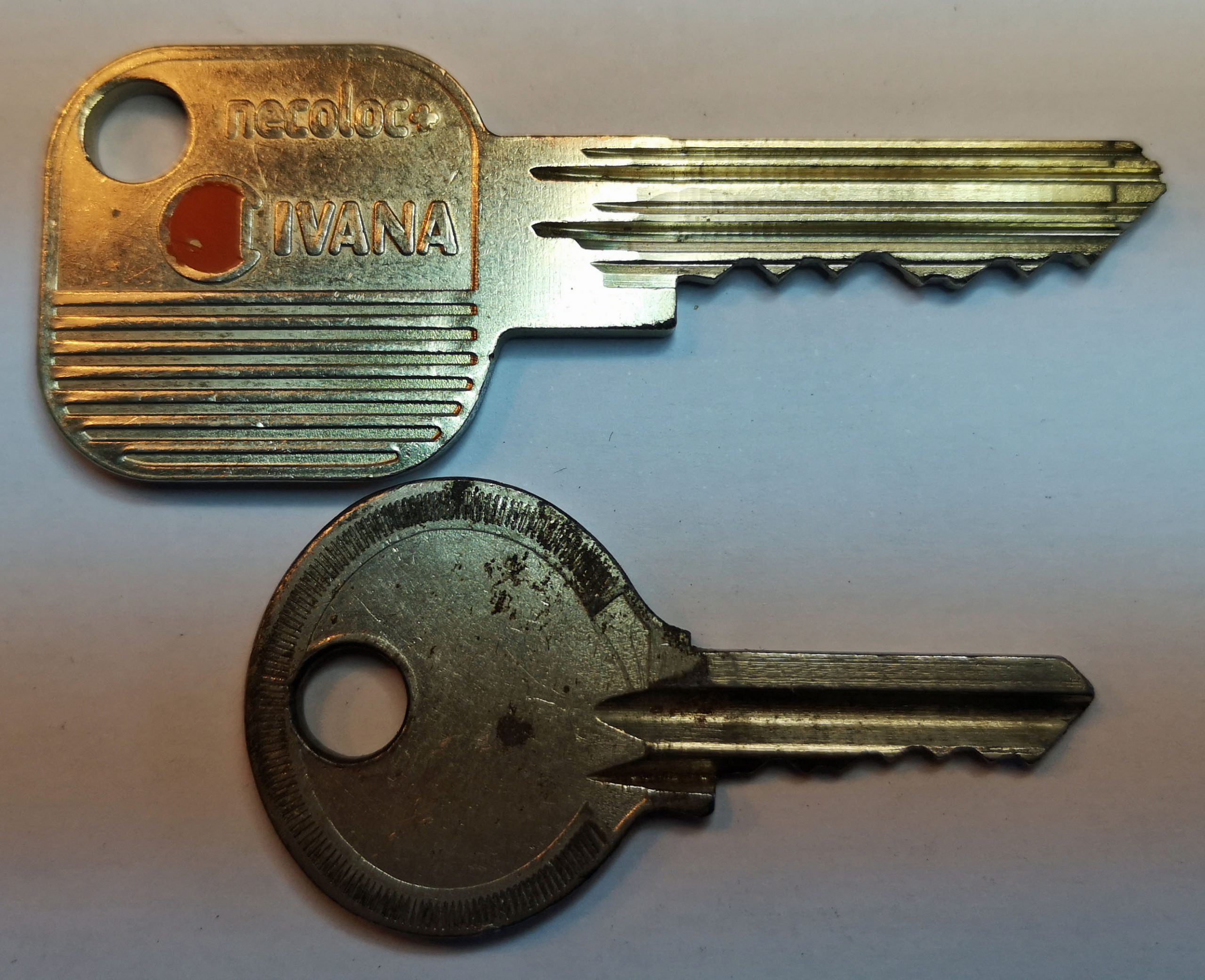
    After reassembling, the cylinder worked fine again. Here’s a comparison of the key to this cylinder with one of a regular 6-pin cylinder:

    Photos CCBY4.0 Walter @ Toool Blackbag


    Источник...
  6. #126
    Я робот. Собираю для Вас информацию из интернета
    Регистрация
    18.04.2011
    Сообщений
    90,662

    По умолчанию 0

    Gorgeous cutaway photos from Qikom
    Qikom, lockpicker from France, created gorgeous locks cutaways and shared the images online. I believe cutaways to be very useful for understanding intricate lock designs. Where a good cutaway allows us to observe the elements of the lock while still functioning as normal. Qikom is an associate professor in mathematics and computer science. Who got […]
    -------------------------------------
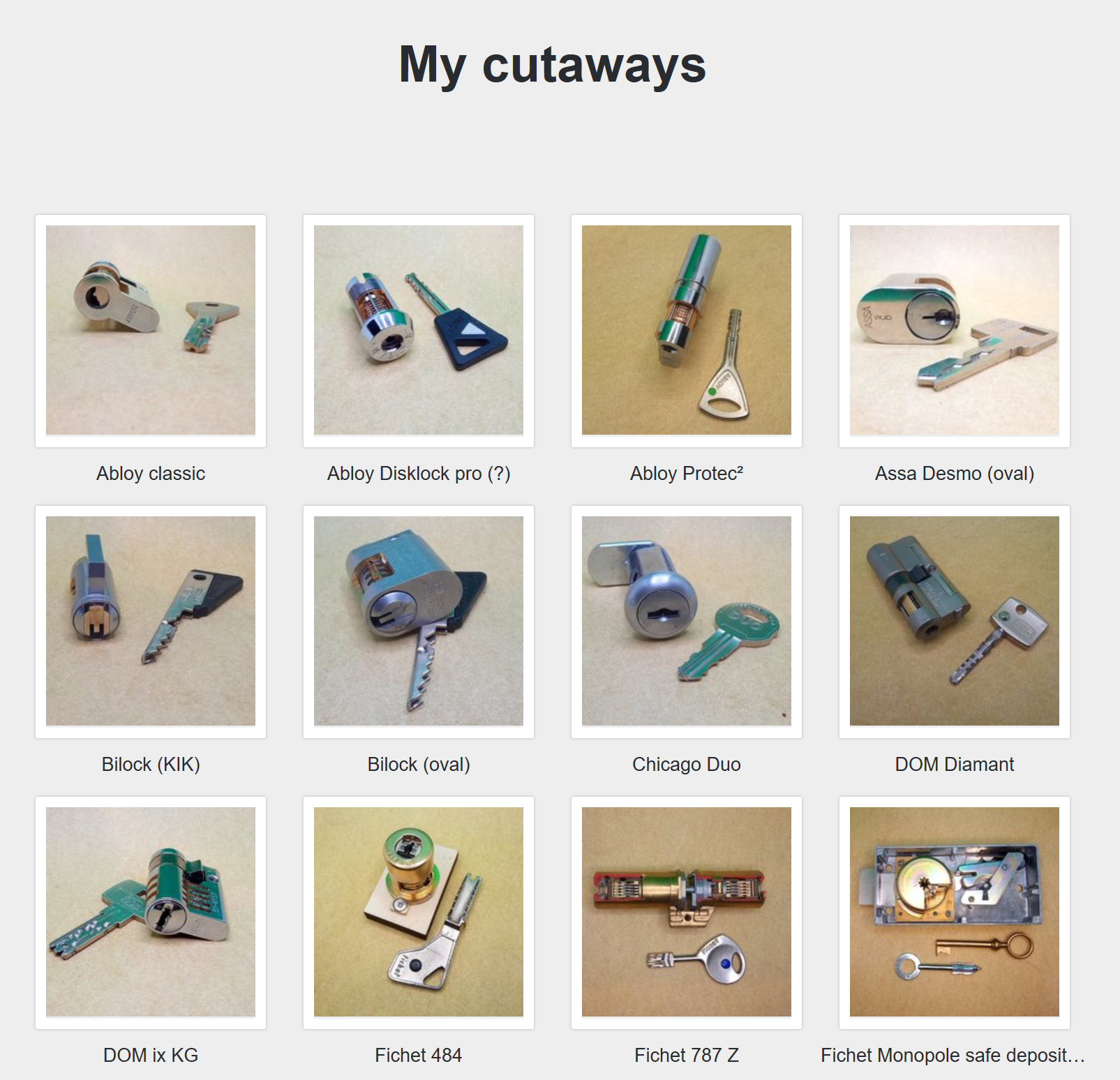
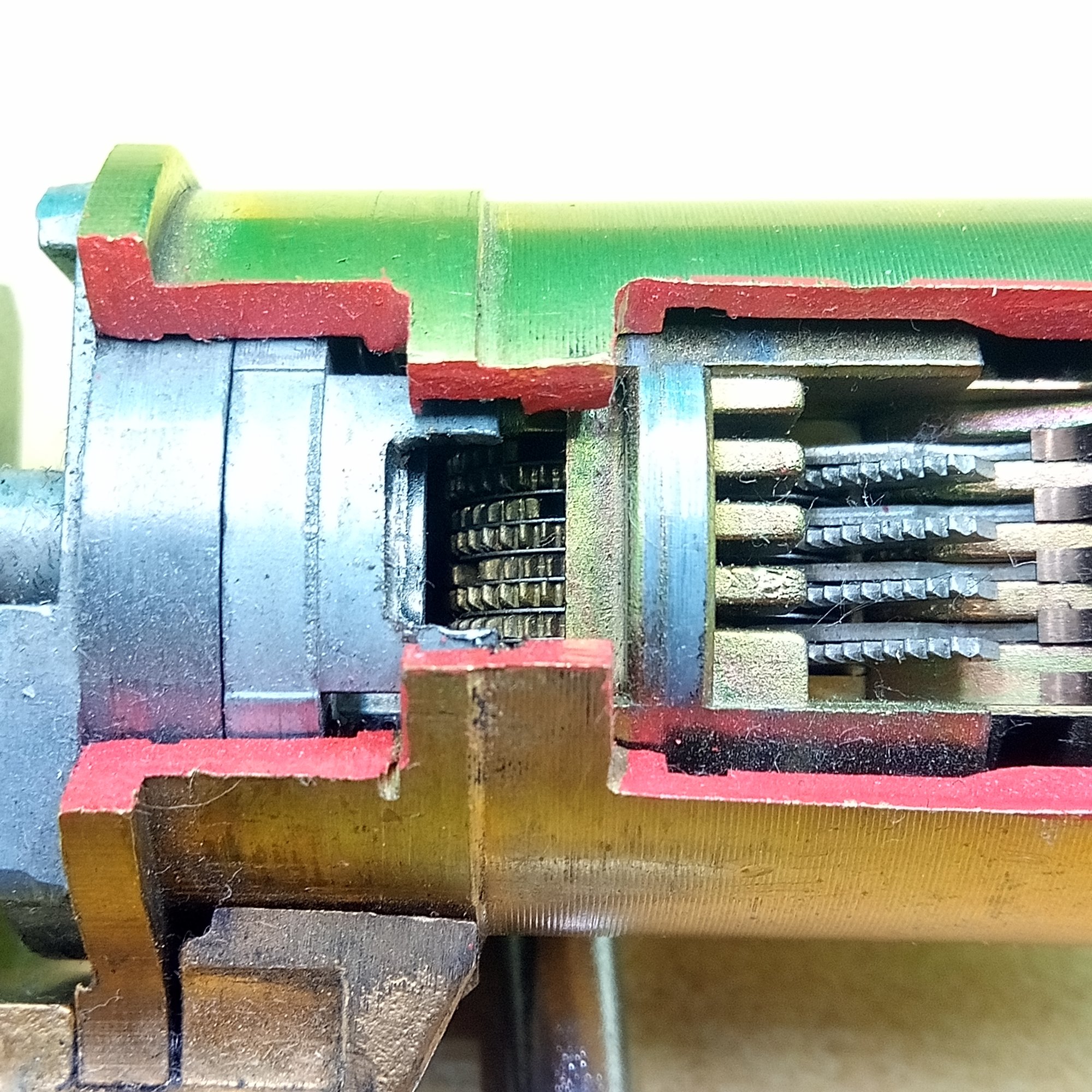
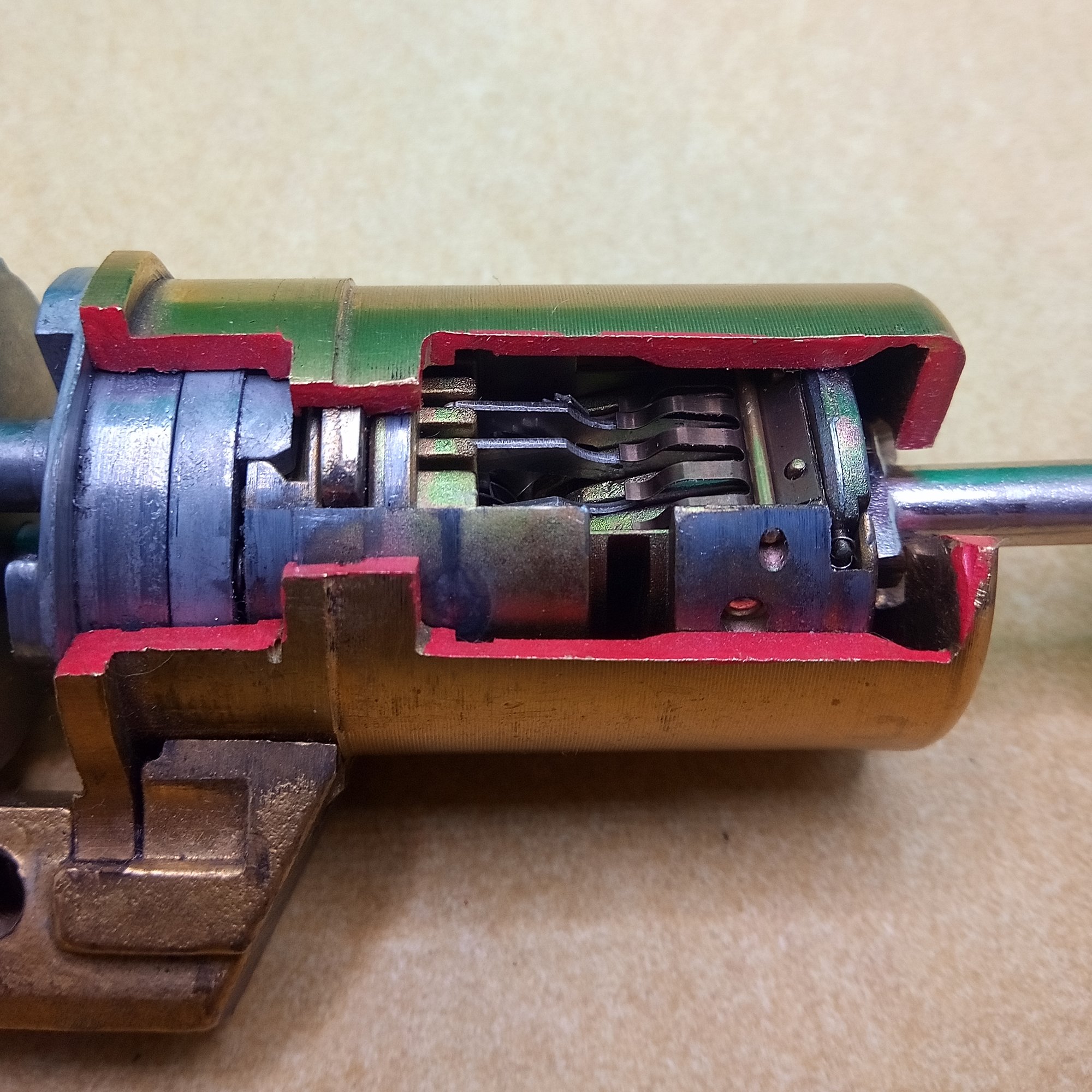
    Qikom, lockpicker from France, created gorgeous locks cutaways and shared the images online. I believe cutaways to be very useful for understanding intricate lock designs. Where a good cutaway allows us to observe the elements of the lock while still functioning as normal.

    Qikom is an associate professor in mathematics and computer science. Who got interesting in lock picking a little before 2000 after reading R. Feynman (the physicist) autobiography. Like many pickers, he is interested in the “puzzle” aspect of locks, and making a working cutaway is another kind of puzzle. Furthermore, he added, to spend more time making cutaways than picking locks!

    You can find Qikom’s complete cutaway collection at: http://qikom.free.fr/. The pictures are licensed under CC BY-NC-SA 4.0.

    Screenshot from Qikom’s website as of January 2023.
    http://qikom.free.fr/ CC BY-NC-SA 4.0
    I’ve asked Qikom for tips on making great cutaways. He says about his cutaway strategy:

    “I don’t have a well-defined strategy when planning a new cutaway. I know people start by making a 3D model of the lock to plan the cuts, but I don’t bother. In many of the locks I’ve cut, the cutting plan isn’t all that complex, and I try to set things up, so I can adjust things incrementally. One important thing I do, is to never cut a lock on the same day that I come up with the cutting plan, to get some time to think about it.

    I usually try to have at least 2 identical locks to cut, and I consider one of them to be expendable. When everything works, I can sell / trade the second one, and if not, I get to correct any mistake on the second try. A couple of times, I badly failed twice, but could salvage enough parts to get the third attempt.
    But there are still some locks waiting because I wouldn’t want to mess them up.

    I’ve made several embarrassing goofs along the way, but none of them would have been prevented by that! The graveyard includes several Robur, Rosengrens, Abloy, Fontaine, and Fichet… I’ve only attempted cutting an F3D when I got a couple of broken ones. This was a good idea, because the first 3 attempts were failures.
    But there are still some locks waiting because I wouldn’t want to mess them up. Including the Emhart.”

    Qikom often sells his cutaways online to partially fund the hobby. If you have interesting in these locks, or have a few spares that would work as a cutaway, consider contacting Qikom at qikom@free.fr


    Источник...

  7. #127
    Я робот. Собираю для Вас информацию из интернета
    Регистрация
    18.04.2011
    Сообщений
    90,662

    По умолчанию 0

    -3 seconds, Impressioning tool
    Impressioning competition are all about opening the most locks in the least amount of time. Quite often, every second counts. As we have been playing the game for a couple of decades, it wouldn’t surprise you that the locks become harder, the times have been getting faster, and the openings more consistent. Most of the […]
    -------------------------------------
    Impressioning competition are all about opening the most locks in the least amount of time. Quite often, every second counts. As we have been playing the game for a couple of decades, it wouldn’t surprise you that the locks become harder, the times have been getting faster, and the openings more consistent.

    Most of the players have reinvented their setup multiple times. I’ve seen 3D printed attributes for key marking, and often see the newest inventions. To keep it fair, however, you require sharing the idea before the competition, as to prevent an unfair advantage.

    My first improvements have been to watch the masters work, and to copy what they do. Whereas my last improvements are much more subtle. I’ve, for example, reduced the distance between the lock, lamp, and table. And improved my handling process to save seconds here and there. I don’t believe we are done, either, as I’m trying to find a better way of placing my file when I’m not using it.

    The tool idea of this blog isn’t a new one. It has, in fact, existed over a decade in use. We have blogged about it back then: When every second counts: formula 1 impressioning tool. It’s however, still relevant.

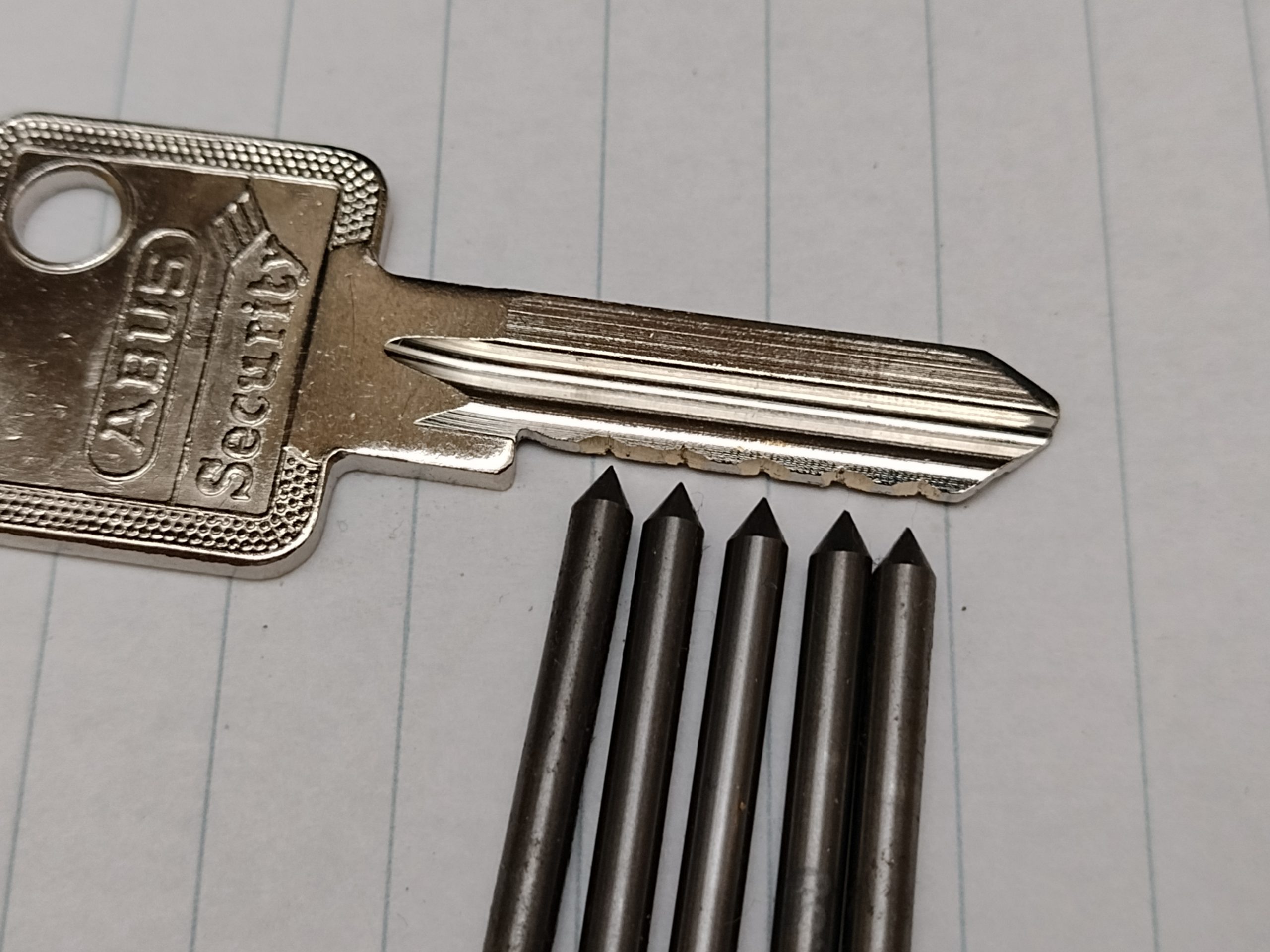
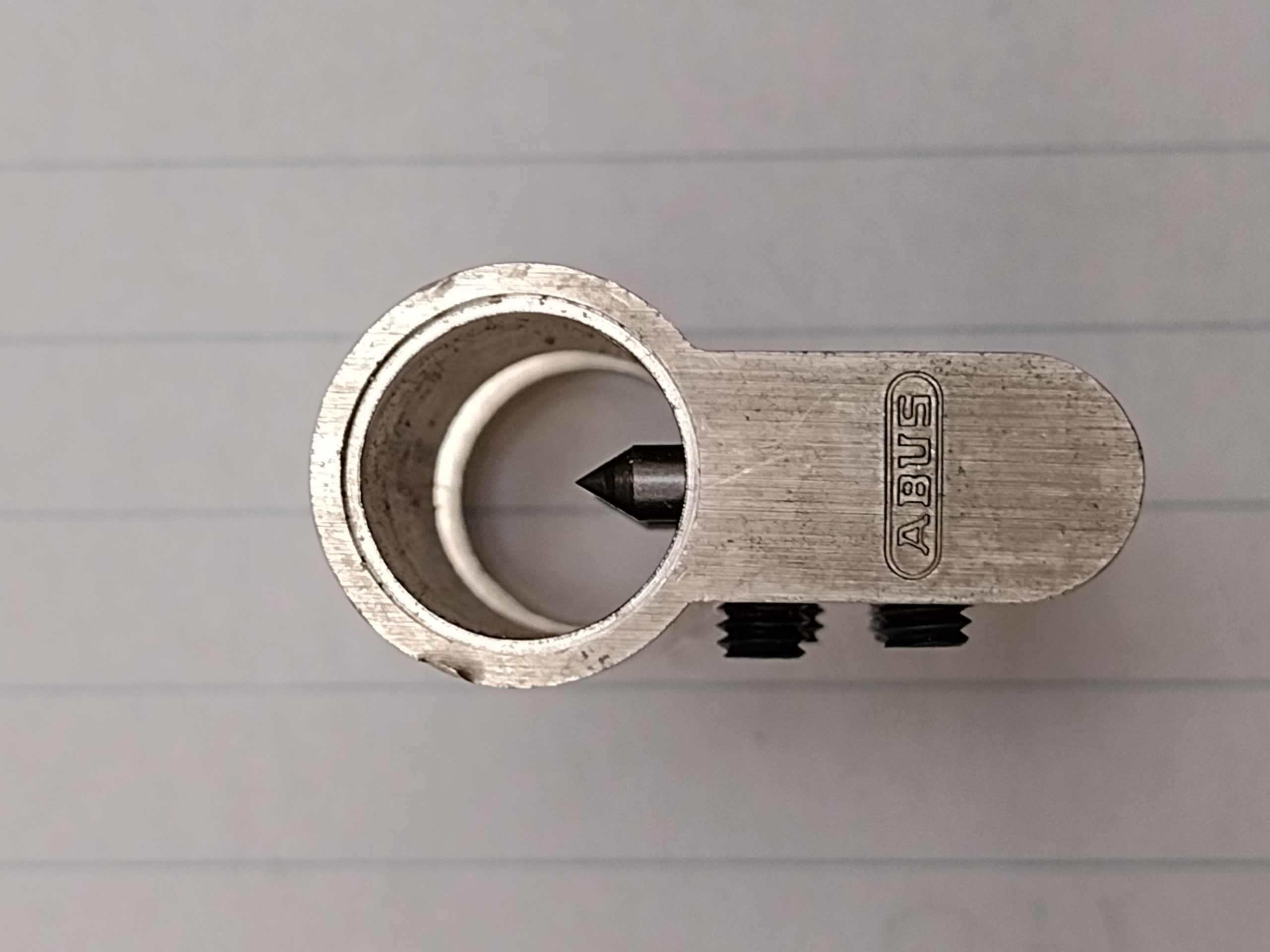
    What is it? It’s a modified cylinder where the pins are replaced by sharp carbide rods. By pressing a key into the pins, the pin positions are marked on the key. Which, in turn, allows a key of all depths one to be made. The process takes a second, instead of preparing a blank with sand paper, a filling jig, or marking the positions one by one with a scribe. To be completely honest, it might not save me too much time, I just like it as a convenience tool.

    I’ve built my first version after I impressioned my first lock, early 2018. It’s not the prettiest, but it worked for over a thousand keys. At that time, I impressioned a lock a day for every day in January. At UKlocksport forum, this is known as the January challenge. I’ve got some good stories about it, including a friend that just never stopped and has a streak in the thousands. (Please, Toni, remind me to write a blog about it.)

    The key below shows the principle of operation. The scribe replacement tips scratch the surface of the key. For this one, the scratches are deeper than I like, but it shows the idea. You want a mark, but not too deep.

    The current version, as shown in the pictures below, are from a small series production I’ve made for LockCon 2022. It was well received, and I’ve helped many of my friends with one of them. Making them commercially is very much not worth it. But if you want one, or the bits to make one, I might have some.

    Please remember, even with all the impressioning gadgets, it’s not going to make a difference if you didn’t put in the hours. Consistence is key.

    Pictures are copyright CCBY4.0 Jan-Willem Markus @ Blackbag.


    Источник...

  8. #128
    Я робот. Собираю для Вас информацию из интернета
    Регистрация
    18.04.2011
    Сообщений
    90,662

    По умолчанию 0

    An even shorter cylinder
    This weekend at the Wendt lockpicking event, I spoke with the gentle people from BESA specialty lock shop in Belgium. They brought with them a very intriguing cylinder. It’s a KESO dimple cylinder, but what makes it special is its size: it appears to be a 15/15 (total size 3 centimeters). The key is a […]
    -------------------------------------
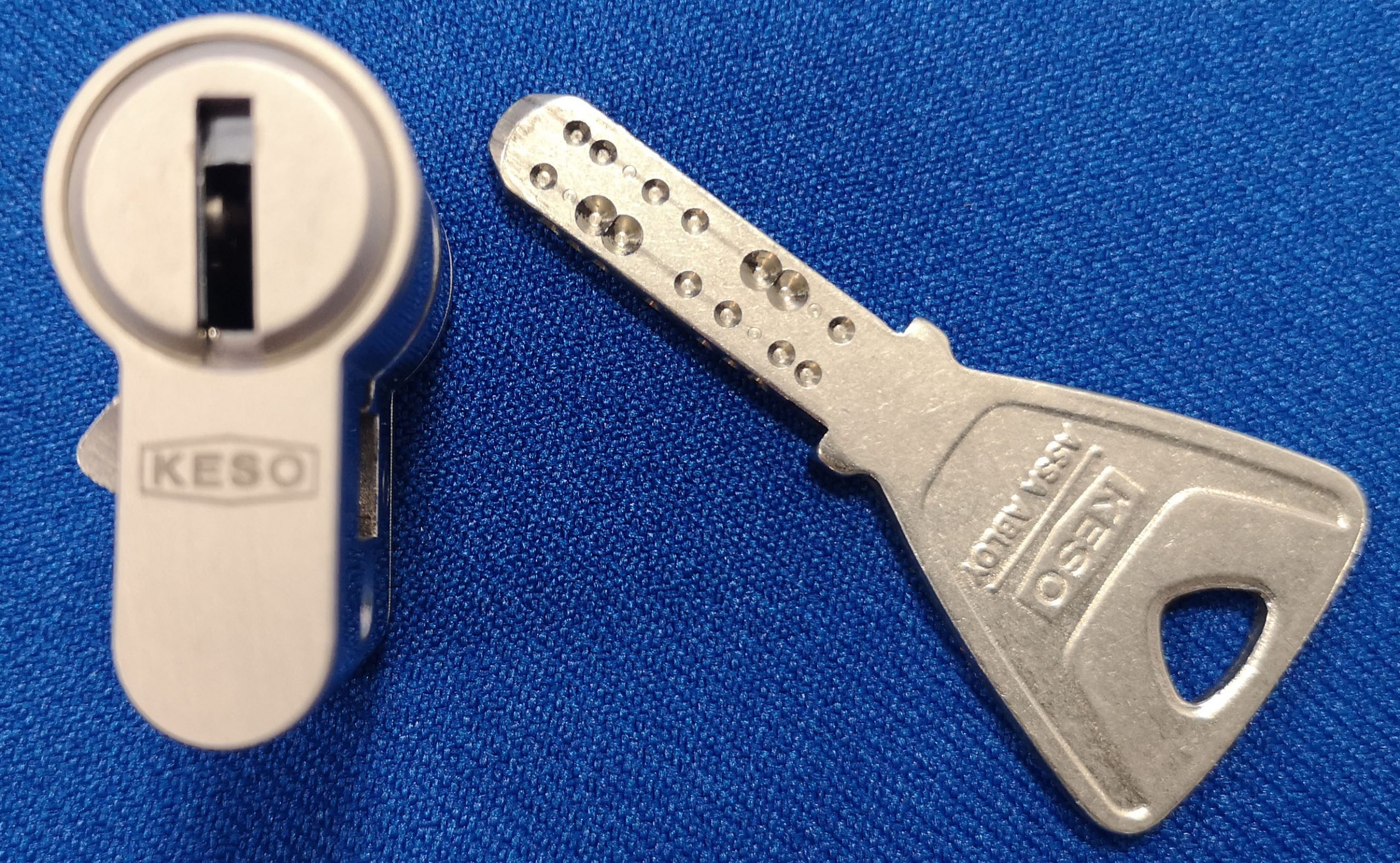
    This weekend at the Wendt lockpicking event, I spoke with the gentle people from BESA specialty lock shop in Belgium. They brought with them a very intriguing cylinder. It’s a KESO dimple cylinder, but what makes it special is its size: it appears to be a 15/15 (total size 3 centimeters).

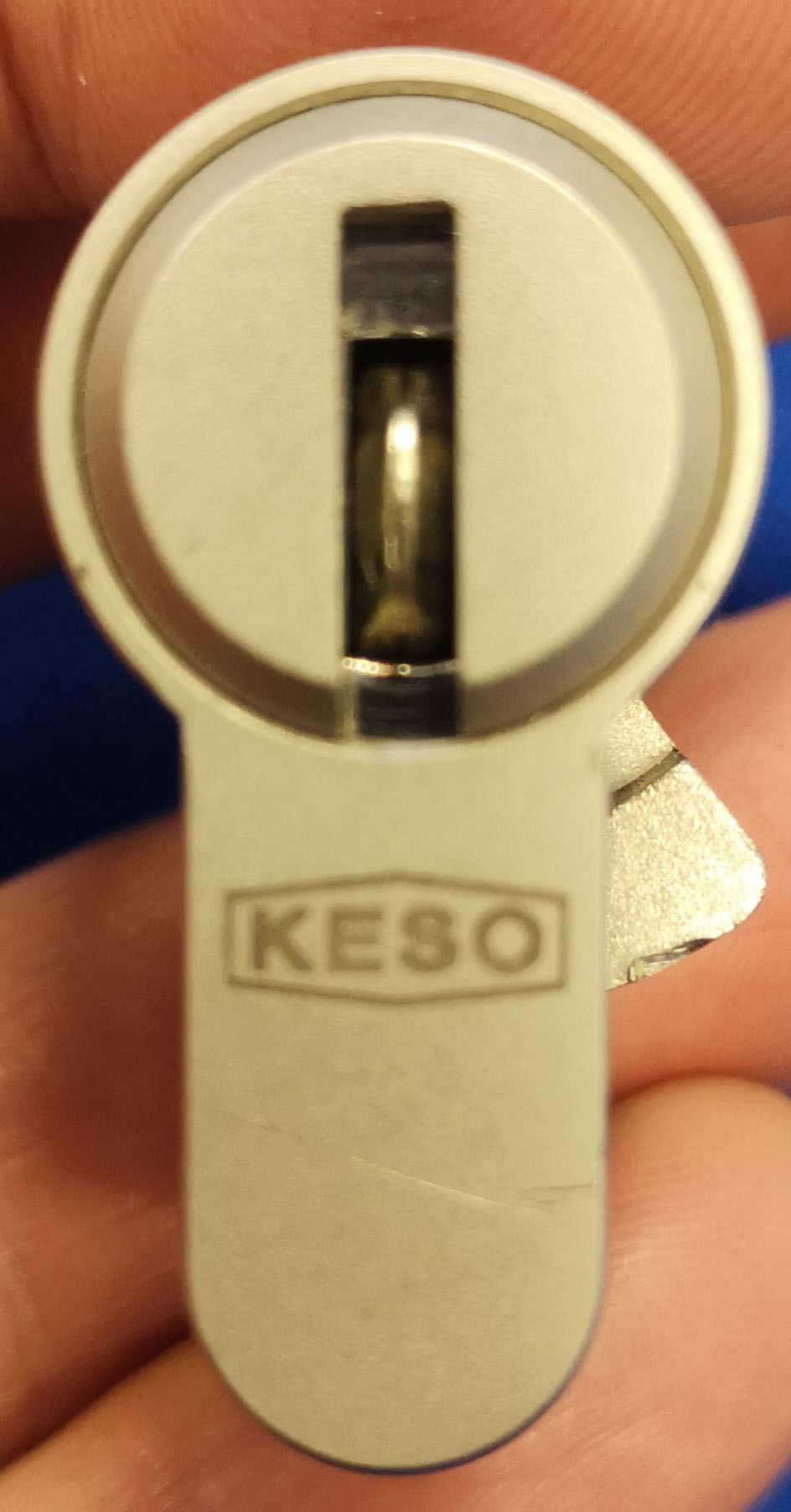
    The key is a normal sized key. It goes all the way through the cylinder. That means that the bitting interacts with pins on both sides of the key, which in turn means that the key must be symmetric.

    Indeed it is. When the key is inserted, you can see it while looking at the other side.

    By looking at the key, there could be as many as 30 pins in there. Not bad for a 15/15 cylinder, especially when you compare it to the 20/20 cylinder that had just one pin I wrote about earlier (see https://blackbag.toool.nl/?p=3882)!

    If you have one of these to spare or know where to get them, let me know.

    Walter.


    Источник...

  9. #129
    Я робот. Собираю для Вас информацию из интернета
    Регистрация
    18.04.2011
    Сообщений
    90,662

    По умолчанию 0

    Wendt lockpicking championship
    On the 25th and 26th of March, Wendt organized a lockpicking championship in collaboration with SSDeV and ACL. Who is Wendt? They are creators and suppliers of locksmithing and lockpicking tools. They have a yearly house-fair to demonstrate the newest in locksmithing tools, and host competitions. This year’s event was specifically for the lockpicking community. […]
    -------------------------------------
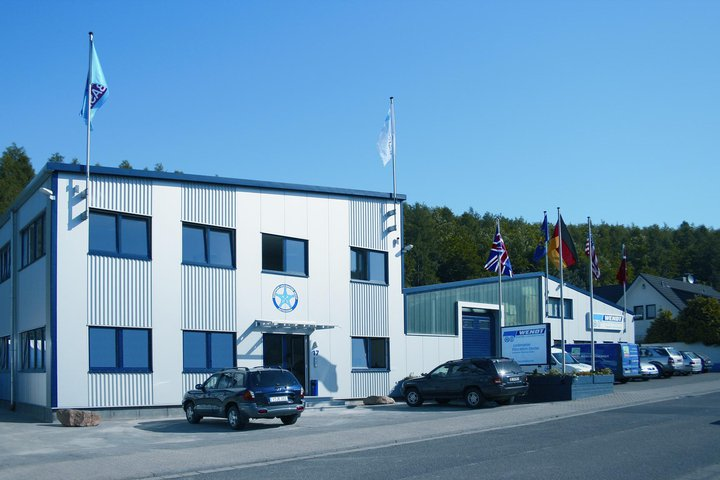
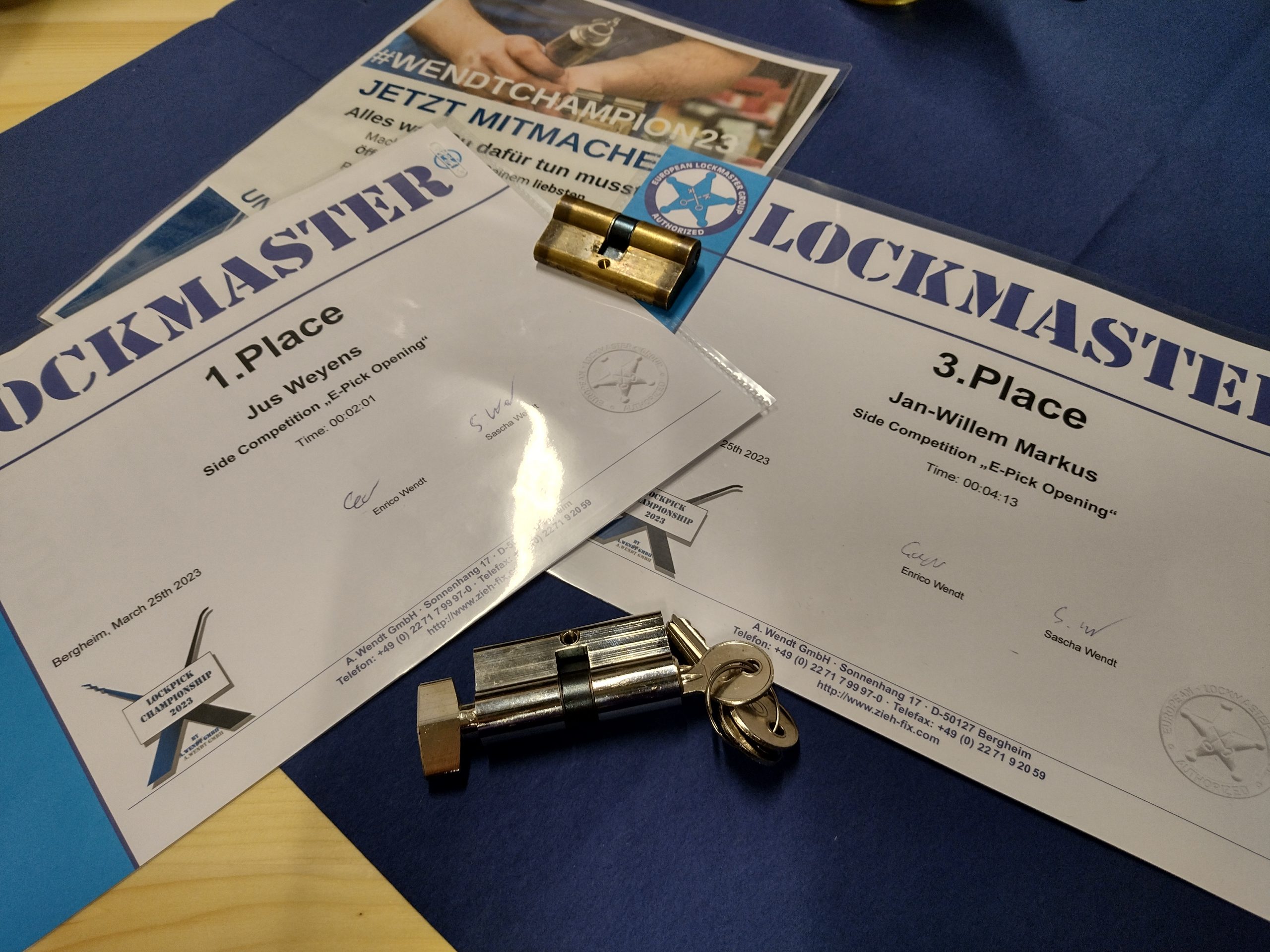
    On the 25th and 26th of March, Wendt organized a lockpicking championship in collaboration with SSDeV and ACL. Who is Wendt? They are creators and suppliers of locksmithing and lockpicking tools. They have a yearly house-fair to demonstrate the newest in locksmithing tools, and host competitions. This year’s event was specifically for the lockpicking community.

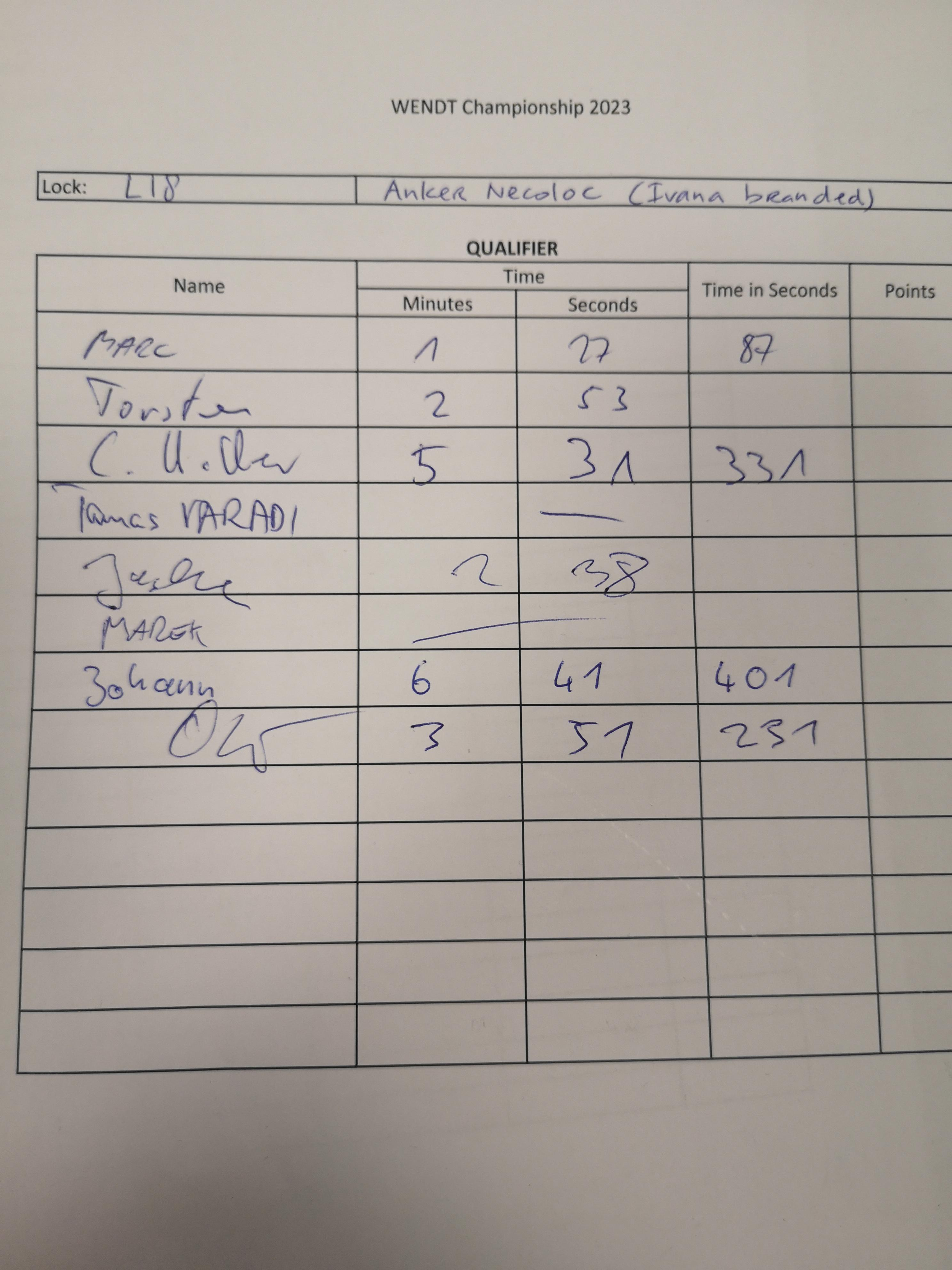
    Wendt HQ in Bergheim, Germany. (Picture copyright Wendt.) The main attraction is the German-style lockpicking competition. Where, in short, every competitor brings them own double euro pin tumbler cylinder. You’ll have to prove you can pick it yourself in five minutes to qualify. For each of the competitors locks, you get fifteen minutes for your picking attempt. Where the final score is decided by the person with the most opens in the least time.

    For this year, a large variety of locks were present. Iseo, M&C, IX Saturn, IX-6, both Abus XP1 and Cisa SP, and Assa twin 2. Some of these, as you can imagine, are not opened often in fifteen minutes. This was felt as a setback by some, while others are encouraged to practice with even harder locks. Not to mention the endurance required to pick locks for over 5h straight.

    Walter and Henri competed were in the competition from Toool. For Henri, it was his second lockpicking event. His video (YouTube) is worth it to watch if you are looking for encouragement to join a similar event. For photo’s of the lockpicking, please see the Facebook page of Wendt.

    I’d like to share a few notes on a constructive discussion on how to run competitions. To some, the competitions at events like LockCon were too easy. People felt it was a competition in who can rake the locks, the fastest. Whereas, this event had rounds with very difficult locks, and few opens. There is a balance to be found is between the two systems. The comments are clear: give us harder locks to pick, but do give locks that are pickable in a reasonable time.

    There was plenty of room to meet other lockpickers at the event, chat with the vendors, and join the side competitions. Han Fey had a very interesting challenge, where you are given a key ring and a box of locks. Where the goal was to match the most keys to the most locks in the least time. The catch is, you only got one chance. If the key didn’t fit, your attempt was over.

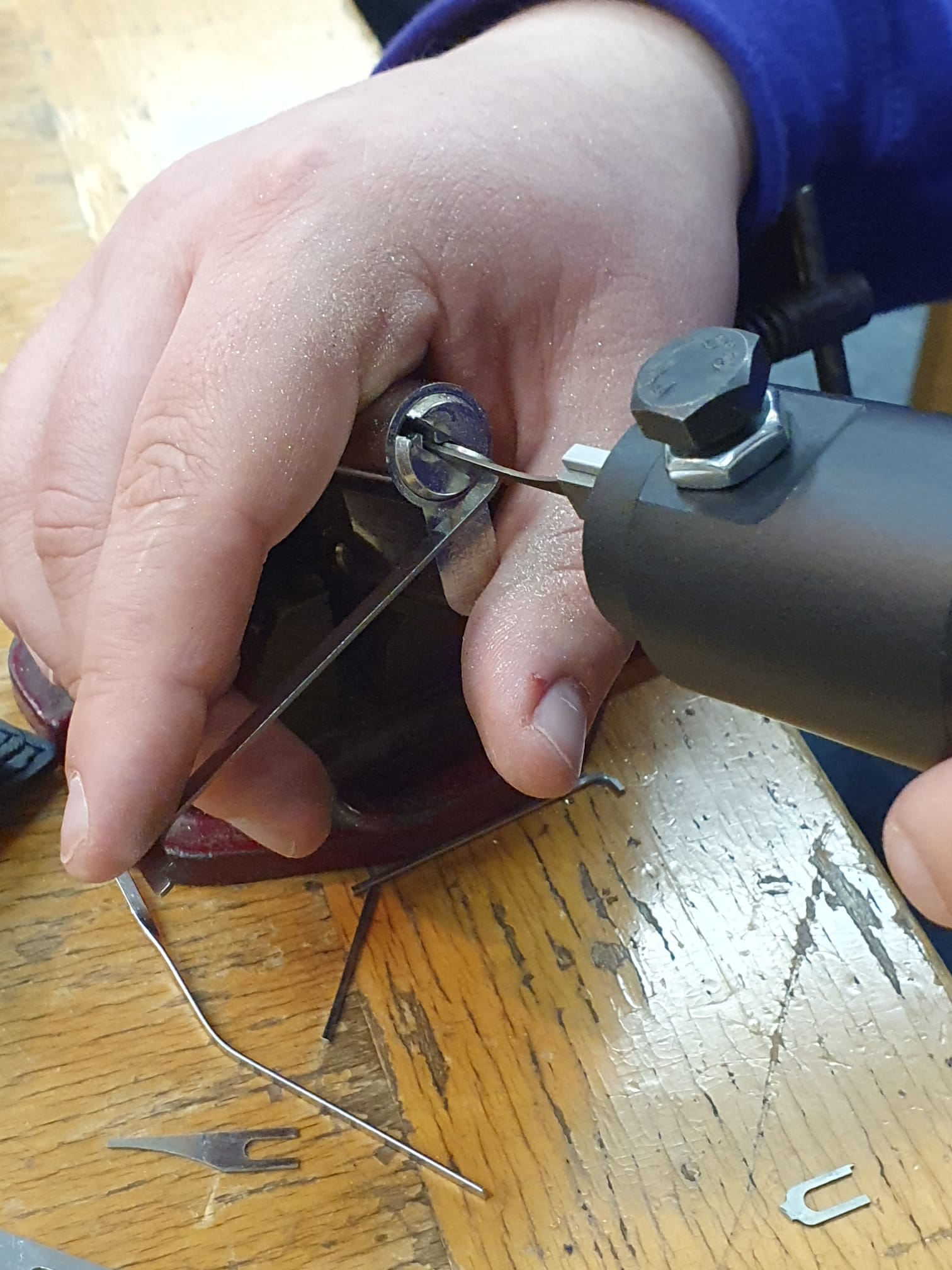
    Just for fun, Jos and I competed in the electropicking competition and got 1st and 3rd place. The real star of the show are, of course, the electropicks Wendt sells. Truly amazing equipment.

    On a side note, we call electropicking non-destructive as the locks remains functional. However, the repeated impact of the pick needle and the pins do create a lot of brass dust, as seen in the picture below.

    To wrap up this post, it was great seeing so many old friends and to make new ones. Time well spent. Thanks, Sasha, and the Wendt team, for organizing this event!


    Источник...

  10. #130
    Я робот. Собираю для Вас информацию из интернета
    Регистрация
    18.04.2011
    Сообщений
    90,662

    По умолчанию 0

    Quantifying the Brinell hardness of keys
    In an effort to quantify the locksport world, I’m taking my measuring tools to locksport in an attempt to learn the details. For example, how much torque is required to pick a lock. With this knowledge, we can build better lockpicks, and teach proper technique. In this blog, I’ve set out to compare the hardness […]
    -------------------------------------
    In an effort to quantify the locksport world, I’m taking my measuring tools to locksport in an attempt to learn the details. For example, how much torque is required to pick a lock. With this knowledge, we can build better lockpicks, and teach proper technique. In this blog, I’ve set out to compare the hardness of key blanks for impressioning.

    As I’m not a machinist, nor do I have access to fancy hardness measuring equipment, I’ve found the cheapest method I could use at home. There are many methods, and many systems, to measure the hardness of metal. One difficulty was to get familiar with the lingo and to find a measurement tool that works for key like metals, thin, soft, etc.

    The most common method of cheap hardness testing is to use Rockwell hardness testing files from measuring hardness of knifes. Usually in the range of C40 to C65 in increments of five. I’ve found similar methods online for testing the hardness of lead with pencils. Where HB hardness pencil will be equivalent to a certain percentage lead in tin. To my knowledge, none such system exists for brass.

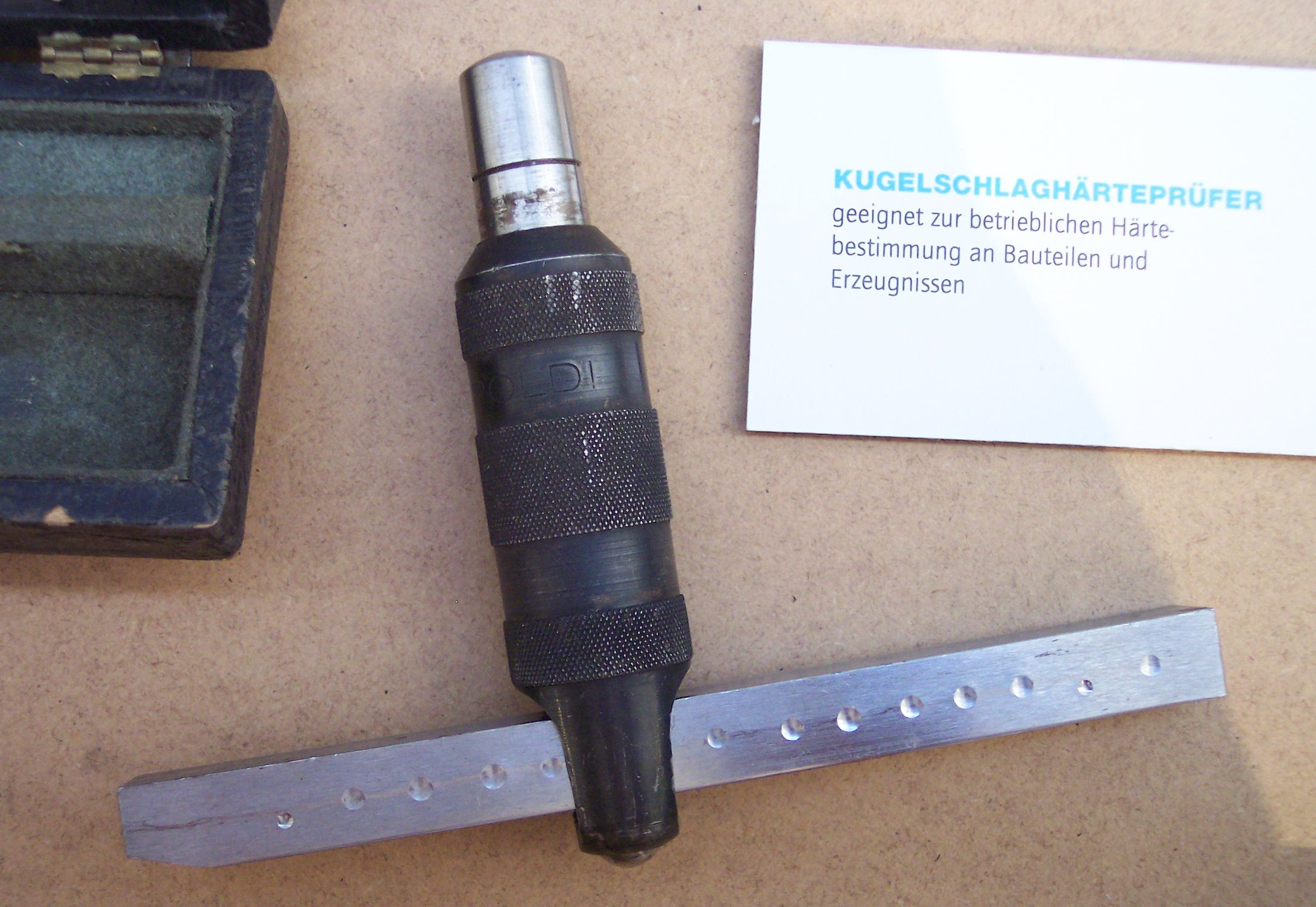
    More expensive methods press a hardened piece of metal with a known force into the sample, and measuring the indentation. While most of these measuring jigs are too expensive, I’ve found one for cheap. That is the Poldihammer test, which is sold on eBay for around €100. The tool uses a captive ball bearing which presses both on a bar of known hardness and the sample. You just simply place it on the object and hit it with a hammer. The ball bearing presses with equal force into both metals object. Comparing the dents gives you the Brinell hardness.

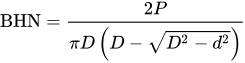
    https://de.wikipedia.org/wiki/Poldih...r%C3%A4t.jpgMy Poldihammer came with a small magnifier and scale. It’s not so easy to use, and the resolution is minimal. The kit also comes with convention tables, but they feel very approximate. My solution is to measure the indentation with a digital microscope and calculate the BHN from this formula from Wikipedia:


    BHN = Brinell Hardness Number (kgf/mm2).
    P = applied load in kilogram-force (kgf)
    D = diameter of indenter (mm)
    d = diameter of indentation (mm)

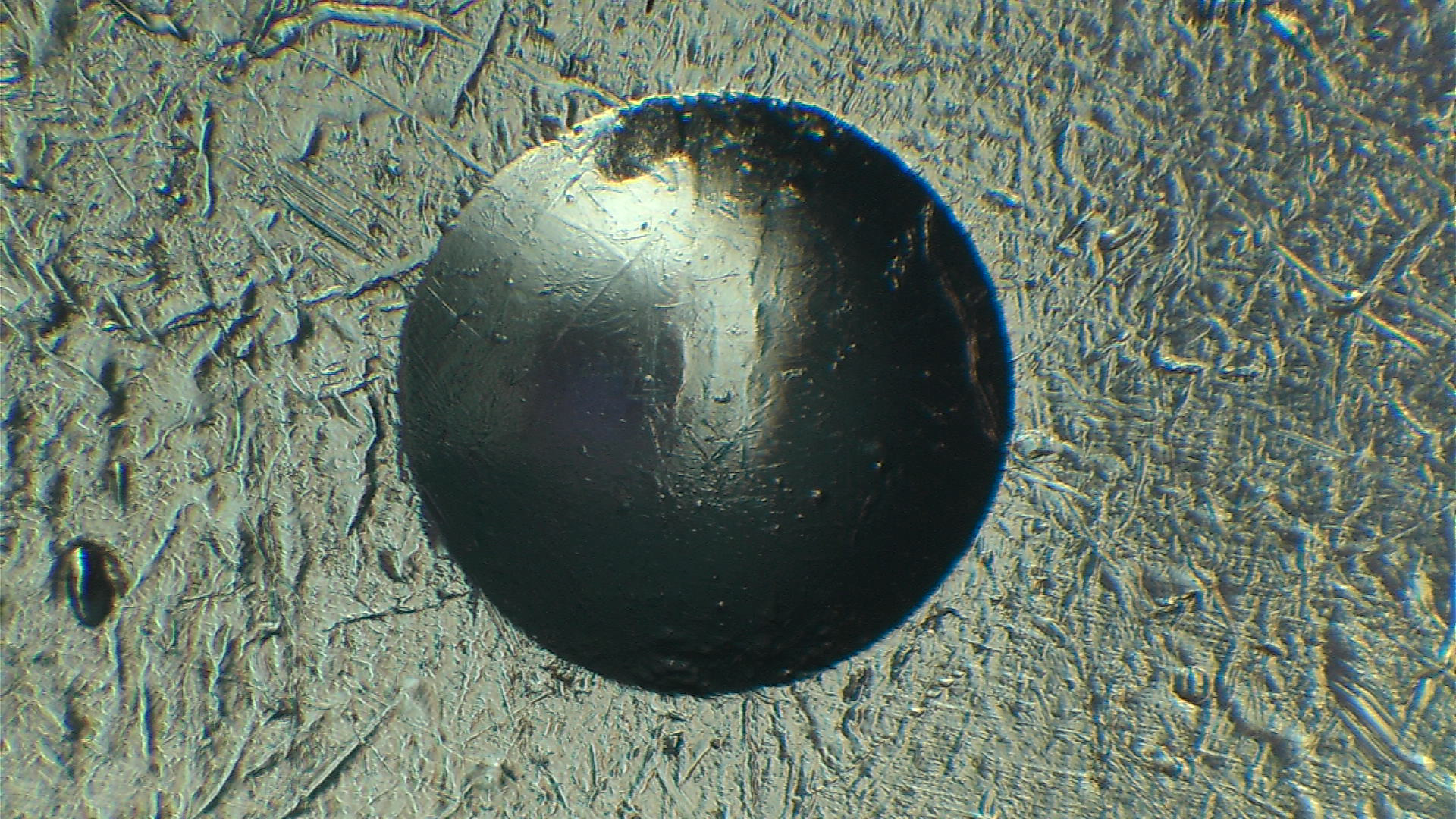
    It doesn’t take much to use the dent on the reference bar to calculate the force. As the force is equal on the key, we can use the force to calculate the hardness of the keys. Let’s take a look at a real world example. The next two images are the dents under high magnification.

    Key for measurement B1: 214.581 by 209.048 pixels. This is 2.00 mm on average.Reference bar with hardness 187. Measurement B1: 163.809 by 162.959 pixels. 1.55 mm average width.For completeness, I’ve added the calculations as to make the method repeatable, and accessible to more hobbyists. The force is calculated as follows: P = BHN(reference) * PI * D * (D – SQRT(D^2 – X^2)). Where X is the dent on the reference bar. In LibreOffice Calc, this is =187*PI()*10*(10-SQRT(10^X^2)).

    The hardness of the key is calculated BHN(Key) = P /(PI * D *(D^2-Y^2)). Where Y is the dent on the key. In LibreOffice Calc, this is =P/(PI()10(10-SQRT((10^2)-(Y^2))))

    For the numbers above, I’ve found the force as 706.25, and the BHN of the key as 110.8. I’ve repeated the test for four more keys and measured them as 114.5, 103.9, 97.0, and 118.2 with an average of 108.9. In similar measurements, I would drop the minimum and maximum and take the average of the remaining samples, which is 109.7.

    The following table is the result of my measurements. The results are surprising.

    BrandAverageAquired dateCommentMeasurement [BHN]SilcaThree keys2018CS206 Brass. 147.1SilcaThree keys2022LD5R Steel. 222.8JMA Three keys2018Keys from Nigel Tolley. 135.4BauelementeThree keys2019SSDeV Impressioning. 123.5AbusThree keys2019LockCon133.4AbusThree keys2020Toool Inventory135.8AbusFive keys2022LockCon Box A127.4AbusFive keys2022LockCon Box B108.9AbusFive keys2022LockCon Box C131.5Table of key measurements. Keys for Abus C83 with keyway similar to Y1. The data revealed something interesting and confirmed a hunch. The hardness of steel keys is the highest, obviously. We see the brass alloy (nickel silver) have a range of values. There are also outliers, for example Box B, these keys are softer than keys acquired on the same day.

    I’ve since played with both harnesses and can tell one hardness from another in impressioning. But only after I’ve switched from one hardness to another after a dozen opens, with the same hardness. After switching backwards and forwards, I can’t tell the difference in a blind test.

    One final note, the kit comes with one reference bar that is consumable. We have about a hundred measurements in them. I have not found replacement bars, yet. But I believe we can use a similar shaped bar of steel, which is then calibrated with the reference bar before use. This will reduce accuracy, but can be accounted for if the measurements are comparative.

    Thanks for taking your time to read about measuring hardness of keys. If you have a professional (Brinell) hardness measurement tool, and want to help out, let’s swap keys and compare notes. I’m always open to learn.


    Источник...

  11. #131
    Я робот. Собираю для Вас информацию из интернета
    Регистрация
    18.04.2011
    Сообщений
    90,662

    По умолчанию 0

    Cutaway locks, why put in the effort?
    In a previous blog post, I’ve written about Qikom’s cutaways. Whereas, this post is a tangent on why we would like to see more cutaways made and the knowledge shared. When we teach beginners, and show them a unique lock, often they can’t imagine what happens in the lock. As all they can see is […]
    -------------------------------------
    In a previous blog post, I’ve written about Qikom’s cutaways. Whereas, this post is a tangent on why we would like to see more cutaways made and the knowledge shared.

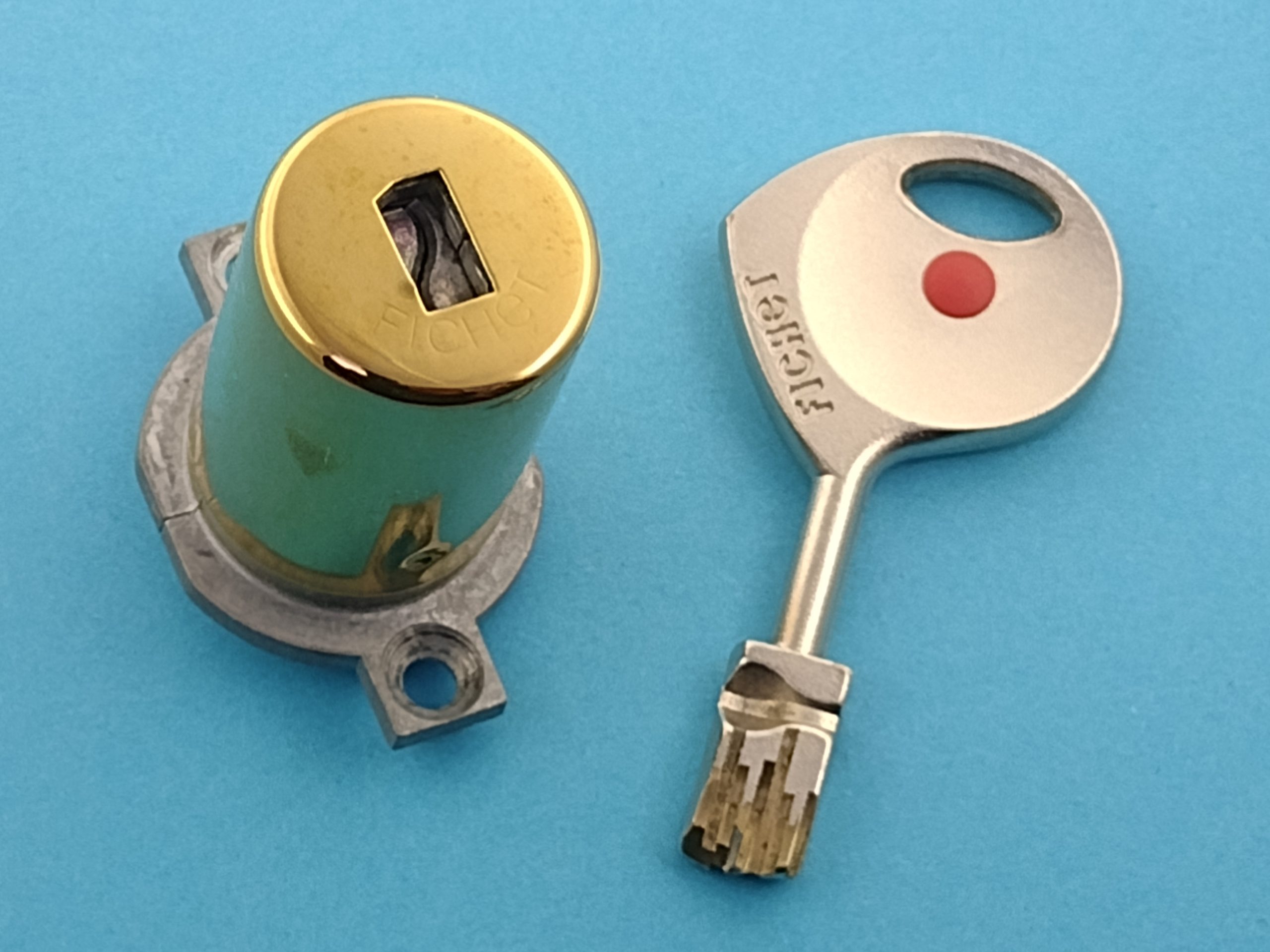
    When we teach beginners, and show them a unique lock, often they can’t imagine what happens in the lock. As all they can see is the outside. To illustrate this, let’s play a short game with a Fichet 787. The key looks quite interesting, as it has half a dozen cutouts on each side. It’s not symmetrical, and can only be inserted in the keyway in one direction. You feel a spring pushing against the key, but at rotation it seems to be like any other lock.

    If you haven’t seen this lock before, take a moment to imagine what the internals are like.

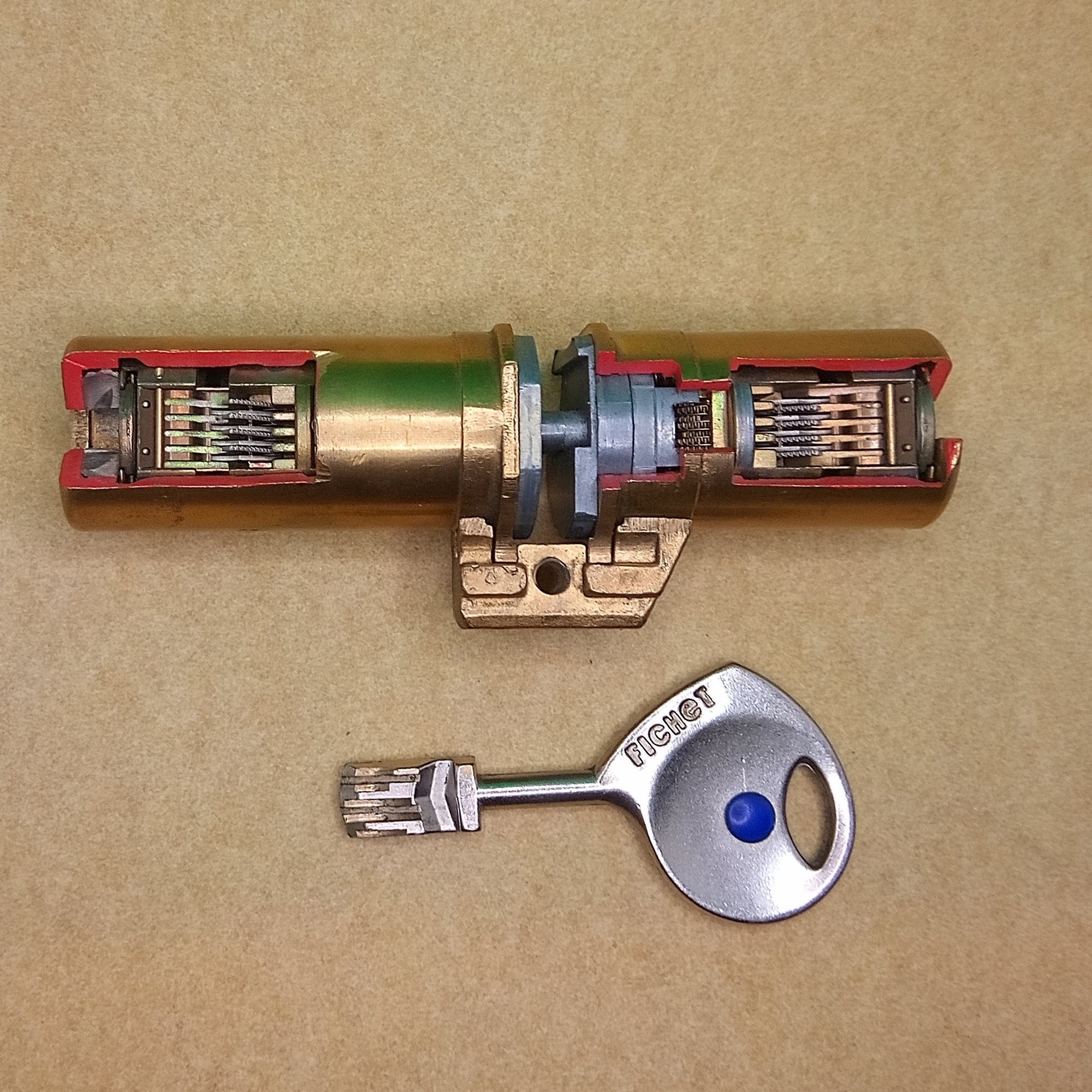
    Fichet 787. CC-BY-4.0 Jan-Willem, Toool BlackbagIt’s quite obvious where I’m going with this. There can be almost anything inside the shiny cylinder. It will be very difficult to find the solution without taking it a part, or looking at a diagram. The cutaway, like the one from Qikom below, shows the internals from the lock. Reducing the guess work over a picture of the parts.

    Qikom Fichet 787 Cutaway
    CC BY-NC-SA 4.0Qikom Fichet 787 Cutaway; The interaction between the lever pack and the gears.
    CC BY-NC-SA 4.0Qikom Fichet 787 Cutaway; The lock is open.
    CC BY-NC-SA 4.0Is it anything like you imagined it to be?

    What does the 787 do? The Fichet 787, is a push lever lock. Where the push action allows the lateral movement of the levers to rotate a set of gears to the opening position. The sidebar is a passive element that checks if the gears are all aligned. With the correct key, the cylinder moves inwards, clears a blocking element, and is able to rotate. At the same time, the key is trapped by two half circle disks.

    It is quite possible you have seen this lock before, as it has been around for decades. I’ve learned about the lock in 2018, and recently expanded the knowledge at the Association des Crocheteurs de France lock conference in December 2022. I’ve learned the dovetail, which connects the cam to the core, is a fairly recent addition that prevents a (partially) destructive attack, for example.

    French locks are my favorite weird lock designs, where Fichet is king. The ingenuity is admirable, with many clever ways to solve the same problem…


    Источник...

  12. #132
    Я робот. Собираю для Вас информацию из интернета
    Регистрация
    18.04.2011
    Сообщений
    90,662

    По умолчанию 0

    Experiment driven lockpicking
    We are happy to present the talk Experiment driven lockpicking by Jan-Willem at HackerHotel 2023. The talk goes into uncovering information leakage in locks like Bowley Rotasera and Kromer Protector. May this talk inspire to do research and share all the interesting results. The slides can be viewed and downloaded below.
    -------------------------------------
    We are happy to present the talk Experiment driven lockpicking by Jan-Willem at HackerHotel 2023.

    The talk goes into uncovering information leakage in locks like Bowley Rotasera and Kromer Protector.
    May this talk inspire to do research and share all the interesting results.


    The slides can be viewed and downloaded below.

    Experiment Driven Lockpicking V2Download


    Источник...

  13. #133
    Я робот. Собираю для Вас информацию из интернета
    Регистрация
    18.04.2011
    Сообщений
    90,662

    По умолчанию 0

    May Contain Hackers 2022
    In the summer of 2022, the Dutch hacker community gathered at the May Contain Hackers conference. The conference was amazing, with over a dozen simultaneous tracks with topics ranging from electronics, privacy and internet security, to art and technology. The program is published at https://program.mch2022.org/ and the talks are published on https://media.ccc.de/c/MCH2022. For Lockpicking content, […]
    -------------------------------------
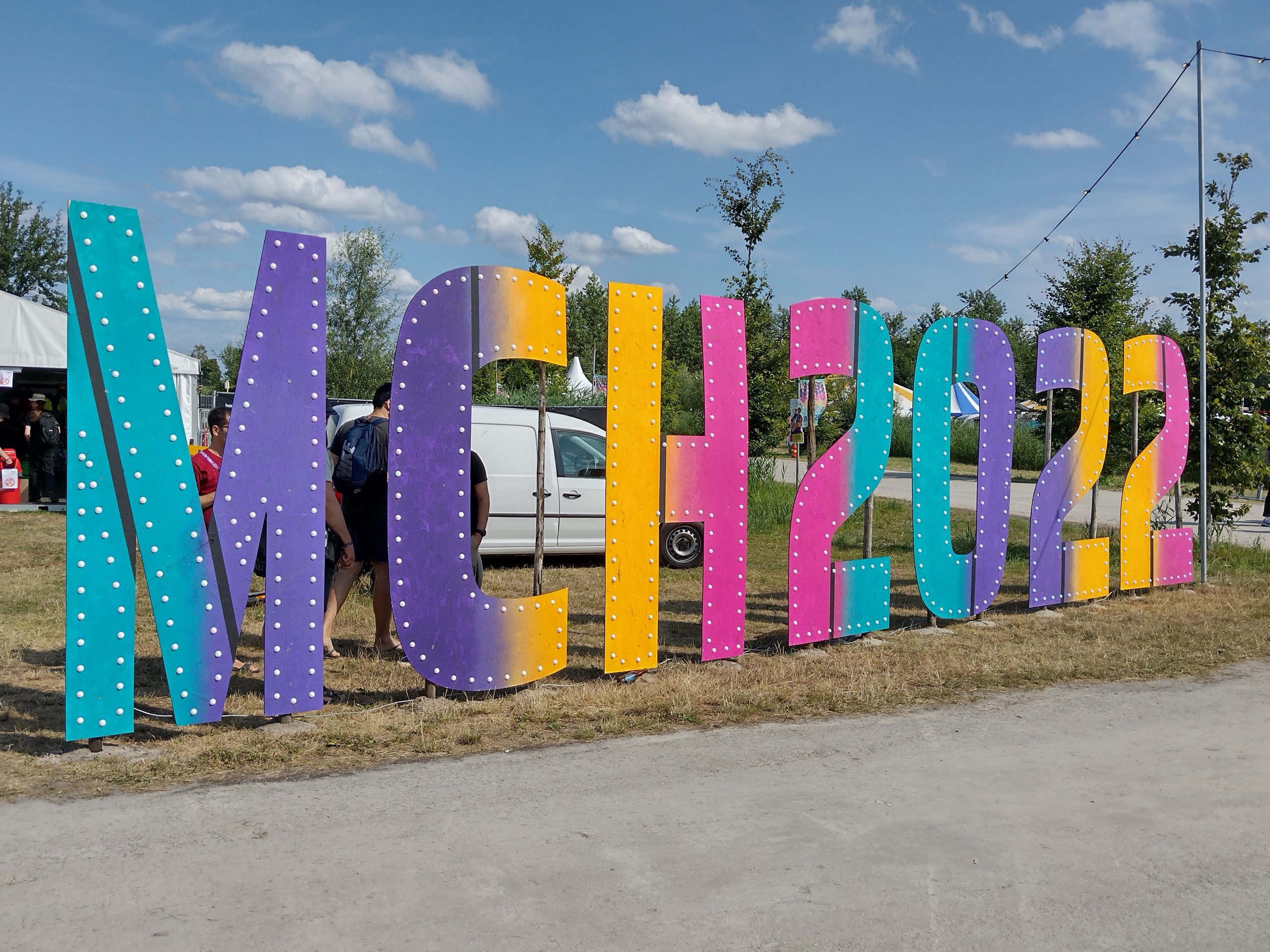
    In the summer of 2022, the Dutch hacker community gathered at the May Contain Hackers conference. The conference was amazing, with over a dozen simultaneous tracks with topics ranging from electronics, privacy and internet security, to art and technology. The program is published at https://program.mch2022.org/ and the talks are published on https://media.ccc.de/c/MCH2022.

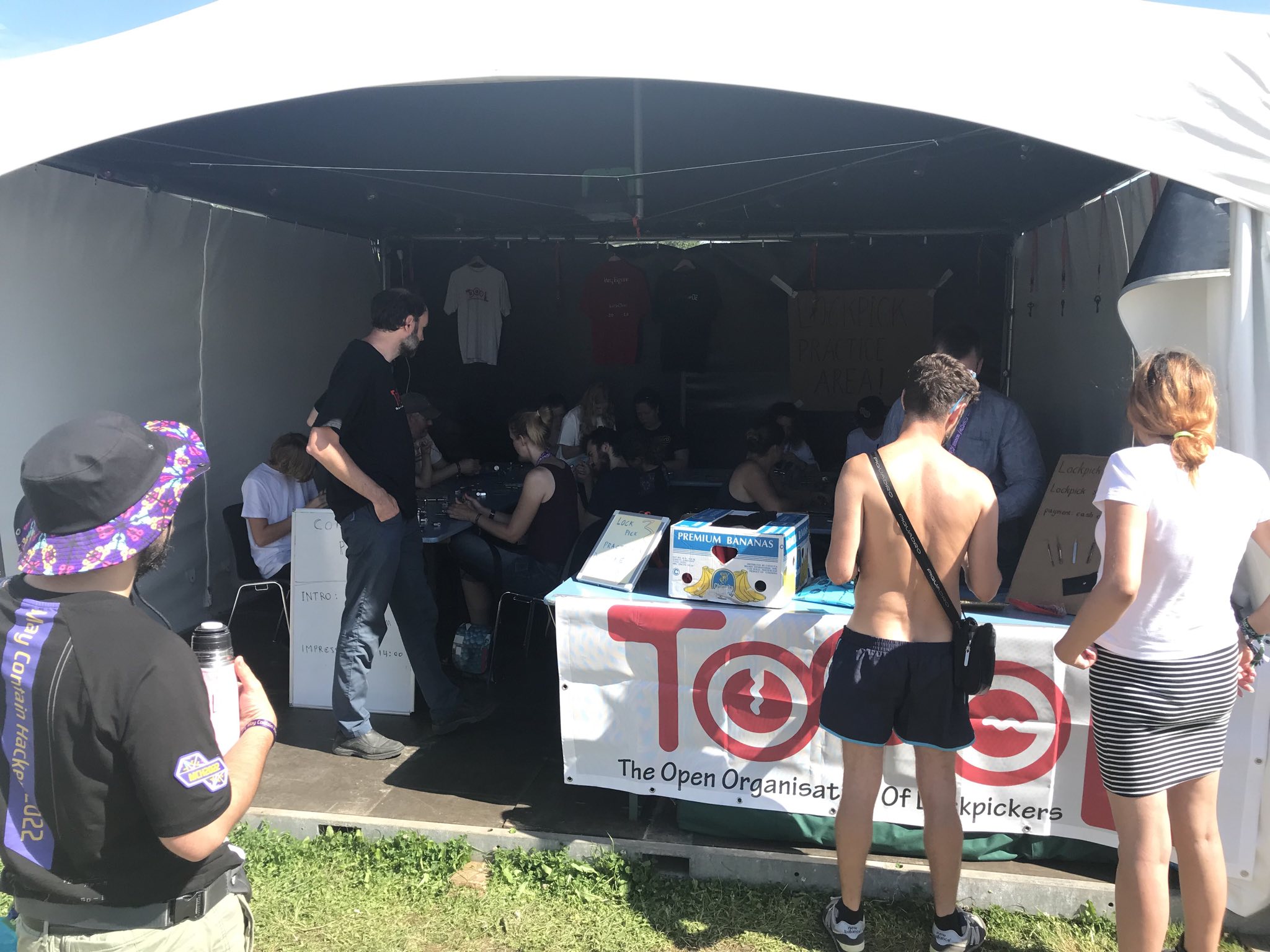
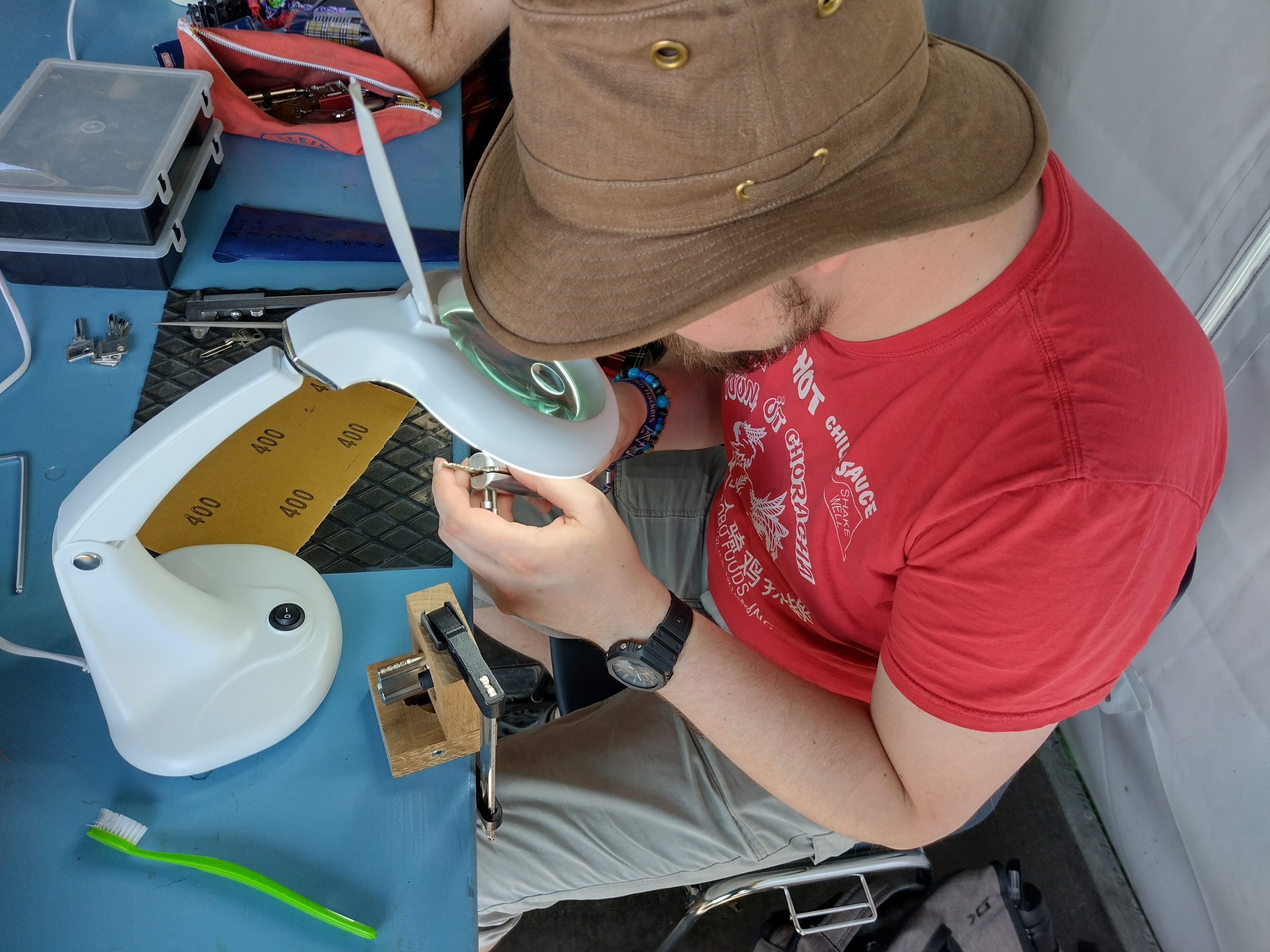
    For Lockpicking content, Toool organized a lockpicking village, The MCH CTF included lockpicking challenges, and plenty of exciting talks are given. Including Introduction to lockpicking and safe cracking, Anker 3800 Magnetic lock, and bumping electronic locks! More on these after a photo impression of MCH.


    Jan-Willem presented an introduction to lockpicking and safe lock manipulation.

    Talk description from the MCH schedule: Most security implementations leak information, mechanical security is no different. It takes sharp eyes, a soft touch, and a good hearing to distinguish between information and noise. In this talk we will go in depth on how locks works, and how we can persuade them to disclose their secrets, and open them without damage.

    The Open Organization of Lockpickers (Toool) is a group of nerds obsessed with mechanical security. We create, collect, take apart, discuss, and attempt to defeat locks. While we are known for lockpicking, there are many other techniques for opening locks without damage.

    This talk will focus on the language of the locks, the side channels in mechanical security systems. We will start with binding order, the mechanism to isolate the locking elements, and exploit them one by one. Then we will discuss a wide variety of other methods of gathering information and opening locks. Most of these methods are not practical, but working them out gives us great joy, and we would like to share the highlights with you.


    Mech-Side-channel_8Download
    Walter presented his research of the Anker 3800 magnetic lock. It includes deriving master keyed systems, designing an electronic key/lock decoder, and 3D printing keys.

    Talk description from the MCH schedule: The Anker 3800 is a mechanical lock that has both traditional pins as well as magnetic sliders. Can it be opened without the key? This talk discusses how the lock works in a master keyed system and how it can possibly be defeated. It will cover decoding, picking and key duplication.

    The Anker 3800 is a mechanical lock that has both traditional pins as well as magnetic sliders. It was designed by Japanese company MIWA and is sold in the Netherlands under the Anker brand. It is a high security lock that is often used in large master keyed systems.

    I wondered: can it be opened without the key? I will present my adventures with the lock, having opened it up to see how it works, and several things I have tried to copy the key, pick the lock, decode the lock and find out what the master key looks like. The talk will include successes and failures and I will discuss designing 3D models, C&C work, electronics, Arduino programming, PCB design, and more.

    The talk is aimed at people with an interest in lockpicking. No prior knowledge is necessary.

    The write-up is found at https://blackbag.toool.nl/?p=3907


    mh shared his research on bumping electronic locks. As in, opening the electronic locks by using a percussion drill and custom attachment.

    Talk description from the MCH schedule: Modern electronic locks are often optimized for cost, not security. Or their manufacturers don’t do security research. Or they ignore it. For whatever reason, many current electronic lock systems are susceptible to surprisingly simple attacks. We’ll look at some of them, and at the underlying basics, so that you can do your own research.

    In this talk, we look at a number of modern electronic locks and their security flaws. Surprisingly many current systems are susceptible to very simple attacks, like the equivalent of using bump keys. Of course, there are electronic and/or SW-based attacks, too.
    We’ll look at some of them, and at the underlying basics, so that you can do your own research.
    Some of the problems have been fixed by manufacturers, but typically only for future production runs, so you will get some practical advice on how to test your own hardware for these critical flaws.


    2022_Electronic_Locks_Talk_by_mh_-_Presentation_Sli_WCe0aQkDownload
    Jan-Willem presented a basic introduction to threat modeling and uses puzzles as an example.

    Talk description from the MCH schedule: Mechanical locks are everywhere and come in all shapes and flavors. But choosing the right lock can be rather difficult. For example, what is better? A lock that is hard to pick, or a lock with hard to duplicate keys. This talk will not give you the answers, but it will help you understand the trade-offs. Furthermore, we will have fun threat modeling our locks.

    Is lockpicking a threat you should be concerned about, or is the brick the tool you should care for? Jan-Willem, from The Open Organization of Lockpickers (Toool), will share his ideas on mechanical security and threat modeling. We will make it fun and use several case studies, starting with defining a lock, threat modeling mechanical puzzles, and use several case studies where the threat was overrated. Simply put, attacks against locks range from the trivial to mastery. I’ll share multiple failed attempts of attacks that should be trivial, but were not in practice, and we will analyze them together.


    Threat-modeling_8Download


    Источник...

  14. #134
    Я робот. Собираю для Вас информацию из интернета
    Регистрация
    18.04.2011
    Сообщений
    90,662

    По умолчанию 0

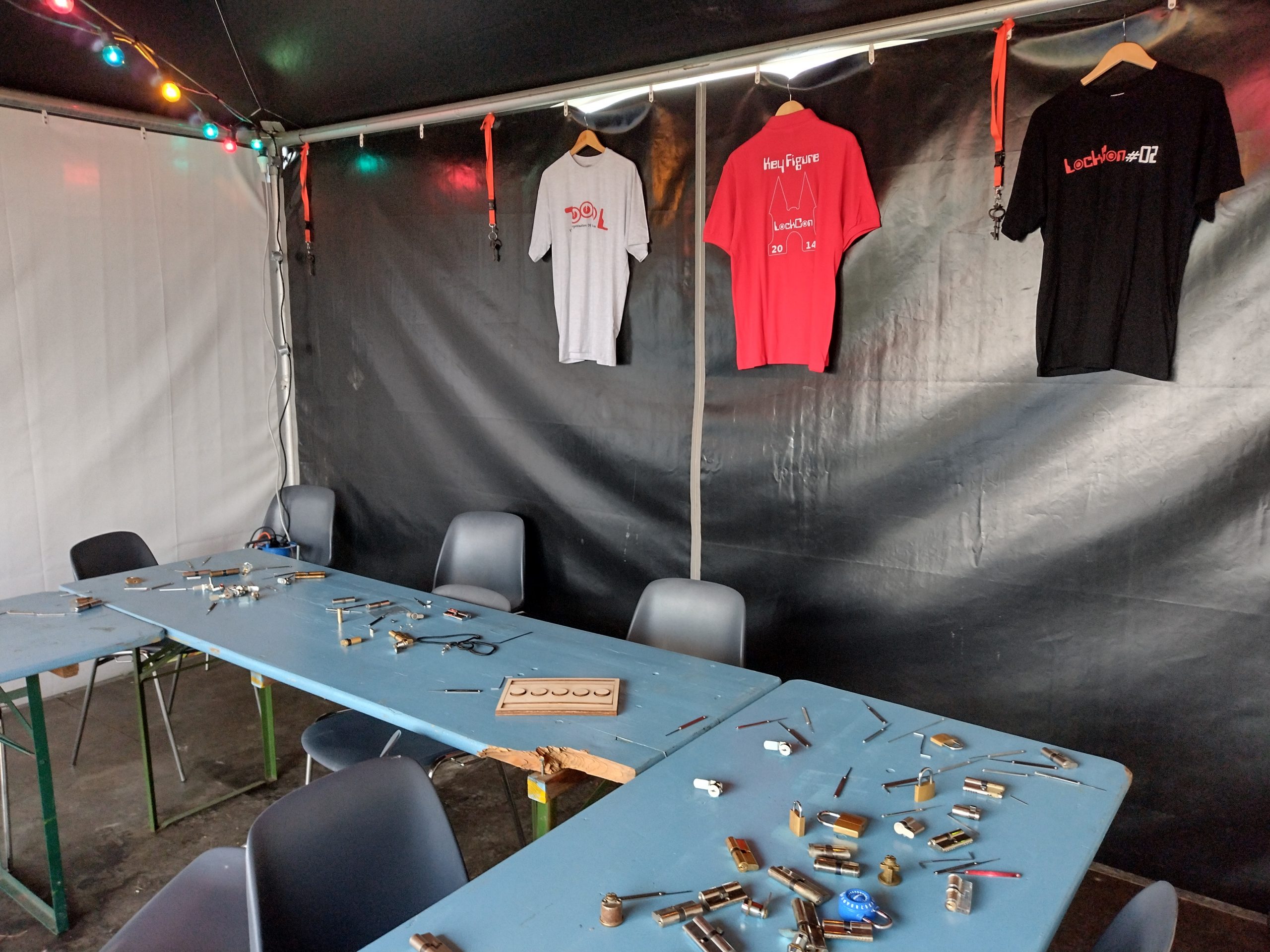
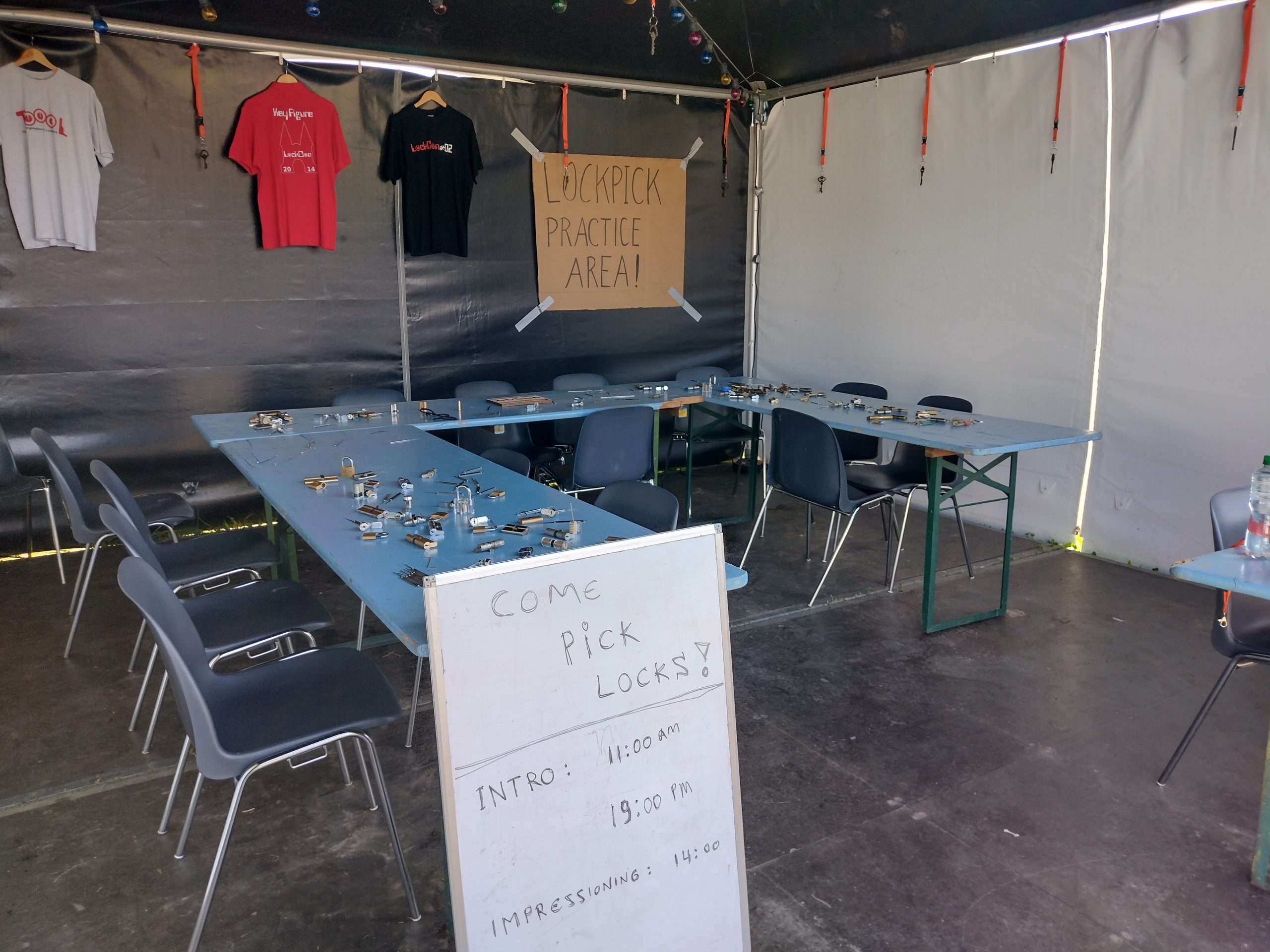
    What happens at a Toool meetup?
    In the current Tool rhythm, we have one meetup a week. Both the Amsterdam and Eindhoven meetups are Bi-weekly, where we planned to have one meetup a week. We come together to discuss lock topics, compete in the Toool competition, and generally have fun picking locks. In this post, I’d like to share pictures topics […]
    -------------------------------------
    In the current Tool rhythm, we have one meetup a week. Both the Amsterdam and Eindhoven meetups are Bi-weekly, where we planned to have one meetup a week. We come together to discuss lock topics, compete in the Toool competition, and generally have fun picking locks.

    In this post, I’d like to share pictures topics and projects that have come across at Toool meetups.

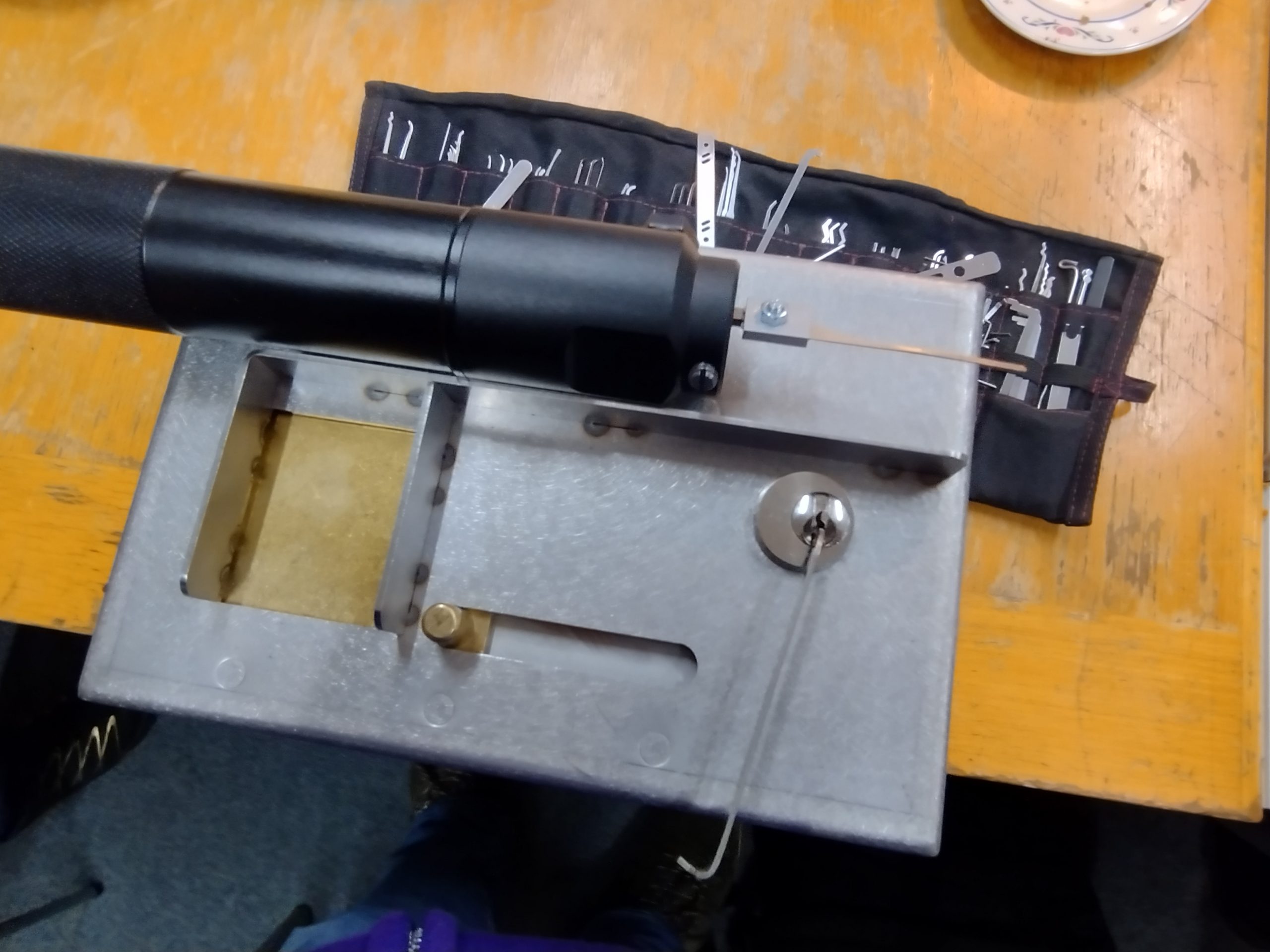
    A locked coin safe was brought to the meeting. Due to the construction of the box, the lock was a very difficult to put torque on with a turning tool. We succeeded in opening the lock several times, and had great fun picking the lock in literally seconds with an electronic pick.

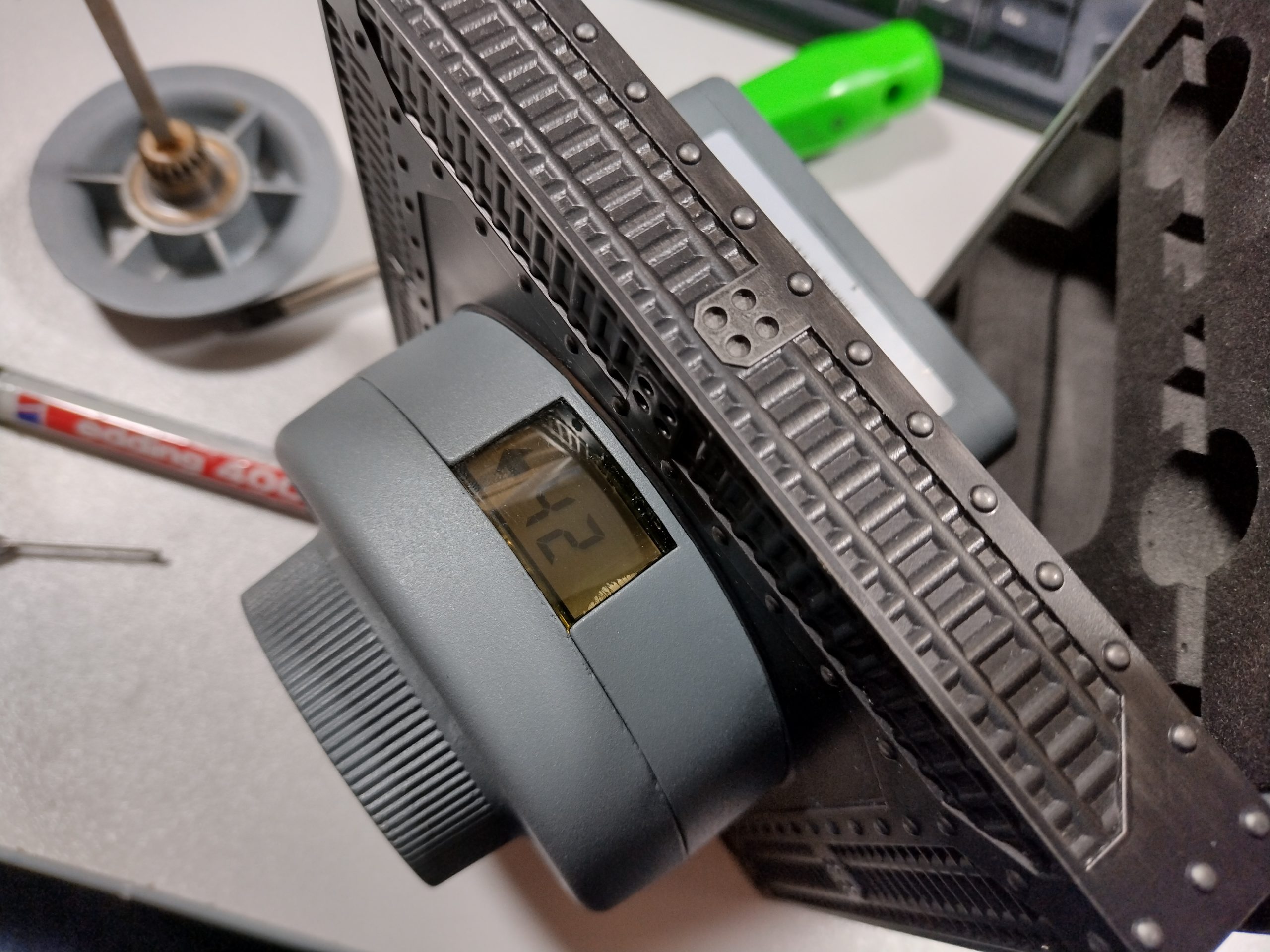
    Once in a while, we receive donations from community members. This Sparrows vault was donated to us with the request for an upgrade to the lock, as the original served not enough of a challenge. We complied, and mounted a Kaba Mas X0 Electronic lock on the Vault.

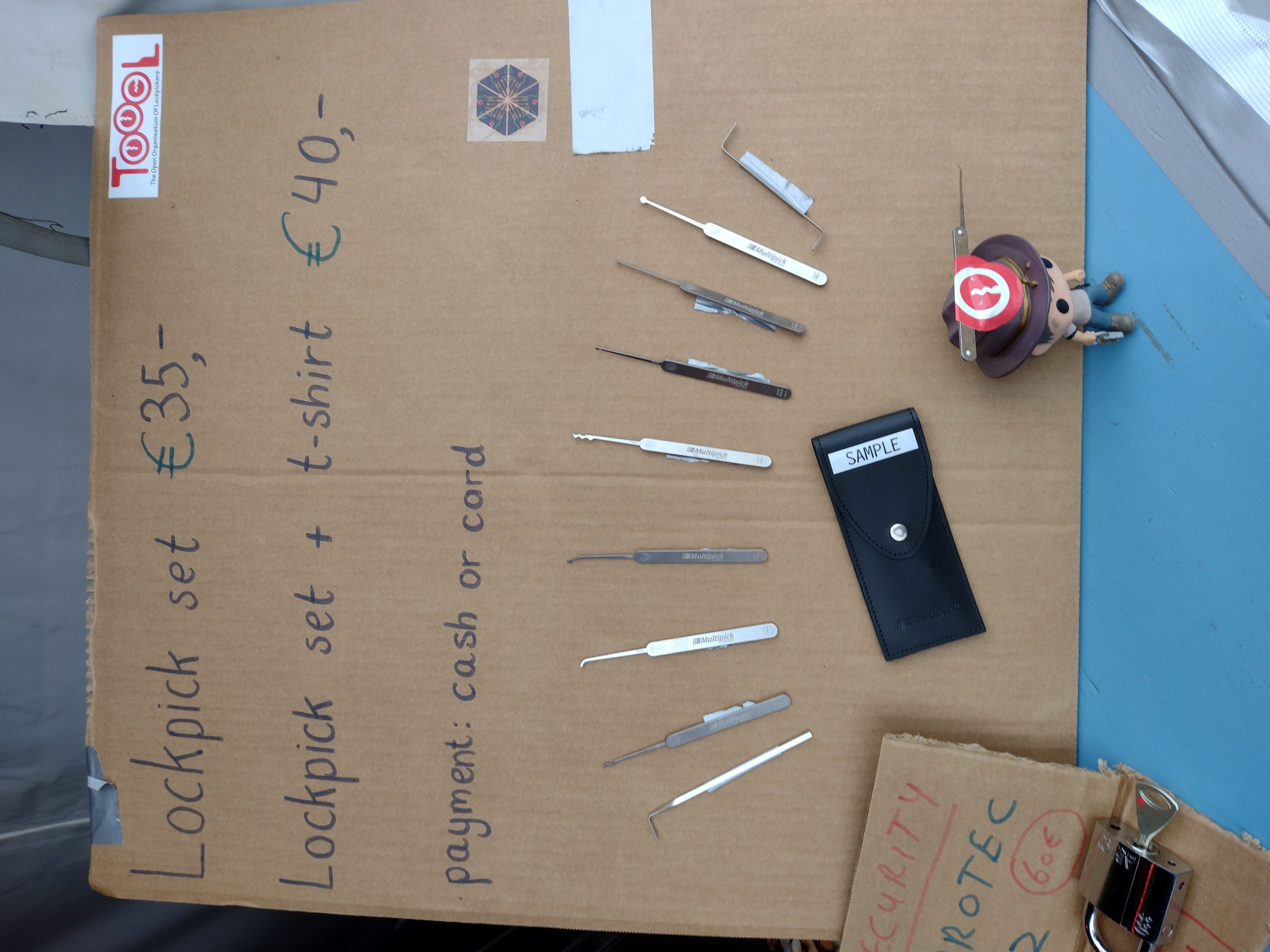
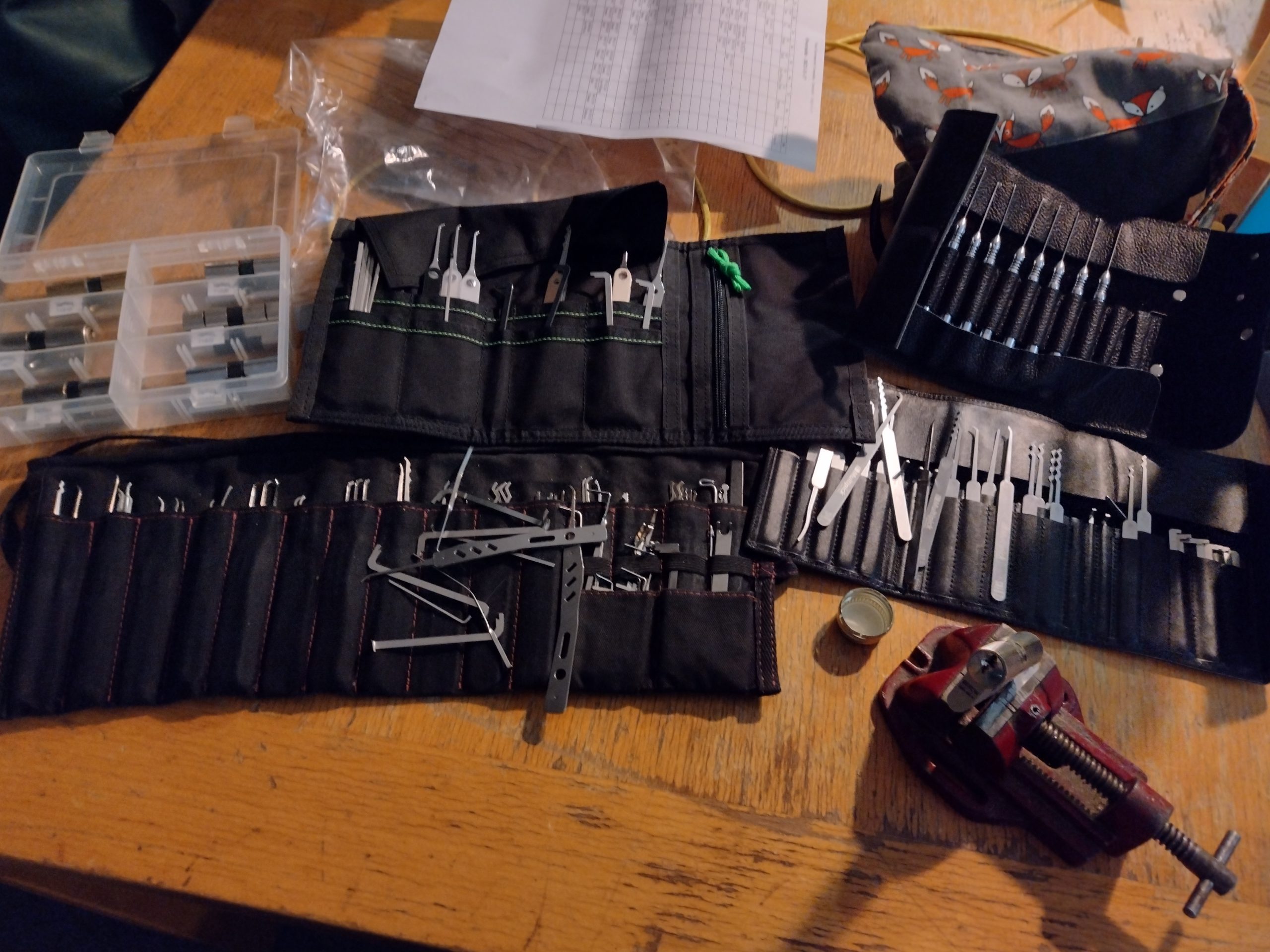
    Everyone has a go-to pickset, one which is a mix of everything. We also bring Sunday’s best to dedicated sets. For example, Moki makes great picksets, which are even better with homemade handles. Or a shiny Multipick set, be it dimple or a dual-gauge set designed by Christina Palmer. Where the only part staged about the photo is to have all the sets neatly displayed.

    We went to the Association des Crocheteurs de France conference in December 2022, and brought back a few tools and picks from France. We attempted to pick the Polox-5, and Fichet F3D. Both attempts made possible by the incredible work of Nitiflor, who designed and 3D printed these picks.

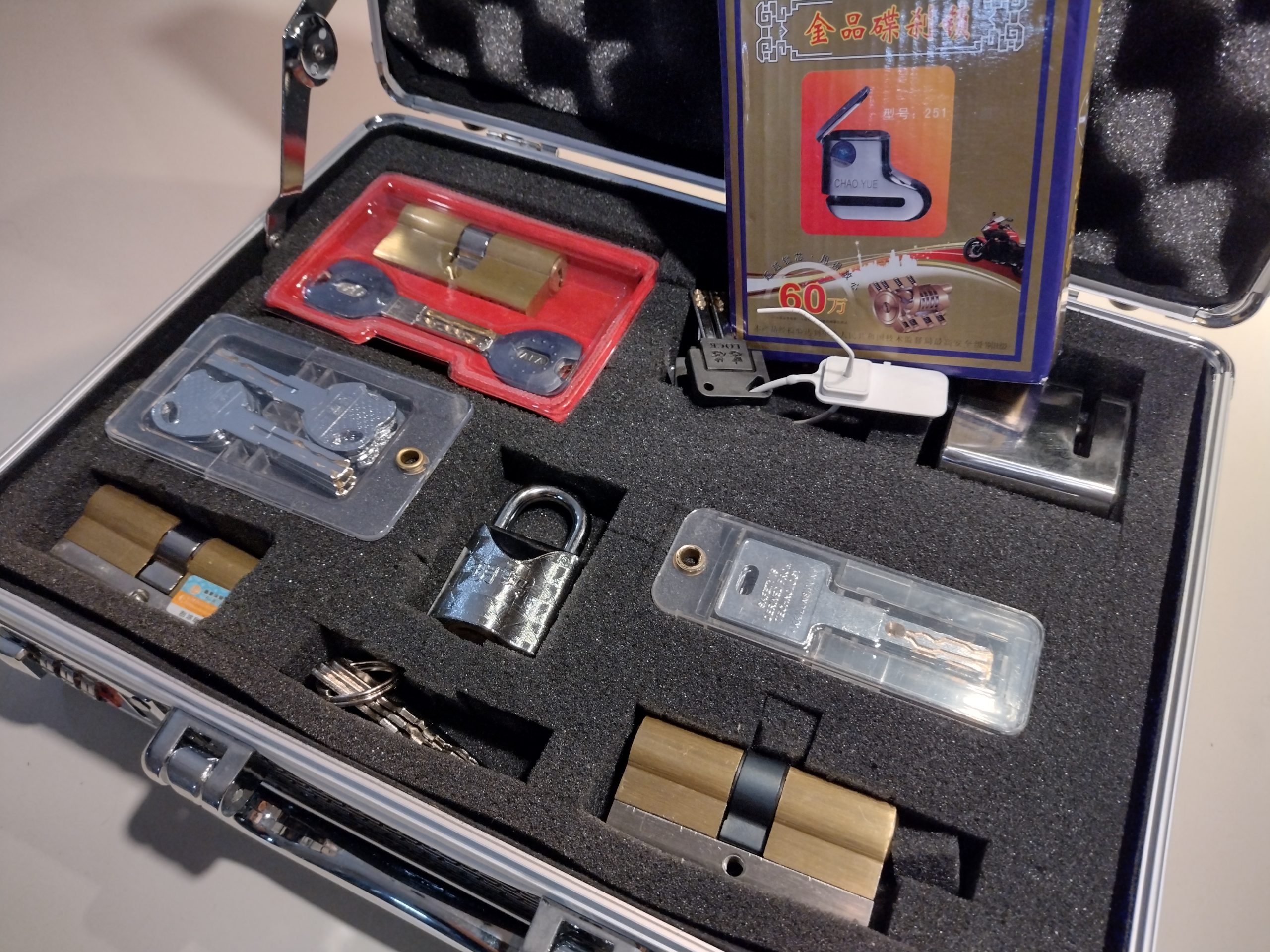
    Jos brought a suitcase with Chinese locks, which was gifted to him for organizing LockCon 2016. At the time, these locks were unobtainable, and information sparse. The mechanisms are very intricate with 50-element wafer locks, and cores with continuous rotation similar to the Yuema 750, an implementation we have yet to see used in Europe.

    If this blog sparked interest in lockpicking, or if you have been picking and would like to join a meetup, please contact us. We are always welcome to new people, be it to teach the basics or to share advanced tricks. https://toool.nl/Gatherings


    Источник...

  15. #135
    Я робот. Собираю для Вас информацию из интернета
    Регистрация
    18.04.2011
    Сообщений
    90,662

    По умолчанию 0

    EVVA ELUS cylinder
    I recently acquired an EVVA cylinder stamped “ELUS”. Nothing could be found about it, so I decided to investigate it. Looking at this picture, it looks pretty standard. It is a variation of the EVVA NL system, which is inself is a variation of the TSC system. The NL is a 5-pin cylinder with multiple […]
    -------------------------------------
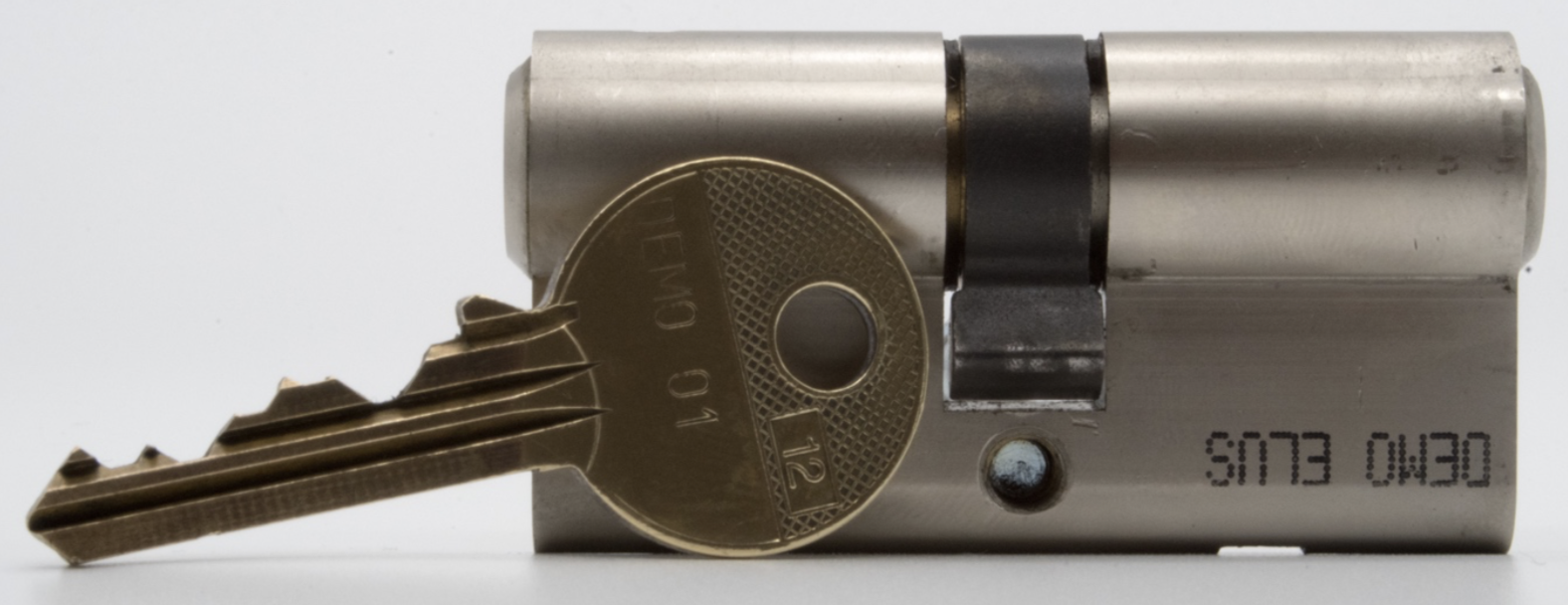
    I recently acquired an EVVA cylinder stamped “ELUS”. Nothing could be found about it, so I decided to investigate it.

    Looking at this picture, it looks pretty standard. It is a variation of the EVVA NL system, which is inself is a variation of the TSC system. The NL is a 5-pin cylinder with multiple possible key profiles and with master keying in the bitting.

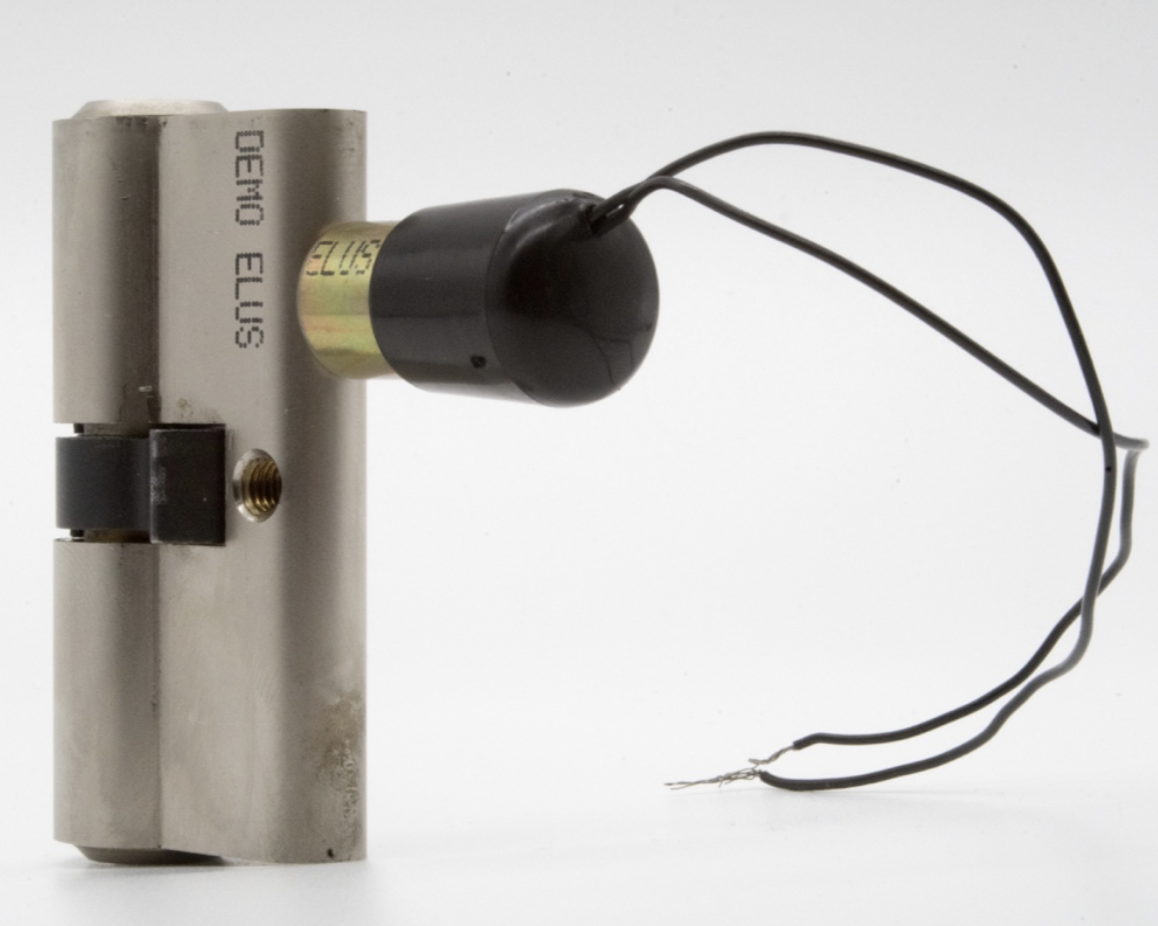
    But: this system has additional electronics attached to it:

    The electronics implement a Temporary Access Function, similar to that in the EVVA ICS TAF cylinder, invented around 25 years later than this. It was an invention of EVVA Netherlands with one of their partners, but it never reached production.

    Read more about it inthepaperI‘vewrittenaboutit.

    -Walter.


    Источник...

  16. #136
    Я робот. Собираю для Вас информацию из интернета
    Регистрация
    18.04.2011
    Сообщений
    90,662

    По умолчанию 0

    Lips shared access
    Locks don’t have to be hard to pick to be interesting, and a Lips lock Jos loaned me is a fine example of that. Lately I’ve been drawn to picking lever locks, as they have that nice “Skyrim” vibe. You can get a long way with just some bent wires. Knowing that, Jos brought this […]
    -------------------------------------
    Locks don’t have to be hard to pick to be interesting, and a Lips lock Jos loaned me is a fine example of that.

    Lately I’ve been drawn to picking lever locks, as they have that nice “Skyrim” vibe. You can get a long way with just some bent wires. Knowing that, Jos brought this nice Lips lock to a Toool meetup, and I got to play with it a little.

    Picking it is pretty straightforward, as there are no false gates on the lever, and no curtain. The pin in the keyway does make navigation a bit awkward, but all in all it’s not hard to pick.

    Things get more interesting when you take a closer look at the lock.

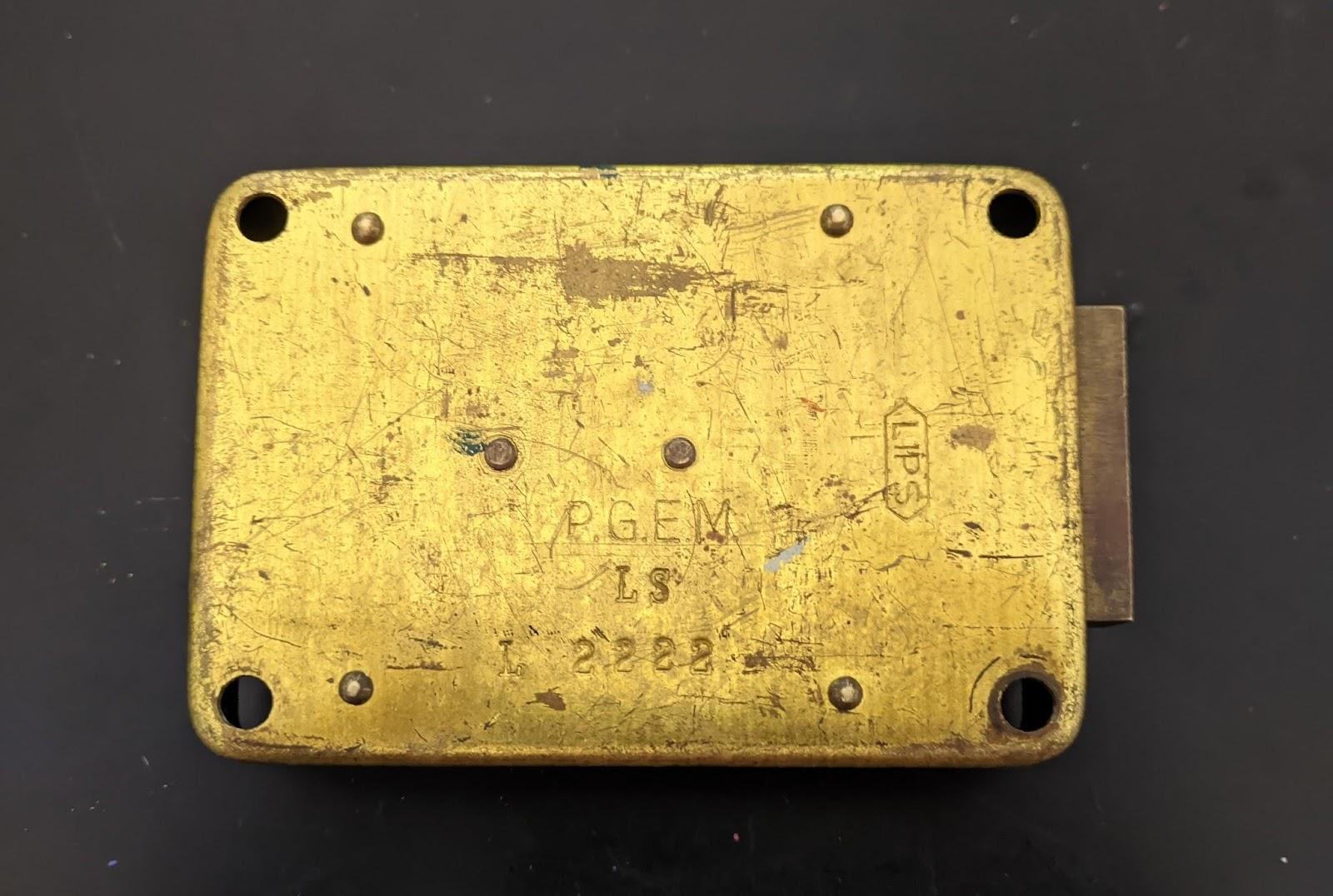
    First of all, it’s a Lips lock. Lips is a Dutch lock manufacturer that was founded in Dordrecht in 1871 by Jacobus Lips. In 1971 it became part of Chubb, and since 2000 it’s part of the Assa Abloy group.

    The second name on the lock is P.G.E.M. The P.G.E.M. (or Provinciale Gelderse Energie Maatschappij) was a utility company delivering electricity and gas to the whole province of Gelderland in The Netherlands. Every Dutch province used to have its own utility company. It was owned by the province, and the local municipalities.

    In the 1990’s the Dutch government decided all the utility companies had to be privatized, and P.G.E.M. became part of Nuon (which is now a part of Vattenfall).

    Below P.G.E.M. are the letters LS, that stand for Laagspanning or Low Voltage. PGEM used these locks to secure electrical substations, and LS indicates this particular lock was used on a low voltage substation. The other side of the lock tells us more about this.

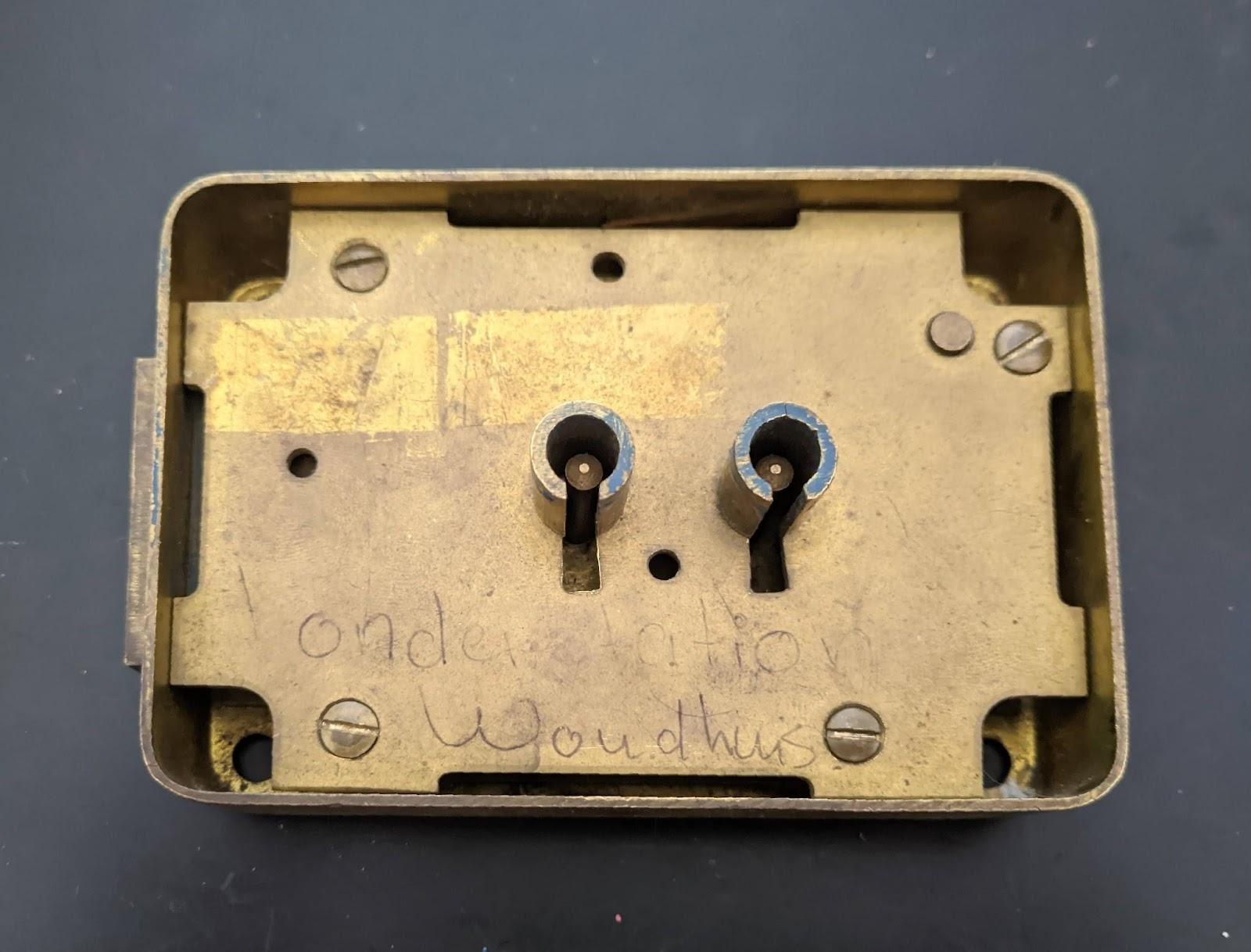
    Here we see “Onderstation Woudhuis” written in pencil. Onderstation Woudhuis is a substation located in the city of Apeldoorn.
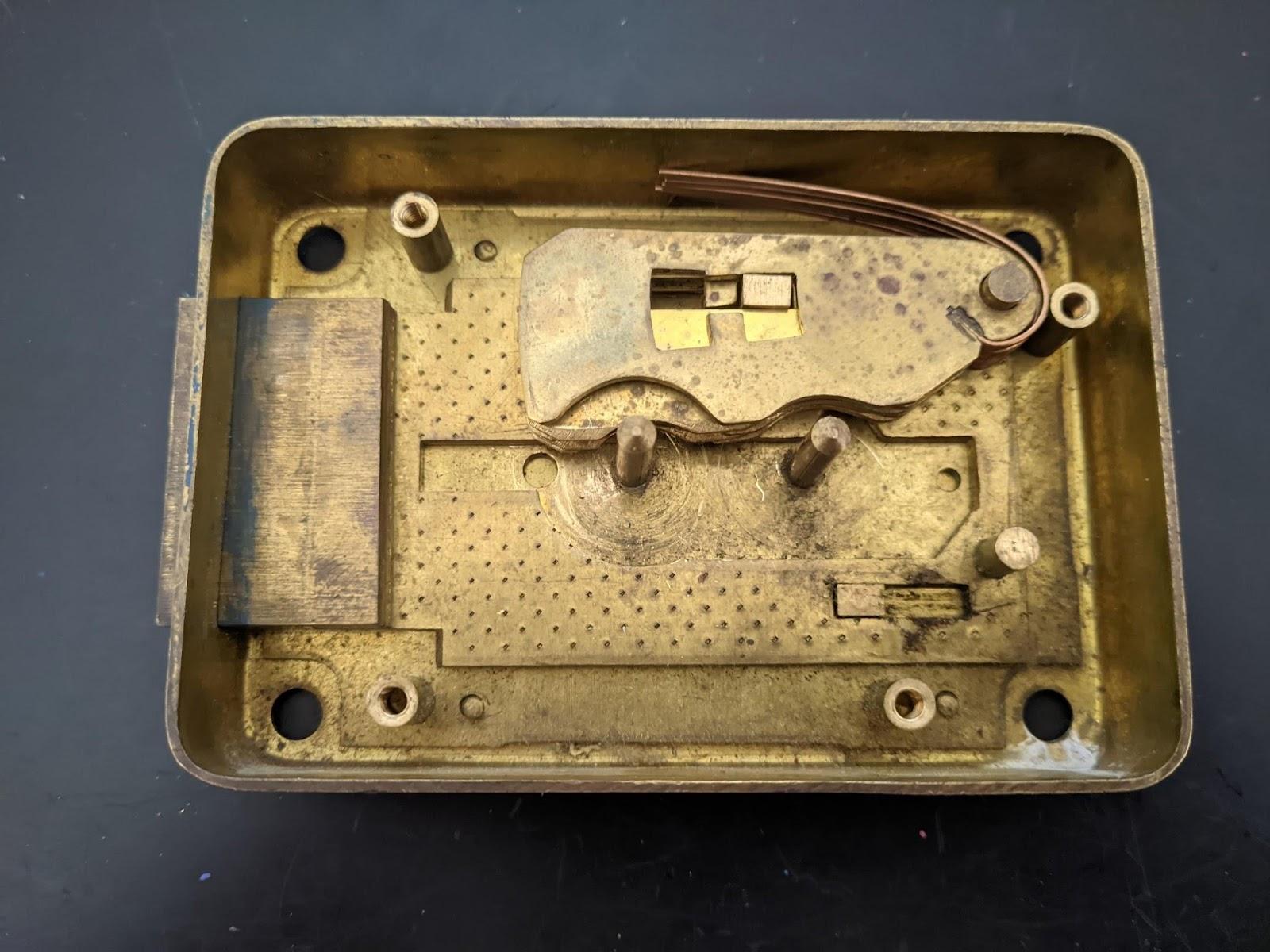
    The double keyway is a striking feature which reminds of dual custody locks, only this isn’t that. It’s shared access, where only one of both keys is required to open the lock. This becomes clear when the faceplate is removed.

    This seems to be a form of master keying without having to need to add extra gates to the levers, which would compromise the security of the lock.
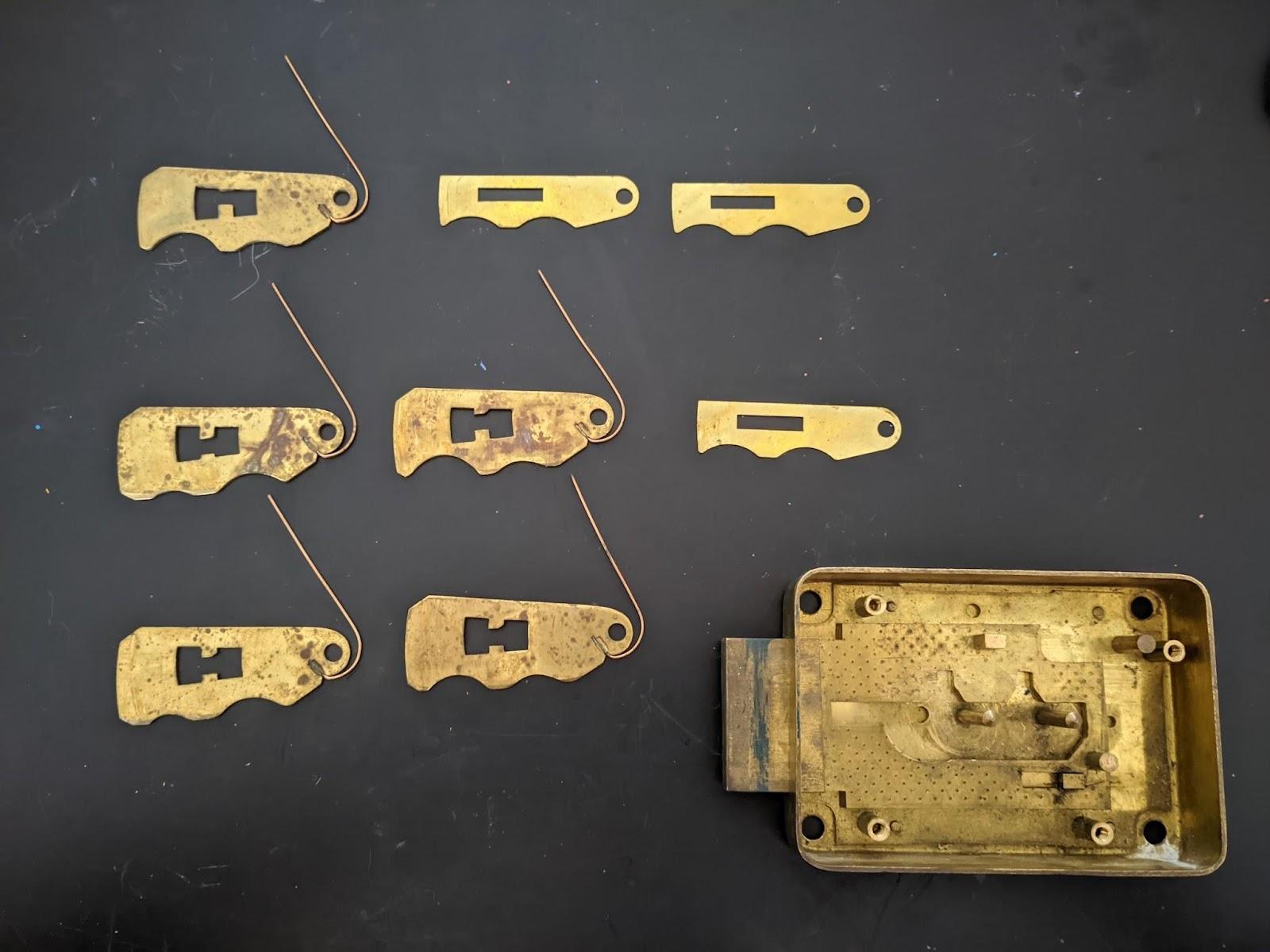
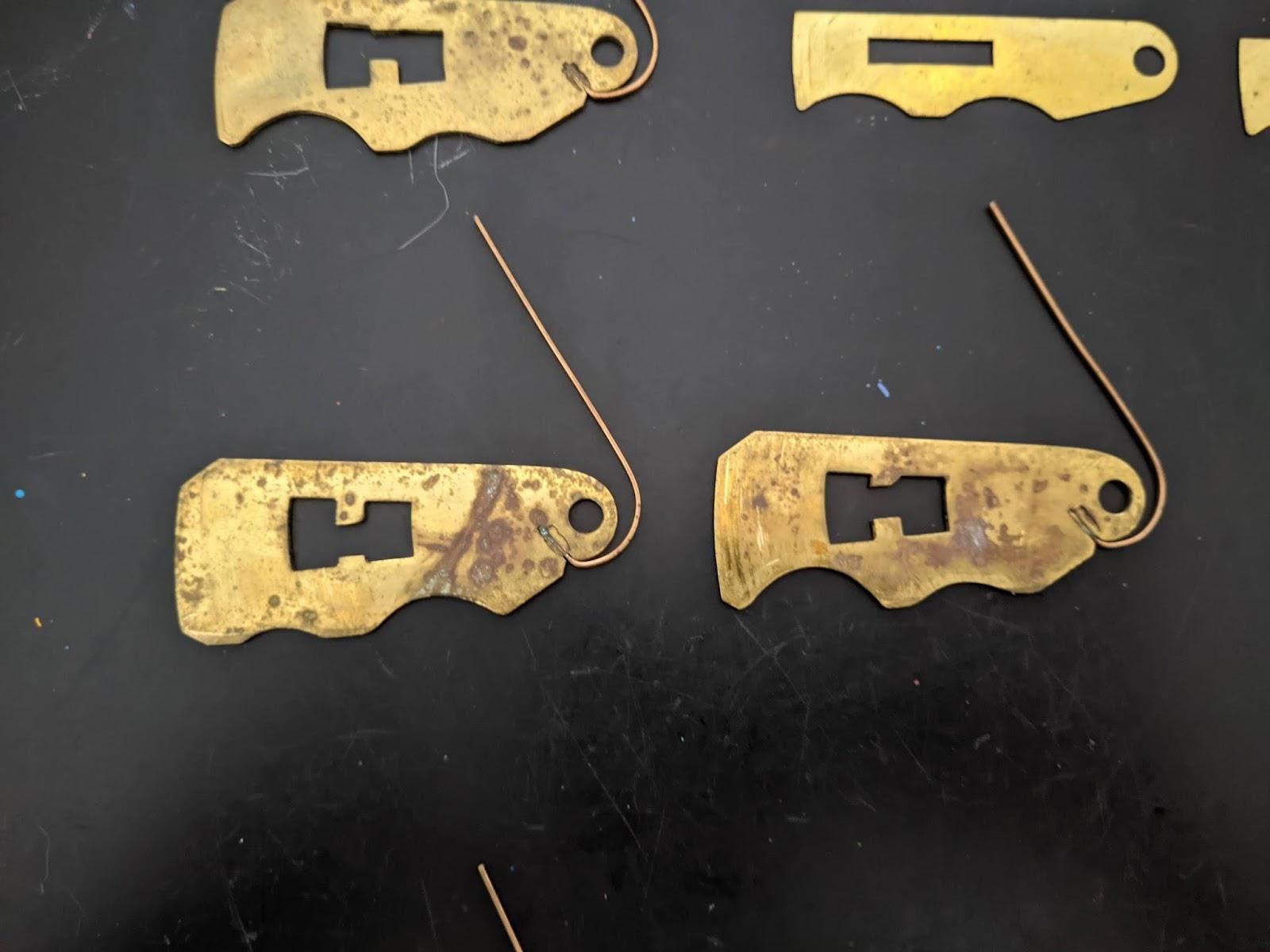
    Every lever has two cuts at the bottom. A closer look at two of the levers shows how different cut heights make it possible to open the lock with two different keys.
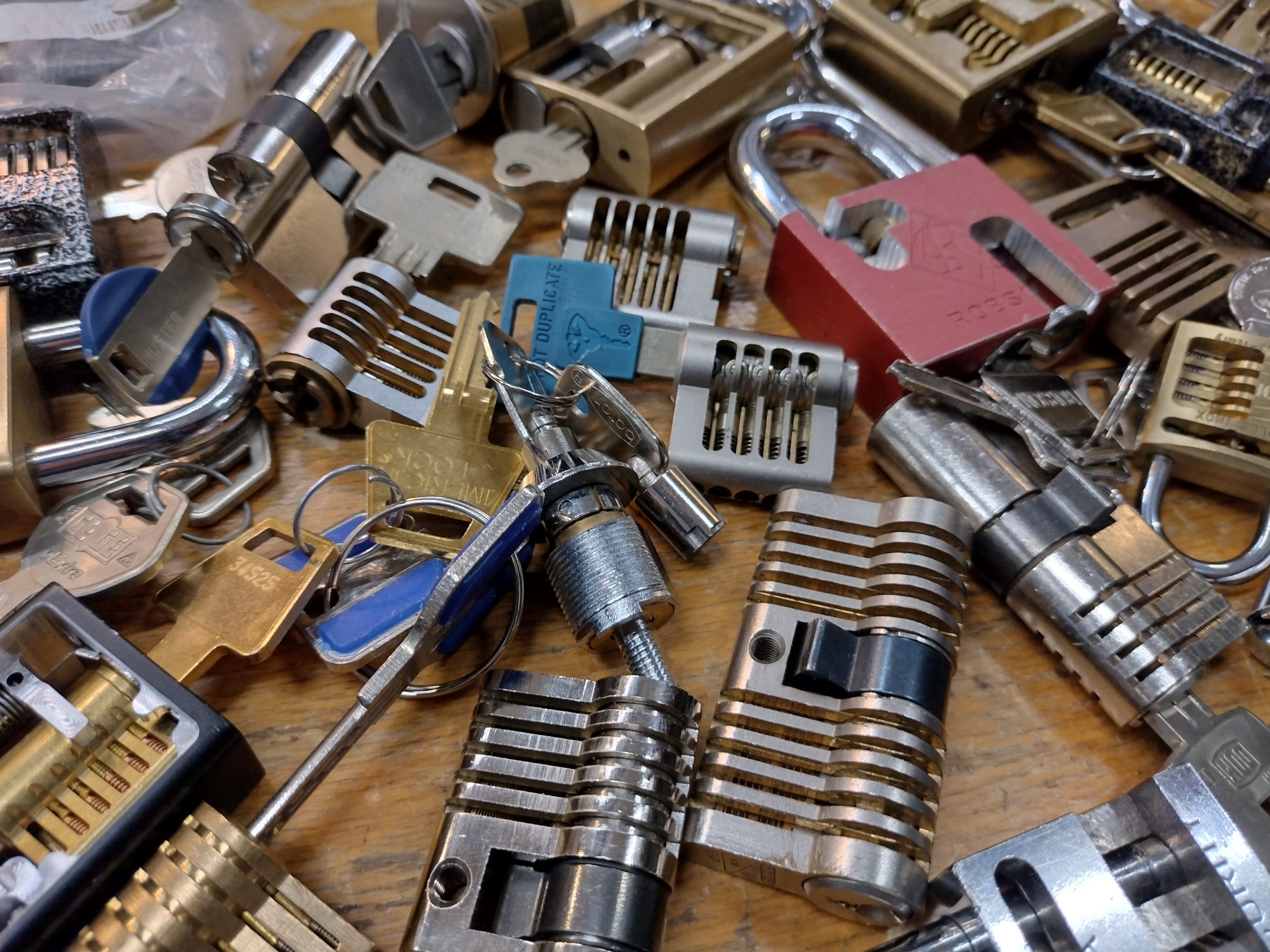
    Moral of the story: locks are fun in so many ways.

    ~Greenish


    Источник...

  17. #137
    Я робот. Собираю для Вас информацию из интернета
    Регистрация
    18.04.2011
    Сообщений
    90,662

    По умолчанию 0

    Registration for LockCon 2023 is open!
    Dear friends, We are delighted to announce that registration for LockCon 2023 is open! The conference will be held from the 12th of October to the 15th of October at the WestCord Hotel de Veluwe in Garderen, The Netherlands. The Event We will welcome registered attendees from Thursday afternoon (check-in 15:00 hr) with a meet […]
    -------------------------------------

    Dear friends,


    We are delighted to announce that registration for LockCon 2023 is open! The conference will be held from the 12th of October to the 15th of October at the WestCord Hotel de Veluwe in Garderen, The Netherlands.

    The Event

    We will welcome registered attendees from Thursday afternoon (check-in 15:00 hr) with a meet and greet in the bar. On Friday, Saturday, and Sunday, we will have talks, workshops, competitions, and social events. And, of course, there will be plenty of opportunities to pick locks. We will have to vacate the hotel again on Sunday evening.

    Invitation

    LockCon is an event for the locksport community. Everyone with a passion for locksport is welcome, no matter the locksport group you are with. We work with the principle of friends, and friends of friends. If your friends are going to LockCon, ask them to vouch for you.

    We have also reserved seats for people we have never met before. If you think you have something to contribute, or just are a very enthusiastic lockpicker who does not have the right connections yet, please contact us through the usual channels.

    Hotel

    As you may have seen, this year we will reside in a Hotel. This means there will be no dorm rooms, the maximum number of people sharing a room will be 4, and you will be able to suggest preferred roommates. As always, we have a limited amount of beds, so please complete the registration process early. The price for the entire weekend will be €360 per person, and will include LockCon 2023, breakfast and lunch on Friday, Saturday, and Sunday, dinner on Friday and Saturday, and lots of fun!

    We are looking forward to seeing you there!

    LockCon Team

    Thursday October 12th 15:00 until Sunday October 15th early evening.

    WestCord Hotel de Veluwe | Oud Millingenseweg 62 | 3886MJ Garderen | The Netherlands

    https://westcordhotels.com/hotel/hotel-de-veluwe/

    https://www.openstreetmap.org/relation/3591498


    Источник...

  18. #138
    Я робот. Собираю для Вас информацию из интернета
    Регистрация
    18.04.2011
    Сообщений
    90,662

    По умолчанию 0

    Cutaways, and lever locks
    When we teach lockpicking we usually revert to schematics of locks, and different models for demonstrating the functionality of locks. Usually required as the core functionality is well hidden, and not often observable in action. Multiple skilled machinists have made cutaway locks for the purpose of demonstrating the inner workings of real locks. At one […]
    -------------------------------------
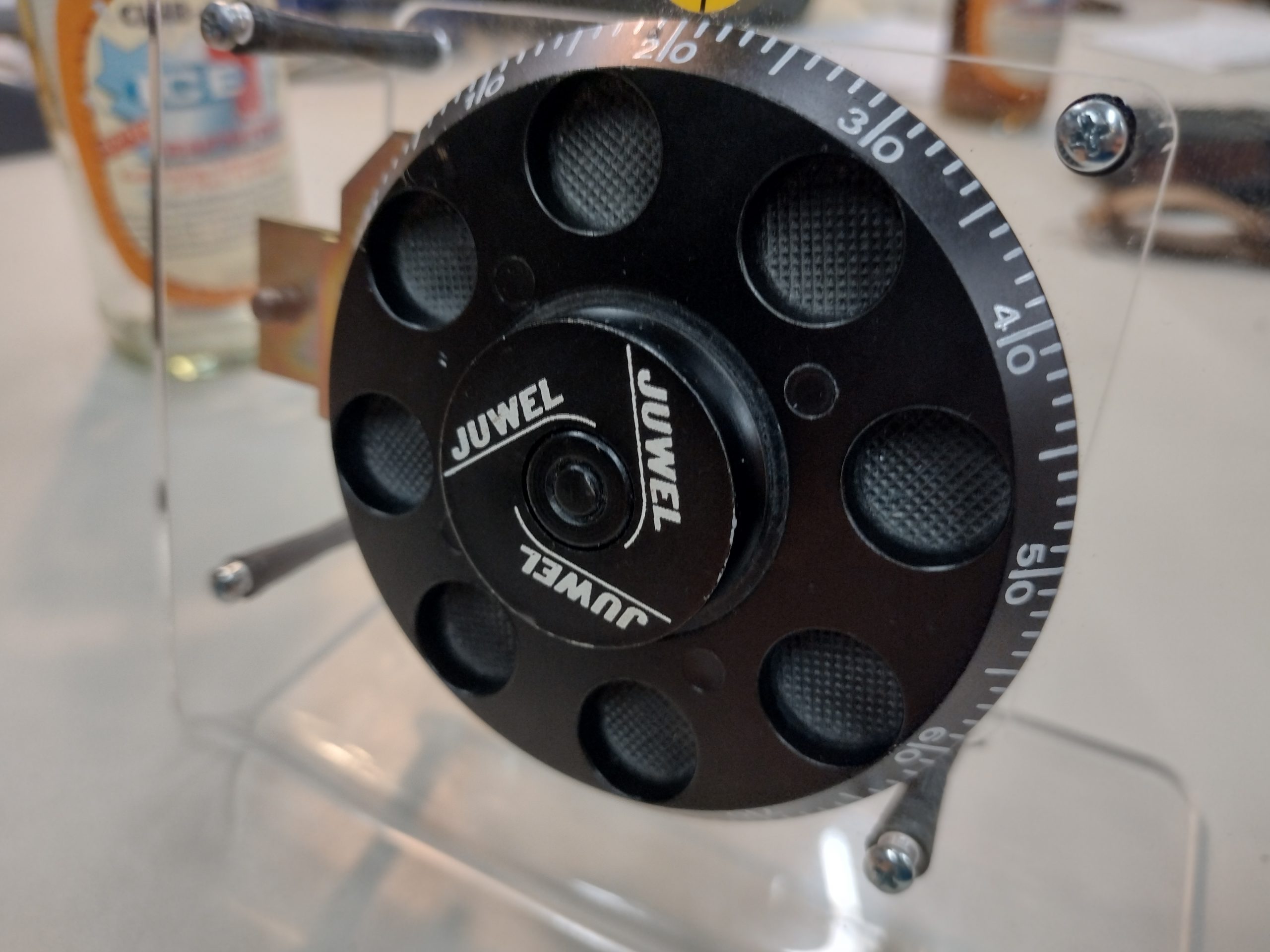
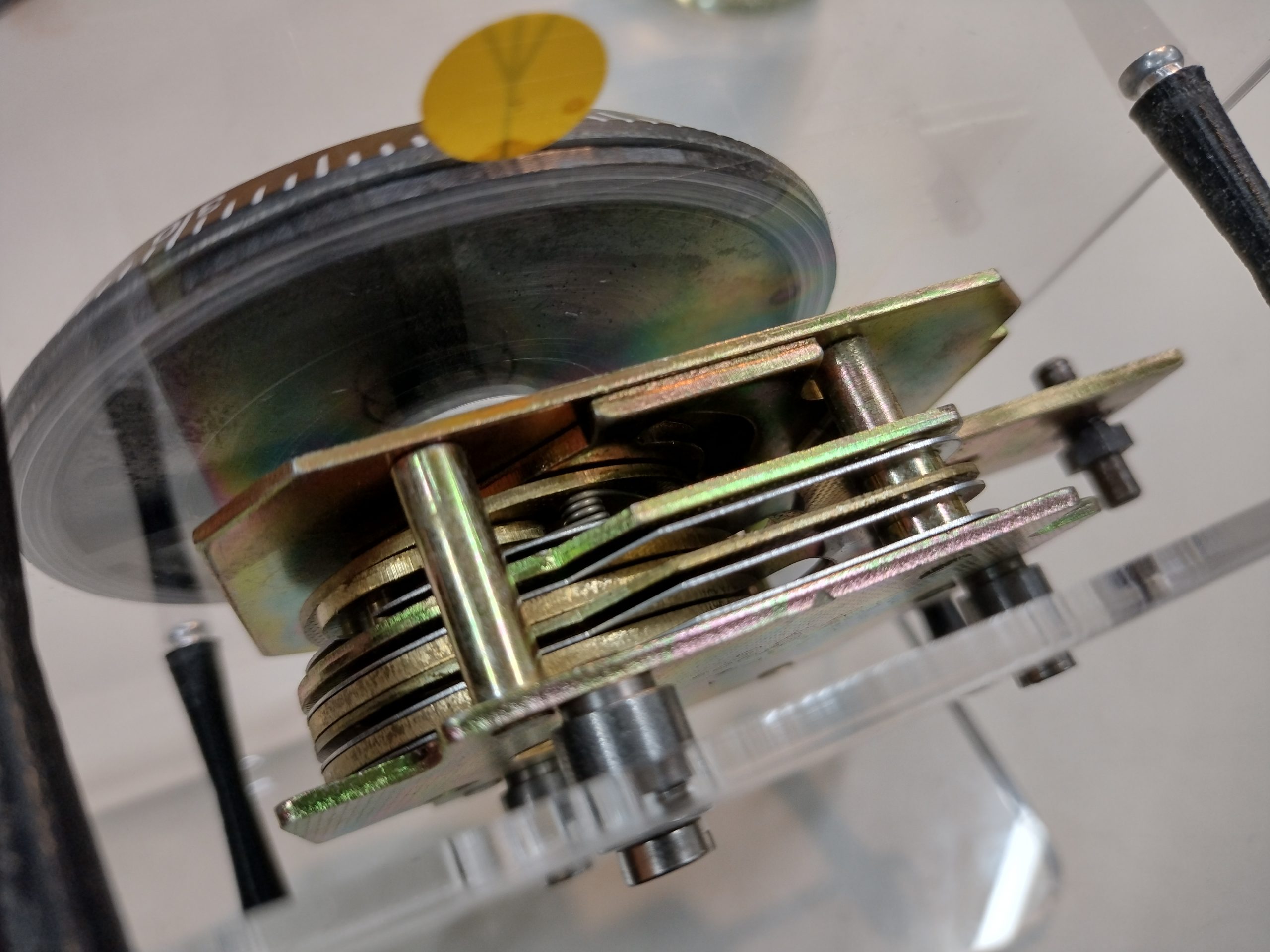
    When we teach lockpicking we usually revert to schematics of locks, and different models for demonstrating the functionality of locks. Usually required as the core functionality is well hidden, and not often observable in action. Multiple skilled machinists have made cutaway locks for the purpose of demonstrating the inner workings of real locks.

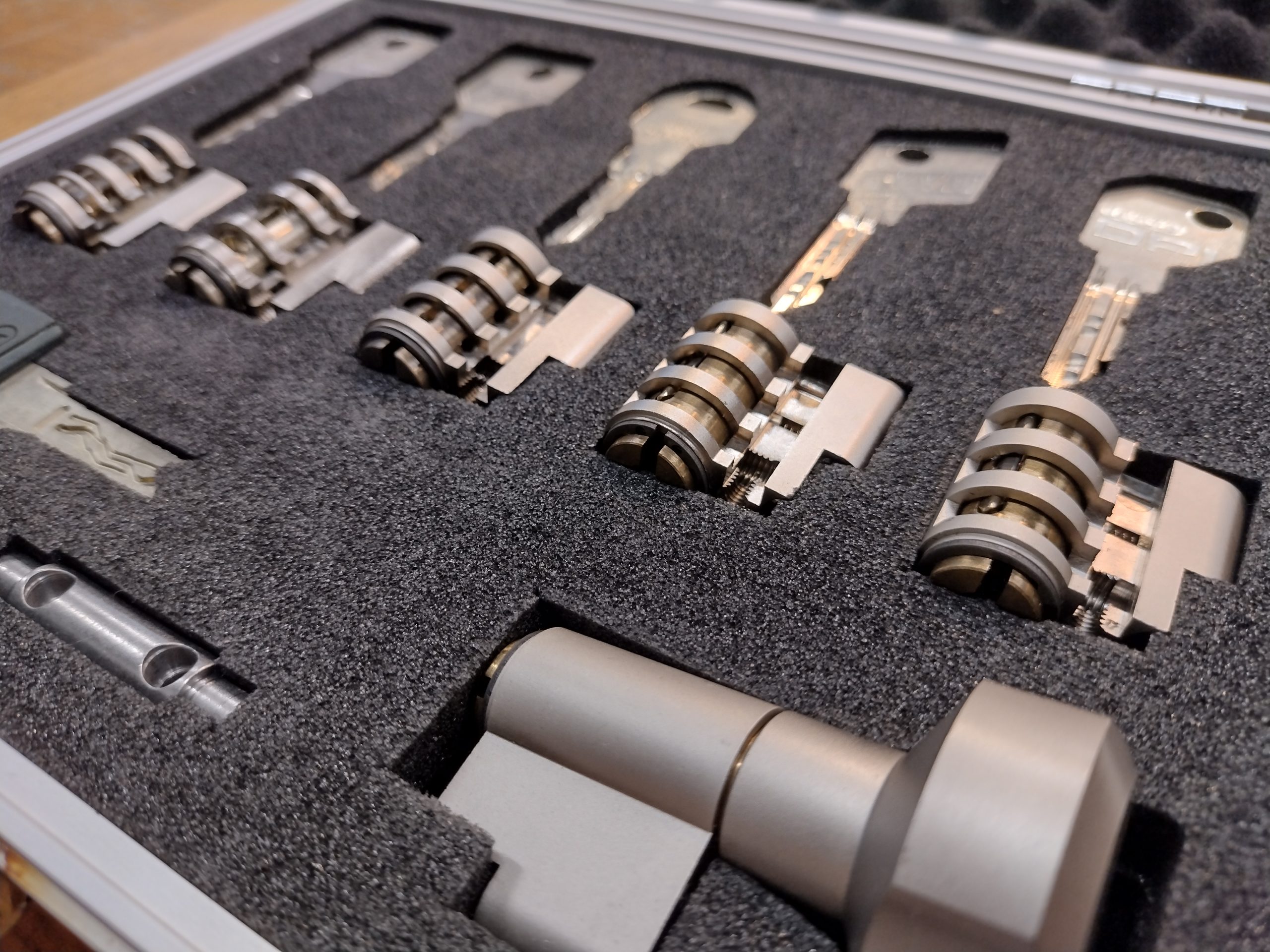
    At one cutaway themed evening, we had over 50 unique cutaways on the table. From all brands and mechanisms. Some of which even the pins themselves were cutaway.

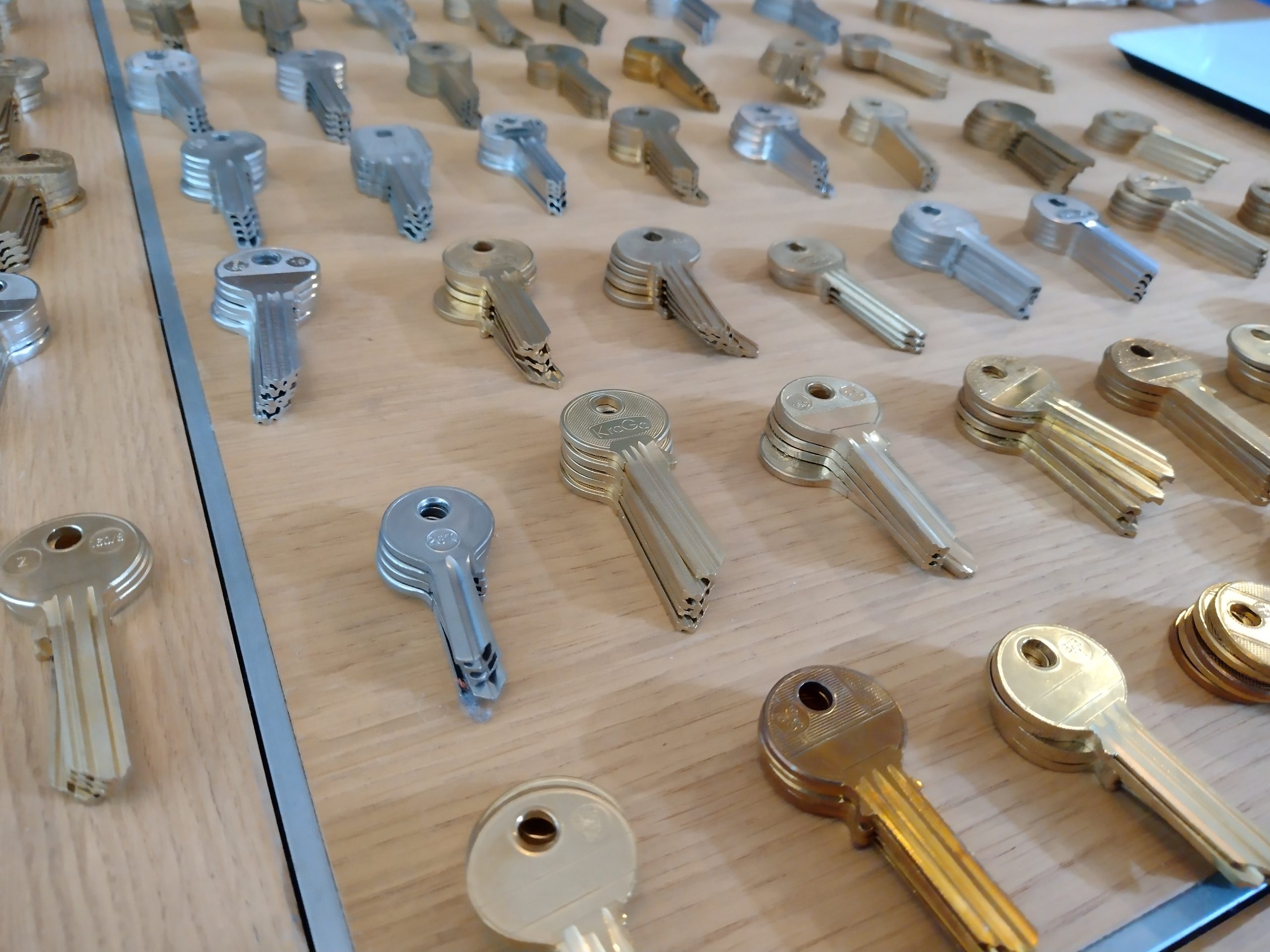
    On an evening with impressioning, a member asked for some blanks to practice with. The call was answered by the keys below. Sadly, it’ll be very hard to find a corresponding lock for the key blanks, as in Europe we have thousands of unique keyways. Even though they all look a-like.

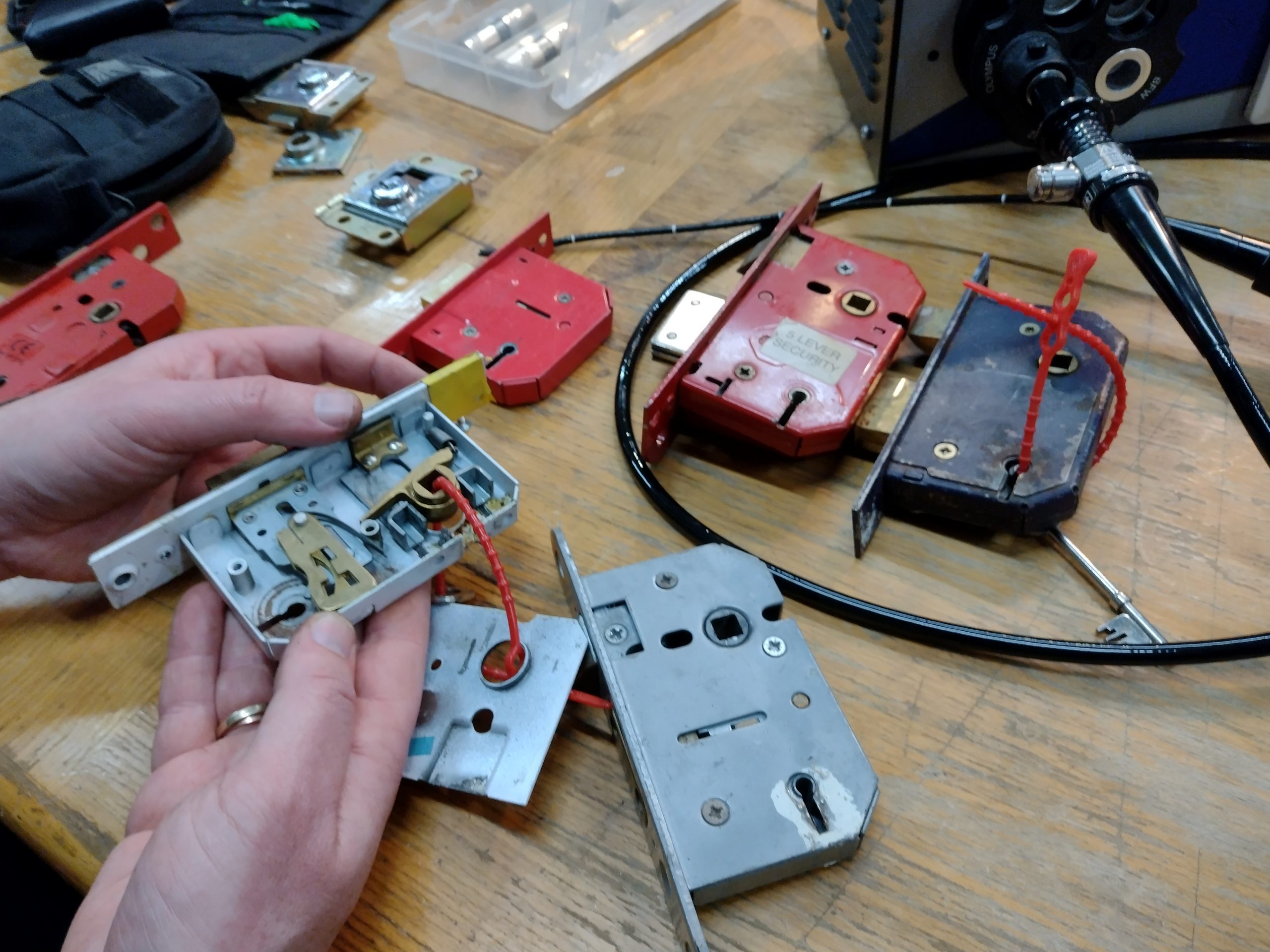
    On another evening, we delved deep in lever locks, from your classic Chubb locks to high-end safes. A boroscope was brought as to try to decode some locks by belly reading the levers. E.g. to observe the scratches on the levers and determining the length of the butting making the scratches.

    The WE30C also made its appearance. The lock was used on pay phones, and is remarkably hard to lockpick due to the lever blocking system, shown in the top right. As torque is applied, the blocking system engages with the levers, making all levers bind up before the lever tests the gate.


    Источник...

  19. #139
    Я робот. Собираю для Вас информацию из интернета
    Регистрация
    18.04.2011
    Сообщений
    90,662

    По умолчанию 0

    Dutch Open Competition 2023
    In an effort to bring people up to speed on the Dutch Open Competitions at LockCon, we are publishing the competition rules. The PDF below are rules for the Lockpicking, Impressioning and Lever lockpicking competition, exported from the ‘How to run LockCon’ document written by Walter in 2016. We have a lockpicking, impressioning, disk detainer, […]
    -------------------------------------
    In an effort to bring people up to speed on the Dutch Open Competitions at LockCon, we are publishing the competition rules. The PDF below are rules for the Lockpicking, Impressioning and Lever lockpicking competition, exported from the ‘How to run LockCon’ document written by Walter in 2016.

    We have a lockpicking, impressioning, disk detainer, and Lockpicking Pentathlon. The Pentathlon has five opening techniques which includes picking, lever lockpicking, car locks and much more.

    The organizers will put up flip overs, on which you can register yourself for the competition.
    Please be on time when the competition starts. We aim to have Impressioning on Friday afternoon, Lockpicking on Saturday afternoon, and the Pentathlon on Sunday.

    Lockpicking

    For LockCon 2023 we will run the lockpicking competition with locks commonly found in the Netherlands, in addition to locks kindly sponsored by Zeefeene and Nigel from Toool UK.
    • The locks are pickable with normal lockpicks, of which we do not have a restriction for custom or commercial.
    • We aim to have locks without a secondary locking system, I.e. sidebar.
    • Applying torque on the tailpiece instead of using a tension wrench is allowed.
    The time per round is adjusted for the difficulty of the lock, usually 5/10/15 minutes per round.

    Impressioning

    The Impressioning competition will be on Abus C83 locks, kindly sponsored by Abus. The first round will be an hour, and the A and B finals are planned to be six rounds of 15 minutes each.

    In addition to the rules below, we added several small nuances to the rules:
    • The tailpiece of the lock needs to be unobstructed. As in, no torque can be applied from the tailpiece. Please take care to mount the lock properly, and not pinch the tailpiece.
    • Any newly invented tool or technique can only be used in the competition after explicit permission of the Judges.
    Please see the Dutch Open Impressioning Championship 2022 report for more information on the competition. https://blackbag.toool.nl/?p=4222

    Disk detainer competition

    We will have a disk detainer lockpicking competition for the first time. For which, Sparrows kindly sponsored five of their disk detainer lockpicks. The competition will run throughout the event as a self timed competition, or if time allows, gets a dedicated time in the schedule.
    • There will be three to five locks selected, from easy to fairly difficult.
    • The supplied Sparrows DD tools are augmented with a 3D printed spacer designed by Thice. https://www.thingiverse.com/thing:5246593/files
    • Locks are not guaranteed to be front tensioning, but can all be opened with the tools provided.
    • Please keep the combinations a secret for others competing.
    • The tools are not fragile, but shouldn’t be abused either. We have some spares, and come to the organizers if the tools are defective.
    For people that are either new to disk detainers or don’t like competing, there will be tools and locks available to learn the technique, as well as workshops in picking high security disk detainers. We will also bring locks with much higher difficulty, starting at Abus plus with butterfly disks, to Tokoz Pro. Picking these high-end locks is left as an exercise to the attendees. (Maybe bring your own tools for these.)

    Pentathlon

    Our friends from Parmakey in Italy will host a pentathlon competition this year. It will include five lock opening techniques of the following list:
    • Lockpicking pin tumbler: Bring your own tools
    • Lockpicking dimple: Bring your own tools
    • Impressioning: Bring your own tools
    • Lockpicking lever locks: Tools are supplied
    • Lockpicking car locks: Tools are supplied
    The competition can only host a small group of participants, and will be fun to watch for everyone else.

    Appendix from ‘How to run LockCon’ by Walter, 2016

    Dutch_Open_rulesDownload


    Источник...

  20. #140
    Я робот. Собираю для Вас информацию из интернета
    Регистрация
    18.04.2011
    Сообщений
    90,662

    По умолчанию 0

    Report: Dutch Open Impressioning Championship 2022
    Jan-Willem wrote a report in the Dutch Open championship in Impressioning, held at LockCon 2022. The report talks about the parts of the competition which are rarely discussed, like the bitting of the locks and the opening count of each lock. Hopefully this report is of use for anyone into competitive impressioning. Our appreciation go […]
    -------------------------------------
    Jan-Willem wrote a report in the Dutch Open championship in Impressioning, held at LockCon 2022.
    The report talks about the parts of the competition which are rarely discussed, like the bitting of the locks and the opening count of each lock. Hopefully this report is of use for anyone into competitive impressioning.

    Our appreciation go to Abus for their generosity of sponsoring the competition locks and blanks.
    Abus has sent us the locks for LockCon 2023, as well. Which is on Friday 13th of October.

    20230910 V1.0 Impressioning_LockCon_2022Download


    Источник...

+ Ответить в теме

Похожие темы

  1. More LockCon. blackbag.nl
    от publication в разделе Новости и обсуждения из интернета
    Ответов: 0
    Последнее сообщение: 08.09.2011, 16:11
  2. What is up with Barry?. blackbag.nl
    от publication в разделе Новости и обсуждения из интернета
    Ответов: 0
    Последнее сообщение: 16.05.2011, 02:27
  3. Mottura C38 in new blackbag category: Cut to pieces. blackbag.nl
    от publication в разделе Новости и обсуждения из интернета
    Ответов: 0
    Последнее сообщение: 19.04.2011, 15:56
  4. Assa d12. blackbag.nl
    от publication в разделе Новости и обсуждения из интернета
    Ответов: 0
    Последнее сообщение: 19.04.2011, 15:56
  5. What I do on vacation …. blackbag.nl
    от publication в разделе Новости и обсуждения из интернета
    Ответов: 0
    Последнее сообщение: 19.04.2011, 15:56

Ваши права

  • Вы не можете создавать новые темы
  • Вы не можете отвечать в темах
  • Вы не можете прикреплять вложения
  • Вы не можете редактировать свои сообщения
Яндекс цитирования Яндекс.Метрика

1 2 3 4 5 6 7 8 9 10 11 12 13 14 15 16 17 18 19 20 21 22 23 24 25 26 27 28 29 30 31 32 33 34 35 36 37 38 39 40 41 42 43 44 45 46 47 48 49 50 51 52 53 54 55 56 57 58 59 60 61 62 63 64 65 66 67 68